





 |
|
|||||||||||||||
 |
||||||||||||||||











 |
|||
 |
Italy Sicily Taormina Ancient (Greek) Theatre – History, Architecture & Significance 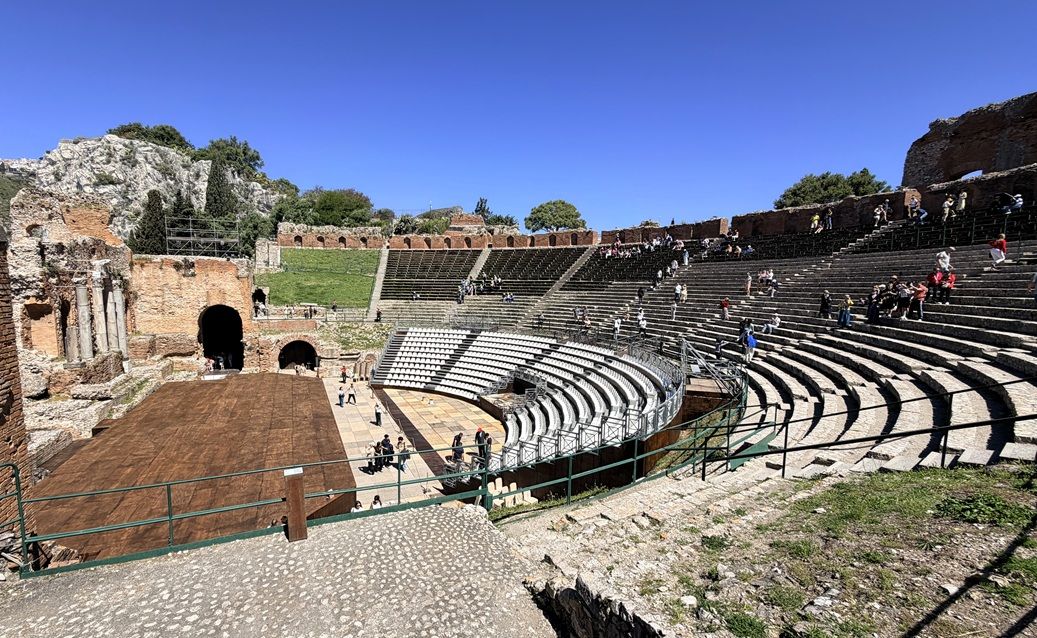
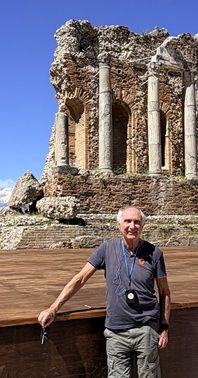
The Ancient Theatre of Taormina (Teatro Antico di Taormina) is commonly called the Greek Theatre of Taormina (Teatro Greco) because its original design and construction are Greek, even though the Romans later rebuilt and enlarged it. It is one of Sicily’s most celebrated archaeological monuments. Set high on the slopes of Monte Tauro, it commands sweeping views of the Ionian Sea, the Bay of Naxos, and the distant, snow capped cone of Mount Etna. 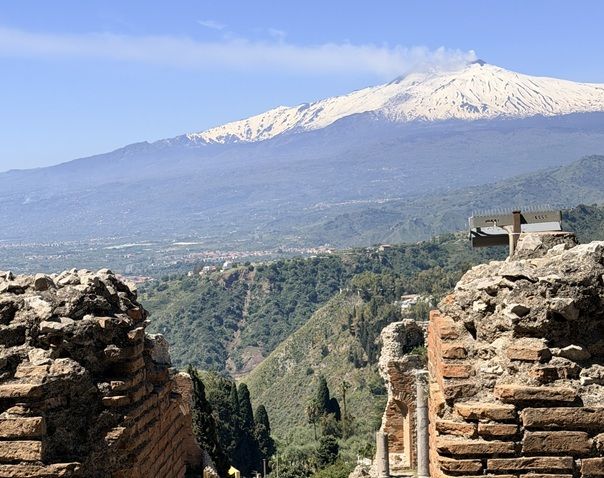 Built originally in the Hellenistic period (323–30 BCE) and later transformed under the Roman Empire, it is today the second largest ancient theatre in Sicily, surpassed only by the theatre at Syracuse. The theatre was first constructed in the 3rd century BCE, during the Greek period of Taormina. Inscriptions carved into some of the surviving seats record the name of Philistides, wife of the Syracusan ruler Hieron II, confirming the dating. A small temple once stood above the cavea, possibly dedicated to Apollo Archagetas, although only its stylobate survives. Under Roman rule (1st–2nd Century CE), the theatre was extensively rebuilt, probably during the reigns of Trajan or Hadrian in the early 2nd century CE. The Romans enlarged the structure, monumentalised the stage building, and introduced new architectural elements such as arches, marble decoration, and a more elaborate scaenae frons. In the later Roman period (2nd–3rd Century CE), the theatre was adapted for gladiatorial games. The orchestra was transformed into an arena, enclosed by a parapet, and a hypogeum was constructed beneath it to house machinery and possibly animal cages. This conversion fundamentally altered the building’s function and appearance. After the fall of the Roman Empire (476 CE), the theatre gradually fell into disuse. During the Middle Ages, parts of the structure were taken for use in private dwellings. In 1860, the architect Saverio Cavallari undertook a major restoration, reconstructing parts of the stage and several columns using anastylosis, a conservation method in which a ruined building or monument is reassembled using its original surviving stones, adding only minimal new material where absolutely necessary to keep the structure stable, thereby giving the theatre much of its present form. Architecturally, the earliest exterior walls were constructed using local limestone and sandstone, laid in regular courses. These walls formed the lower retaining structures that supported the seating. During the Roman rebuilding (1st–2nd century BCE), the exterior was transformed through the extensive use of: Opus latericium (brick facing); Opus caementicium (Roman concrete); and vaulted substructures to support additional seating and porticoes. These Roman additions are still visible as massive brick arches, corridors, and radial walls that project outward from the cavea. Visitors enter via the Règia (Principale) staircase, a triple-ramped external stairway leading to the lower seats reserved for dignitaries. To increase capacity, the Romans added two large brick porticoes whose vaulted structures supported terraces above. 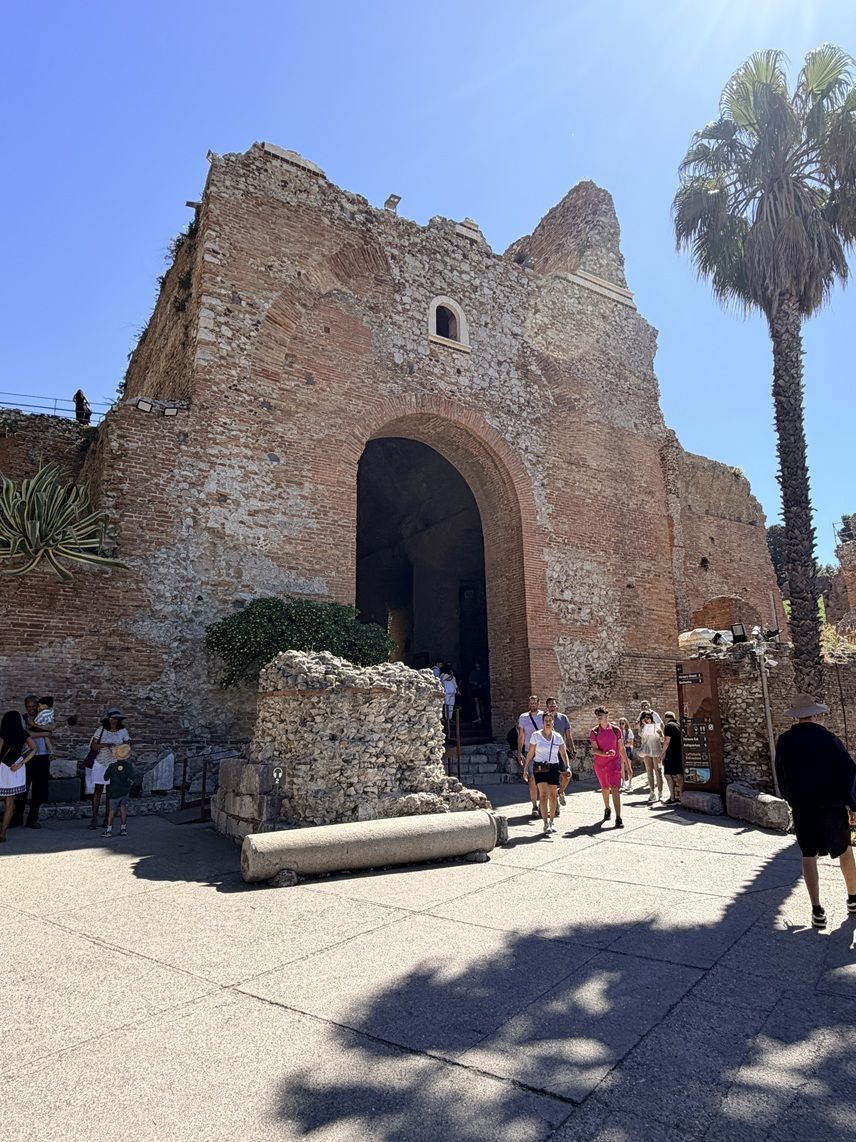 Visitors then pass into a spacious interior. 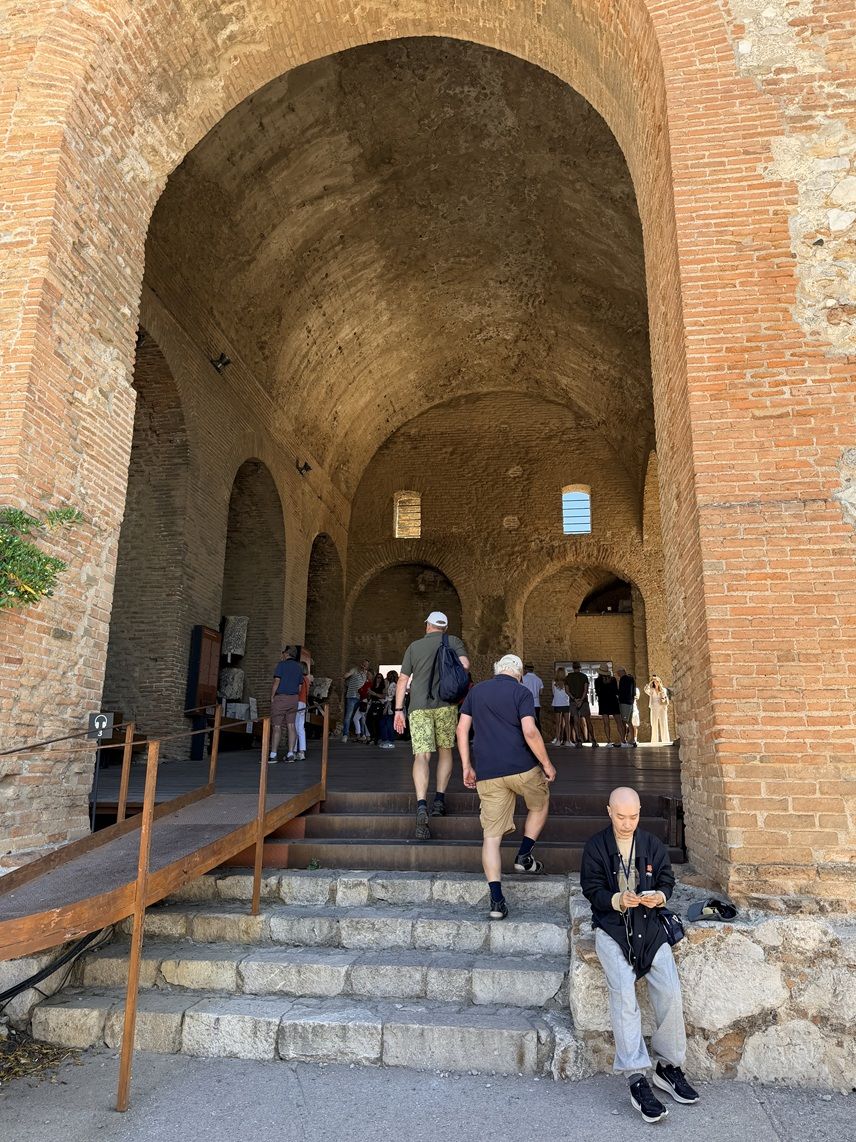 The cavea was encircled by a perimeter wall that once rose in stepped tiers. Externally, this would have appeared as a series of curving masonry walls following the theatre’s semicircular plan; Radial buttresses supporting the seating and Vaulted corridors forming the structural skeleton of the upper tiers. Although the uppermost sections are lost, the surviving lower walls show the precision of Roman engineering in adapting the Greek layout to a larger, heavier structure. The theatre’s exterior was punctuated by vomitoria — arched entrances leading into the seating tiers. From the outside, these appeared as large brick framed arches; Radial passageways extending deep into the structure and staircases rising to the upper cavea. 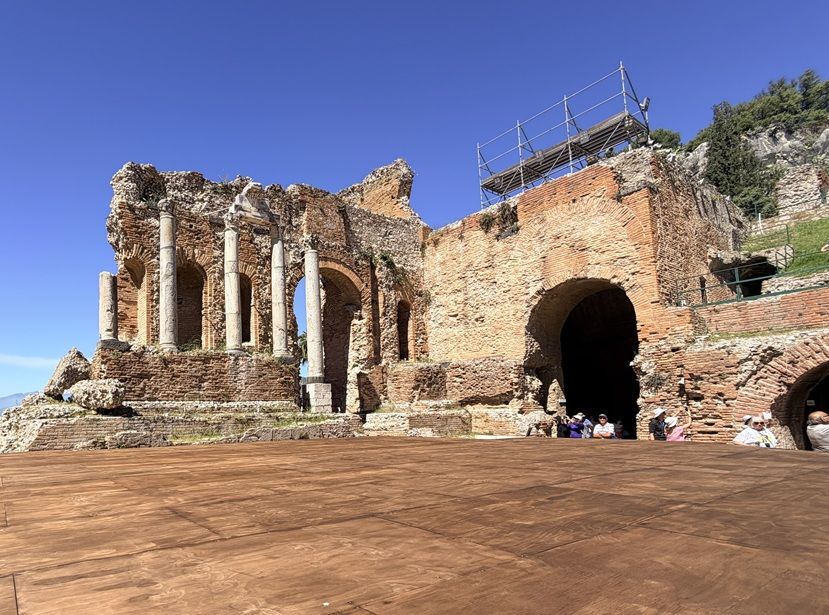 To increase capacity and circulation, the Romans added two large porticoes behind the cavea. Externally, these would have formed: Long, vaulted corridors; Brick arcades supporting upper terraces and covered walkways offering shelter and shade. Only fragments of these survive, but their scale indicates that the theatre’s exterior once had a far more monumental appearance than the Greek original. Located on the rocky terraces just outside the Theatre, along the path that leads toward its upper viewpoints, is a bronze figure statue. This is not an ancient work from Taormina but was installed in 2022 as part of the “Paesaggi e Figure” exhibition by contemporary Sicilian sculptor Giuseppe Agnello. 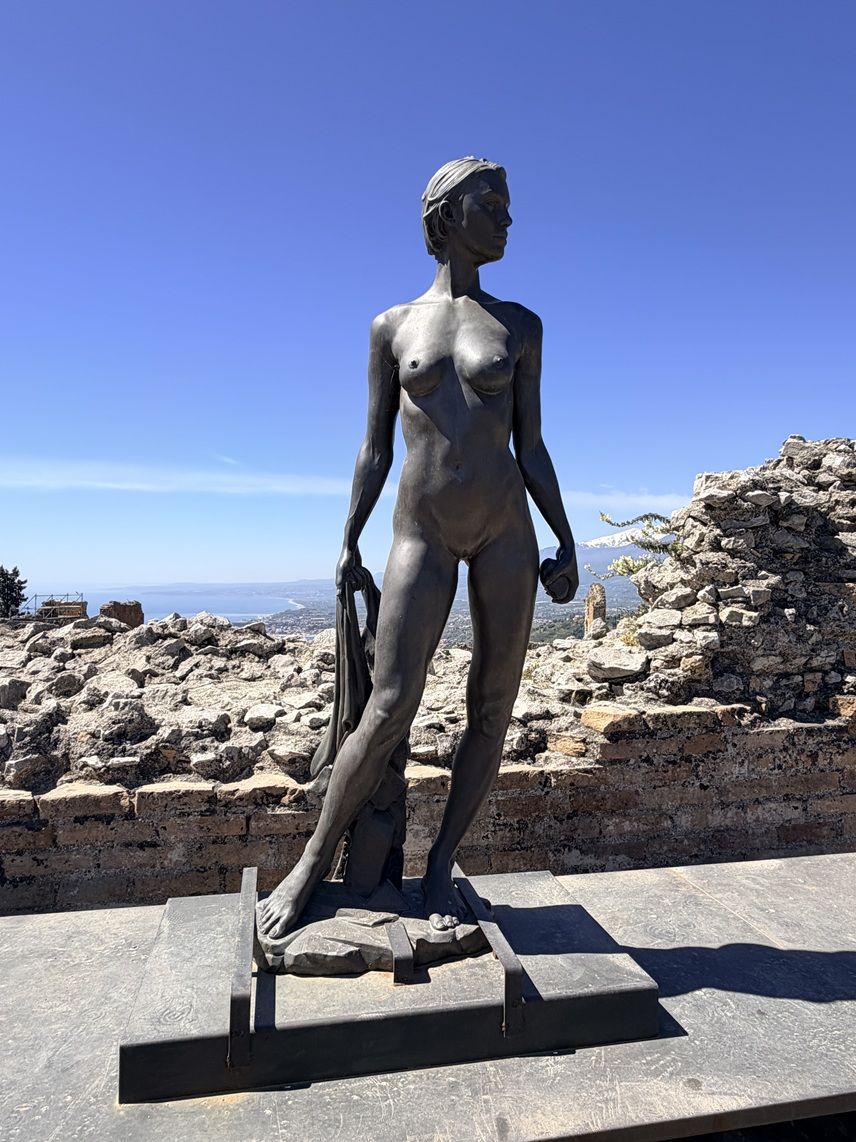 Internally, the theatre’s cavea (Seating) has a diameter of 107 metres and could accommodate around 10,000 spectators, making it one of the largest theatres in the ancient Greek world to feature a curved rather than trapezoidal seating plan. The cavea is divided into nine sections, a typical arrangement in major Hellenistic theatres. 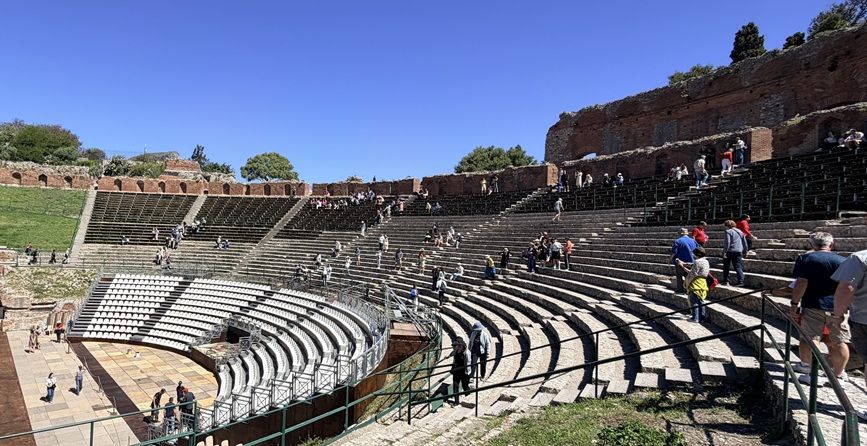 Carved partly into the hillside, the seating offers exceptional acoustics and a dramatic natural backdrop—an intentional feature of Greek theatre design, where landscape and performance were closely intertwined. Originally a semicircular orchestra used for Greek drama, this area was later remodelled into a Roman arena. Today it is used for the performance area during events. 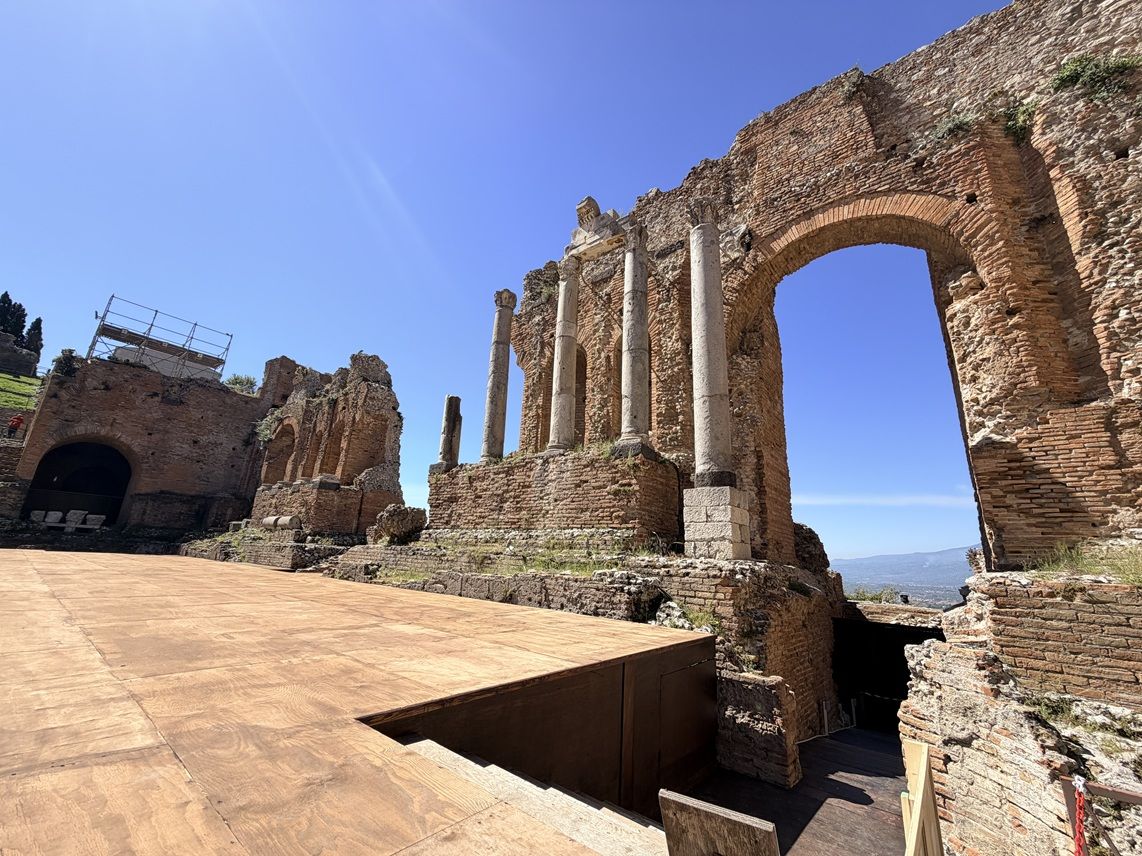 The addition of an annular corridor and raised parapet reflects its later use for gladiatorial spectacles. The Roman scaenae frons (the Stage Building) once featured columns, niches, and statuary. Although much of it has collapsed, the surviving brick arches and reconstructed columns still frame the iconic view of Mount Etna. The two side entrances, or hospitalia, remain visible, while the central royal doorway has not survived. Today, the Theatre remains an active cultural venue. Since the 1950s, it has hosted concerts, opera, and the internationally recognised Taormina Film Festival. The Ancient Theatre of Taormina is not only one of Sicily’s most visually striking archaeological sites but also a monument that encapsulates the island’s layered history—from its Hellenistic origins to its Roman transformation and modern revival. Its blend of architecture, landscape, and cultural continuity makes it one of the Mediterranean’s most compelling ancient theatres. References and Additional Information https://www.parconaxostaormina.com/it https://en.wikipedia.org/wiki/Ancient_theatre_of_Taormina https://www.visitsicily.info/en/attrazione/il-teatro-greco-di-taormina/ https://www.theworldofsicily.com/en/sights/sights-of-taormina/ancient-theatre-of-taormina/ https://www.sicilyactive.com/en/greek-theater-taormina
|
 |
|
 |
|||


All Photographs were taken by and are copyright of Ron Gatepain


| Site Map |