





 |
|
|||||||||||||||
 |
||||||||||||||||











 |
|||
 |
Athens Church of Agia Paraskevi the Holy Martye – History, Architecture & Significance 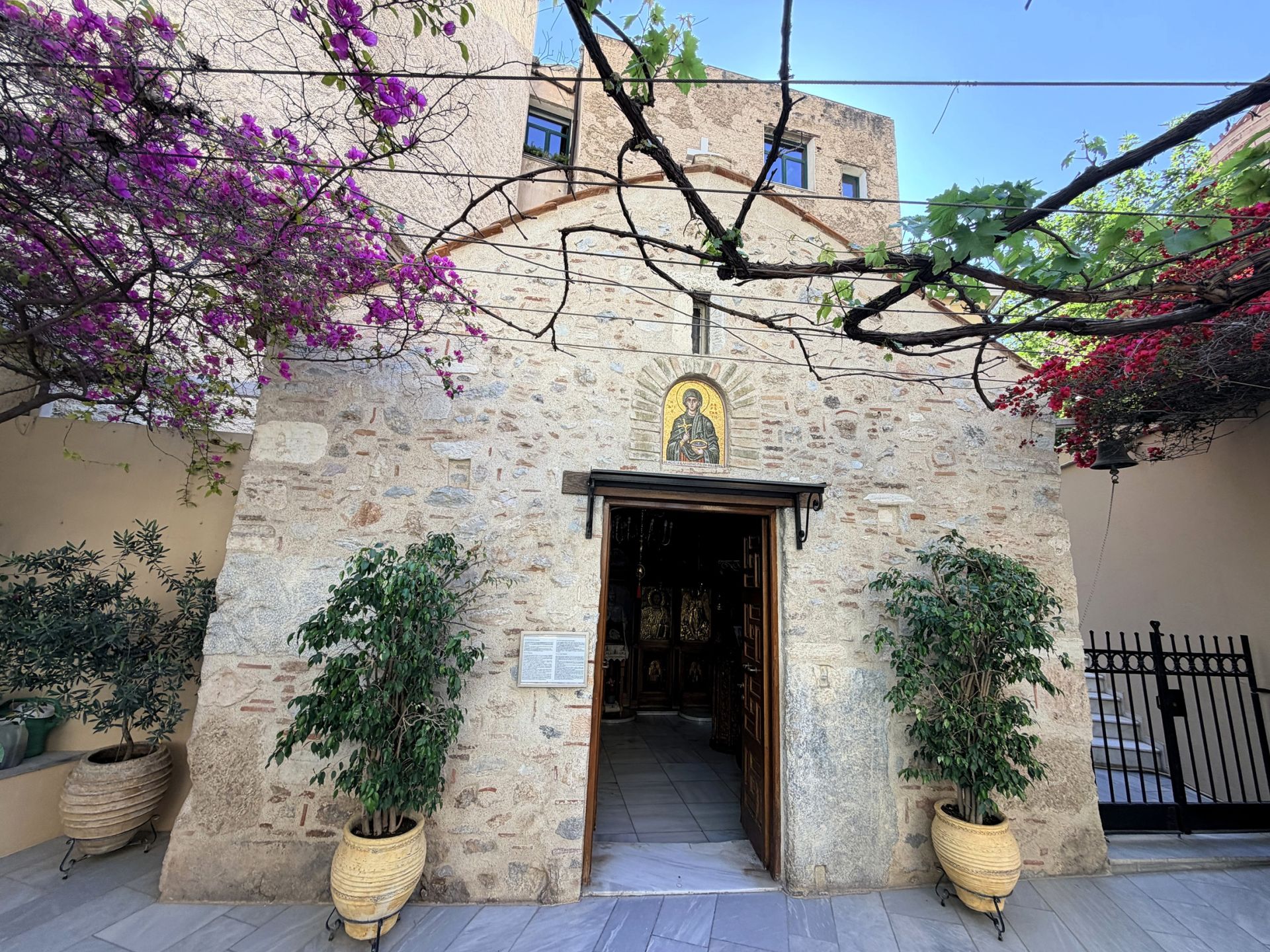
The chapel is dedicated to Agia Paraskevi, honoured on 26 July and venerated throughout the Orthodox world as the Patron Saint of the Eyes. According to tradition, she was born in Rome in 117 CE to devout Christian parents who had promised to dedicate their only child to God. Named Paraskevi because she was born on a Friday, she received a thorough Christian education and, after the death of her parents at the age of twenty, distributed her inheritance to the poor and devoted herself to preaching the Gospel in Rome and the surrounding region. Her missionary activity drew the hostility of Emperor Antoninus (Roman Emperor from 138 to 161CE), who ordered her arrest and attempted to persuade her to renounce her faith with promises of wealth. When she refused, she was subjected to tortures, including the red hot helmet and a cauldron of boiling oil and tar. According to the tradition, she remained unharmed, and when the emperor tested the cauldron himself, he was immediately blinded. Paraskevi restored his sight, leading him to cease the persecutions and release her. She continued her missionary work until she reached Greece, where she was again arrested by a pagan official, endured further tortures, and was finally beheaded, sealing her witness as a martyr. The origins of the church lie in the late sixteenth or early seventeenth century, during the period of Ottoman rule (1458 until 1821), when local Christians constructed a small single aisled basilica beside the larger church of Panagia Chrysospiliotissa. Its initial form was extremely simple, with blind arches along the north and south walls and a vaulted roof typical of the modest ecclesiastical architecture permitted at the time. As the needs of the congregation grew, the blind arches were opened and a narrow northern aisle was added, creating a small subsidiary space that today contains a representation of Calvary, an unusual feature for a chapel of this size. This distinctive feature has been described as “hideous” in the sense of depicting the Crucifixion with stark realism. This is unusual for a chapel of such small size and gives the interior a unique devotional focus. A door and a large window were later inserted on the south side, improving access and lighting while preserving the essential character of the original structure. In 1762 the chapel was granted to the Monastery of Osios Meletios on Mount Kithairon, becoming an urban metochi (an ecclesiastical embassy church within the Eastern Orthodox tradition) that provided accommodation for monks travelling to Athens. This association continued until 1883, when the church was temporarily transferred to the Monastery of Faneromeni on Salamina, a change that led to its local nickname, the “Aeginitiko Metochi.” It returned to the care of Osios Meletios in 1928, and shortly afterwards, in the 1930s, underwent a programme of renovation that included the creation of the interior wall paintings that survive today. These frescoes, executed in a traditional Orthodox manner but with stylistic elements characteristic of the early twentieth century, give the small interior a warm and devotional character. 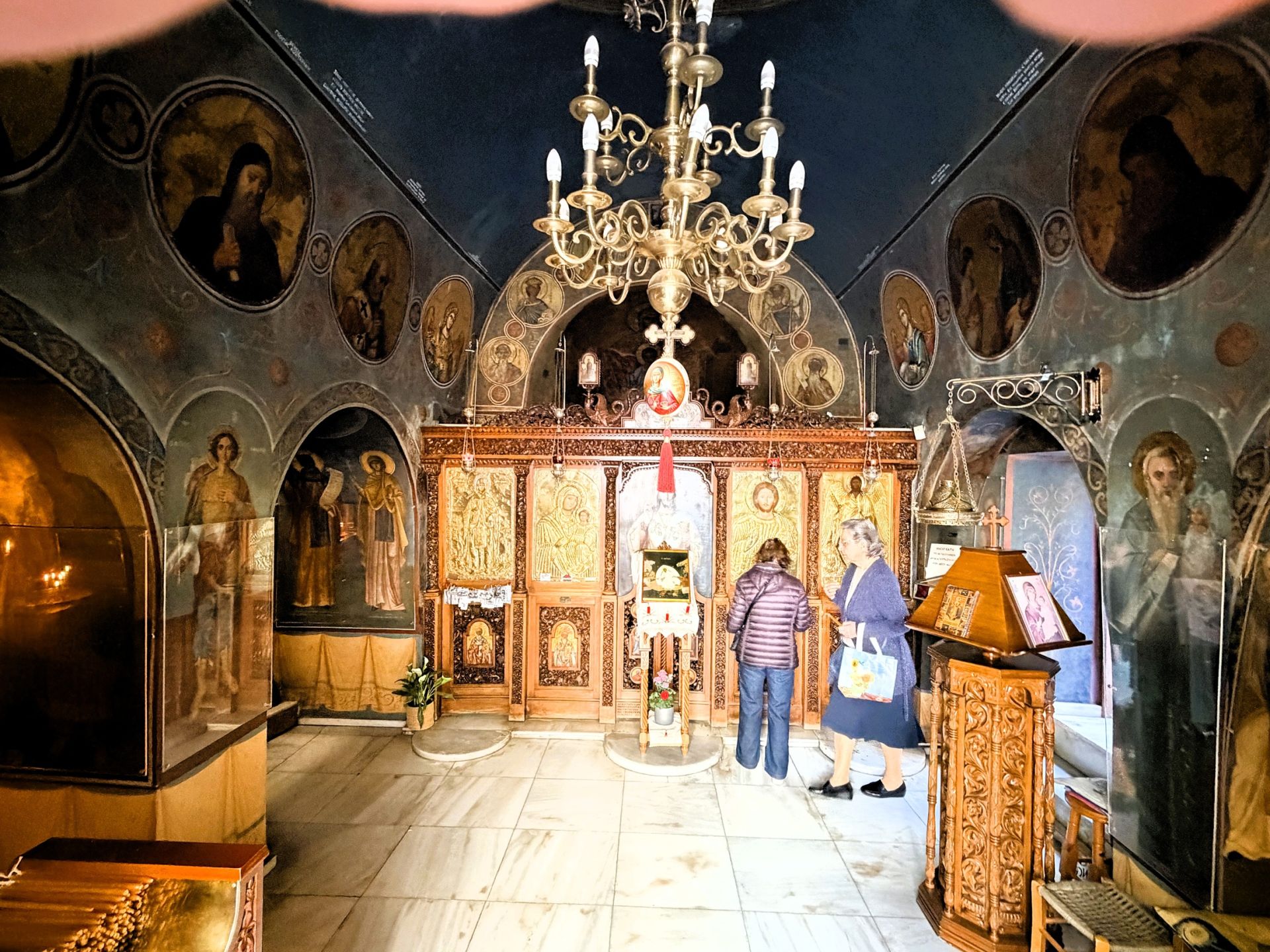 Despite its modest scale, the church retains a strong presence in its urban setting. Its stone walls, tiled roof, and simple façade contrast sharply with the modern commercial buildings that now surround it, creating a sense of continuity with the older, more intimate Athens that existed before the city’s rapid expansion in the nineteenth and twentieth centuries. The chapel remains active, with services held regularly and the doors often open for passers by seeking a moment of quiet in the midst of the busy street. Its survival, largely unchanged in form and function, offers a rare glimpse into the religious and architectural landscape of Ottoman Athens and preserves the memory of a community that maintained its faith through centuries of foreign rule. https://www.religiousgreece.gr/en/attractions/church-agia-paraskevi?utm https://www.religiousgreece.gr/en/attractions/church-agia-paraskevi?utm https://www.athenskey.com/agia-paraskevi.html?utm https://www.atlasobscura.com/places/church-of-agia-pareskevi?utm
|
 |
|
 |
|||


All Photographs were taken by and are copyright of Ron Gatepain


| Site Map |