


<


Produced by

Ron Gatepain

following his visit

in

April 2026


Spain


Barcelona


Church of Santa Anna – History, Architecture & Significance


Summary

The Church of Santa Anna is a rare survival of Barcelona’s medieval monastic architecture, founded in the twelfth century by the Order of the Holy Sepulchre and preserving a harmonious blend of Romanesque austerity and early Gothic refinement. Its single nave interior, lined with later Baroque chapels, leads to a simple polygonal apse that reflects the church’s original monastic character, while the adjoining cloister and chapter house retain the quiet, contemplative atmosphere of the medieval community that once lived here. Layers of later devotion — from gilded retables and Marian chapels to the Chapel of the Holy Sepulchre and the Blessed Sacrament — enrich the building without obscuring its origins, creating a uniquely intimate and historically resonant ensemble at the heart of the city.


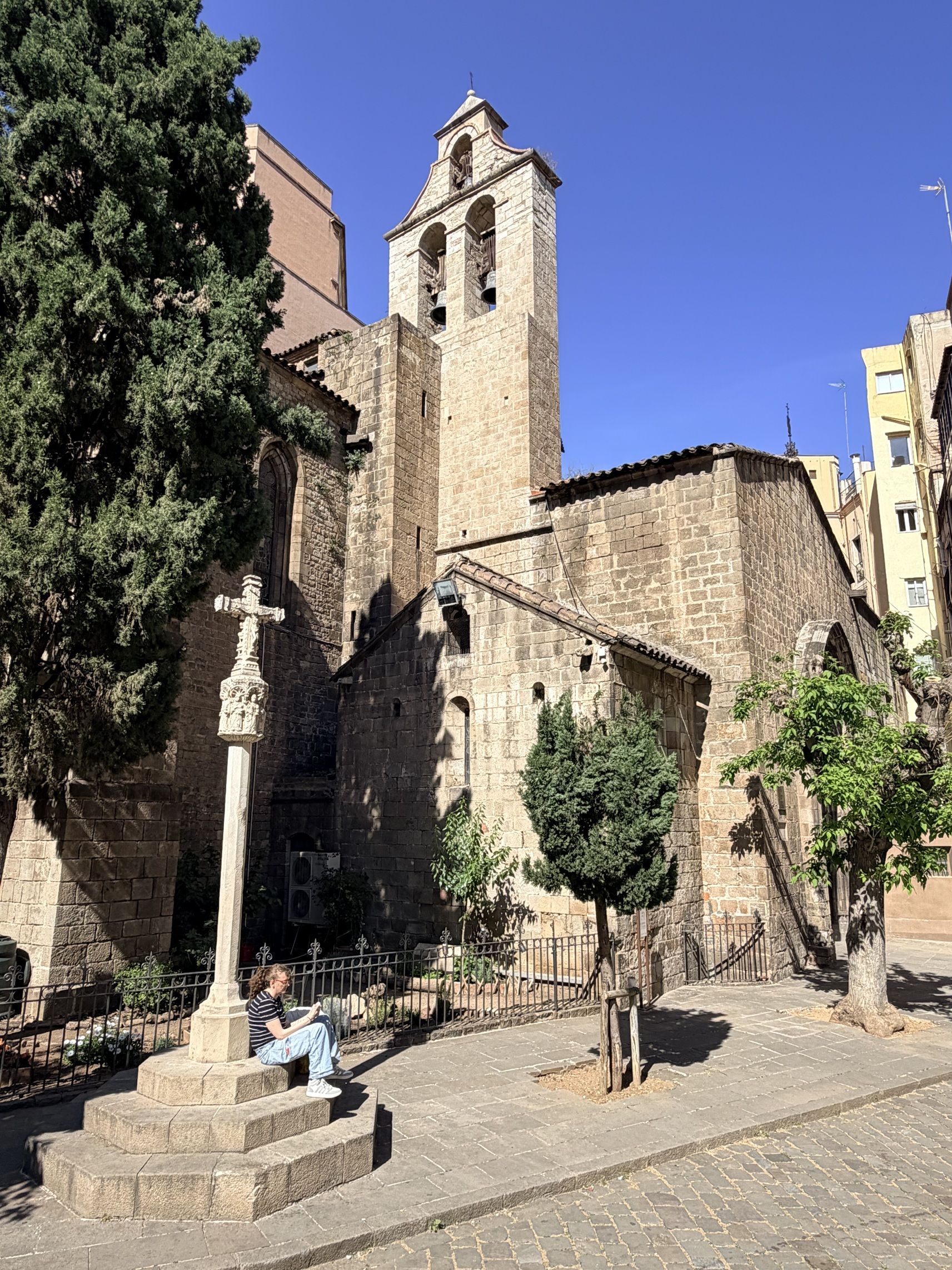
The Church of Santa Anna in Barcelona is a quiet medieval sanctuary hidden just moments from Plaça de Catalunya, its peaceful courtyard creating a striking contrast with the surrounding city. Founded in the late 12th century as part of a monastery belonging to the Order of the Holy Sepulchre, it preserves an unusually complete ensemble of Romanesque and early Gothic architecture that reflects nearly nine centuries of religious life. 

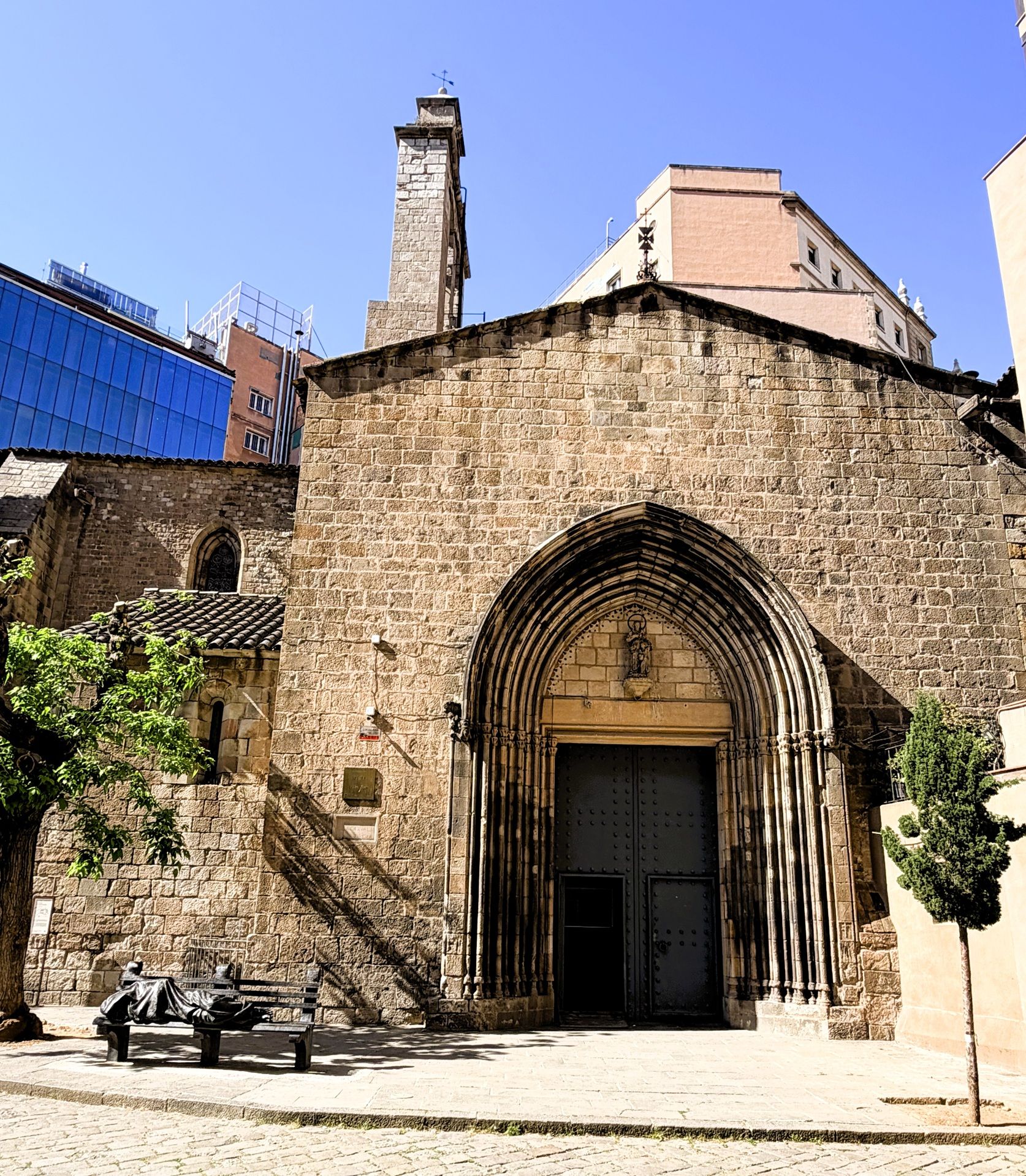
The exterior remains simple and monastic, its rough cut stone façade centred on a Romanesque doorway with plain archivolts and a small early Gothic rose window above. To one side rises the square bell tower, originally Romanesque but heightened during the Gothic period, its paired arched openings characteristic of Catalan monastic design. 

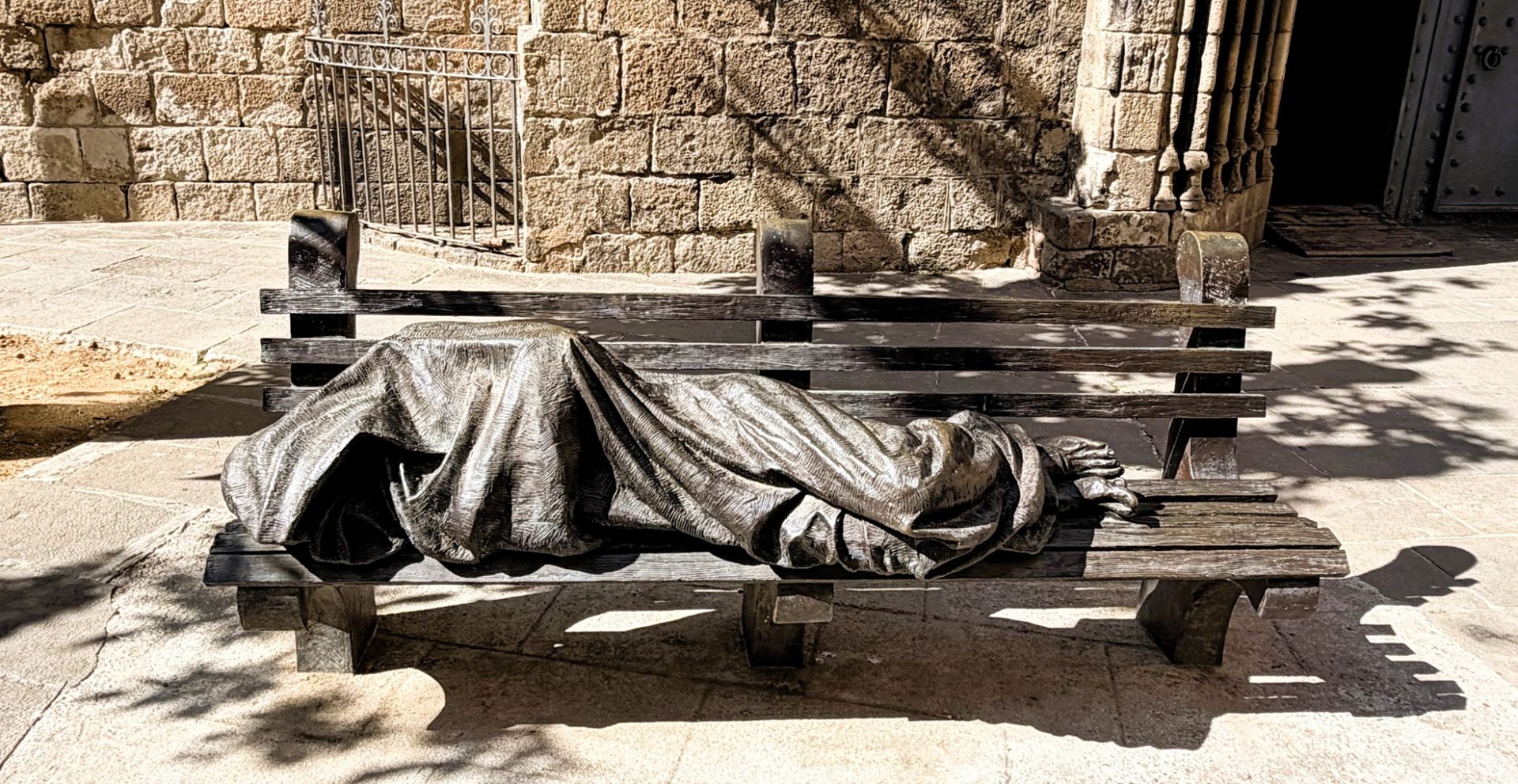
The small courtyard outside the entrance is marked by a striking modern sculpture known as Homeless Jesus, a bronze figure by the Canadian artist Timothy Schmalz installed in 2017.


The work depicts Christ lying on a bench, his body entirely covered by a blanket except for the exposed feet, where the nail wounds of the crucifixion identify him. Its presence at Santa Anna is especially meaningful because the church has long been involved in supporting people experiencing homelessness, and the sculpture serves as a visual reminder of that mission. Set quietly to one side of the courtyard, it forms a poignant contrast with the medieval stonework around it and prepares visitors for the reflective atmosphere found within the church and cloister.


A narrow passage leads into the cloister, one of the most atmospheric in Barcelona, where a small 14th century Gothic arcade encloses a quiet garden and medieval tomb slabs line the walls. From here the church interior reveals its transitional character: a single Romanesque nave covered by a slightly pointed barrel vault, its thick walls and bare stone creating a sense of monastic austerity, leading toward a 13th century Gothic apse with rib vaulting and tall lancet windows that introduce height and light. 


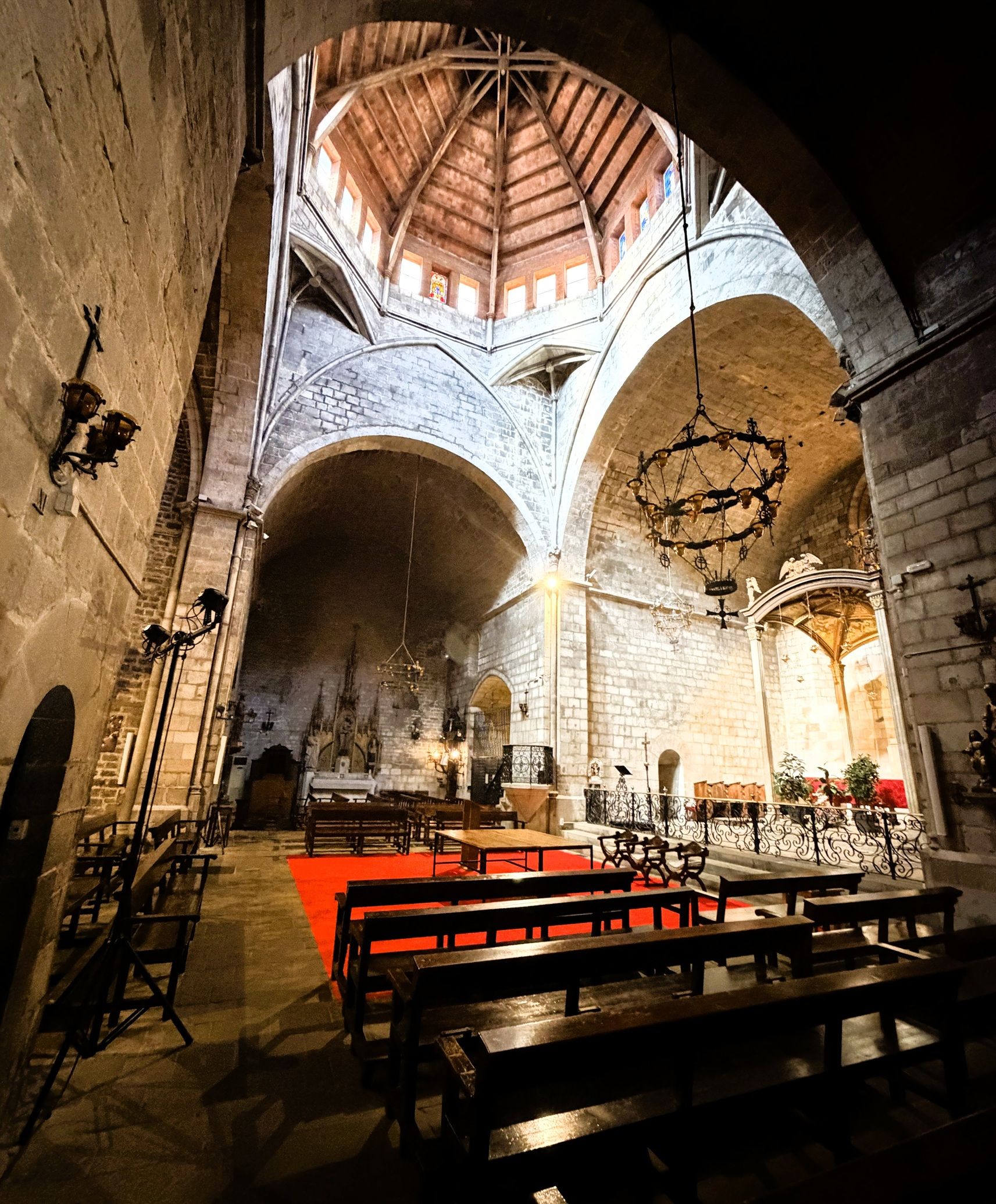
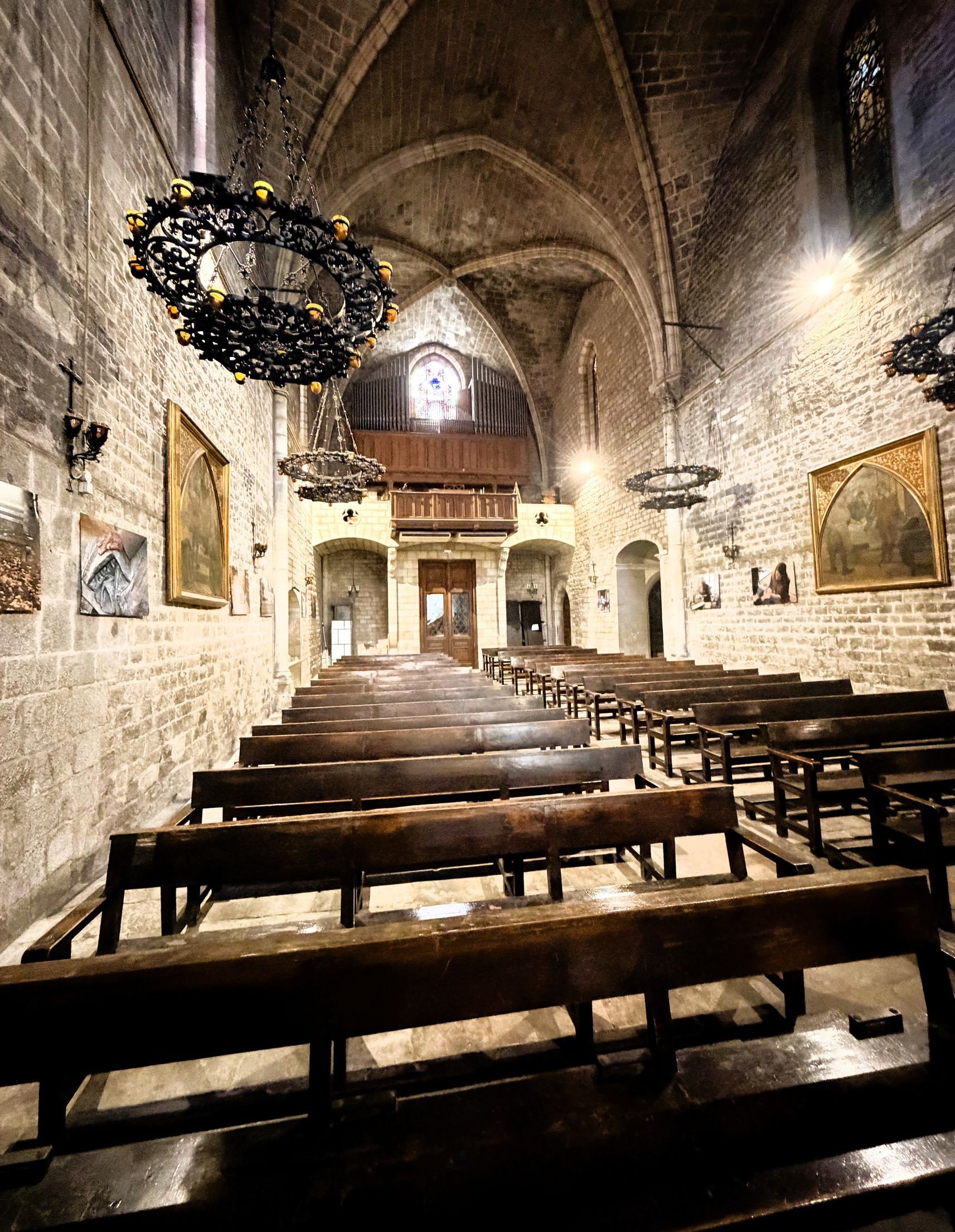
The nave of Santa Anna preserves the character of a late Romanesque monastic church, its single, uninterrupted space covered by a slightly pointed barrel vault that gives the interior a sense of weight and enclosure. The stonework is left largely bare, allowing the texture of the medieval masonry to define the atmosphere, and the thick walls with their engaged pilasters emphasise the solidity typical of 12th century Catalan construction. Light enters sparingly, creating a subdued interior that reflects the contemplative origins of the community that once worshipped here. Moving eastward, the nave leads to a Gothic apse built in the 13th century, where the architecture shifts from Romanesque mass to Gothic verticality. The apse is rib vaulted and illuminated by tall lancet windows that introduce a softer, more elevated light, marking the space that once housed the monastic choir. A single vaulted space built of heavy ashlar masonry creates an atmosphere of solidity and enclosure. The slightly pointed barrel vault overhead reflects the transitional style of the late 12th century, while the thick walls open into side chapels through simple rounded arches. A red carpet now marks the central axis of the church, leading between rows of wooden pews toward the sanctuary screen, whose wrought ironwork introduces a more decorative note against the plain medieval stone. Above the screen, Baroque devotional sculptures add colour and movement, evidence of the later embellishments that enriched the otherwise monastic interior. The combination of rough medieval masonry, later liturgical furnishings, and the soft light filtering through the nave gives this space its distinctive character, preserving the contemplative atmosphere that has defined Santa Anna for centuries.

Within the Gothic sanctuary framed by the ribs of the vaulting and the narrow windows behind it stands the high altar. Although the altar has undergone changes over the centuries, its placement retains the original medieval hierarchy of space, with the sanctuary raised slightly above the nave and visually distinguished by the more refined Gothic stonework. The result is a harmonious transition from the heavy, earthbound nave to the lighter, more aspirational architecture of the apse, a sequence that encapsulates the church’s evolution from its Romanesque foundation to its early Gothic development.

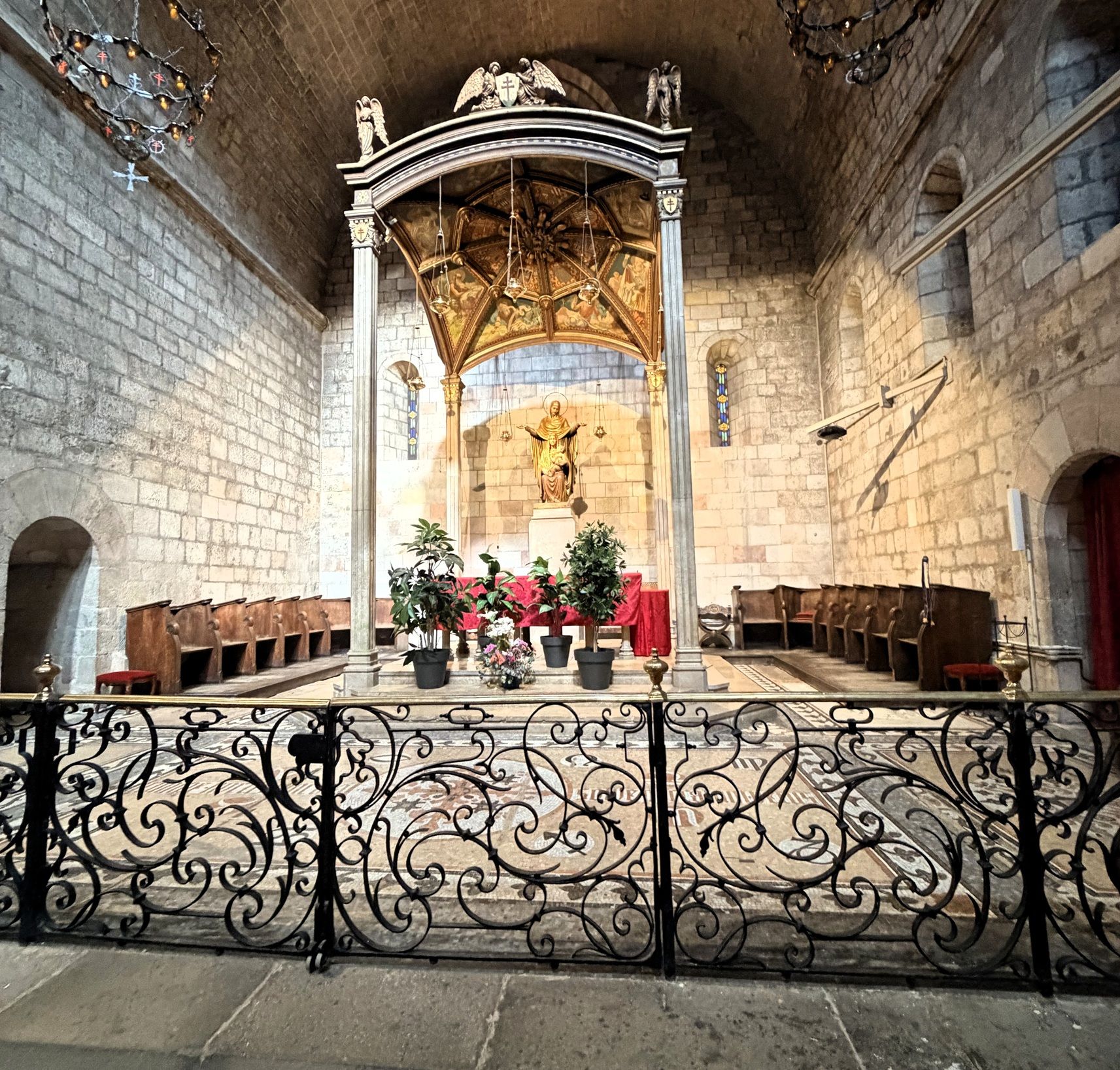
The main altar is a richly decorated Baroque altarpiece set beneath an ornate canopy, placed in the part of the church where the medieval monastic choir once stood. The stonework around it — the rib vaulted ceiling, the thick ashlar blocks, and the slightly pointed arch — all belong to the 13th century Gothic sanctuary that replaced the original Romanesque apse. The Baroque structure in the centre is a later addition, probably from the 17th or early 18th century, when many of Santa Anna’s chapels and liturgical furnishings were updated. The gilded canopy, painted panels, and the statue beneath it are typical of Catalan Baroque church decoration, designed to bring colour, drama, and devotional focus to the otherwise austere medieval interior.


The wrought iron screen in front of the altar is also characteristic of Catalan churches, separating the sanctuary from the nave while still allowing a clear view of the liturgical space. The plants and chairs behind it indicate that this area is still used for worship and small services.

The liturgical axis of the church is dominated by the church’s principal crucifix, a carved wooden figure of Christ suspended above the sanctuary where the medieval apse opens from the nave. Although the present sculpture dates from the late nineteenth or early twentieth century, it follows the restrained Catalan tradition: a slender body, a bowed head, and an emphasis on quiet dignity rather than dramatic suffering. Its placement above the high altar continues a medieval convention in which the crucifix served as the visual and theological centre of the church, drawing the eye along the nave and anchoring the Eucharistic rites performed below.

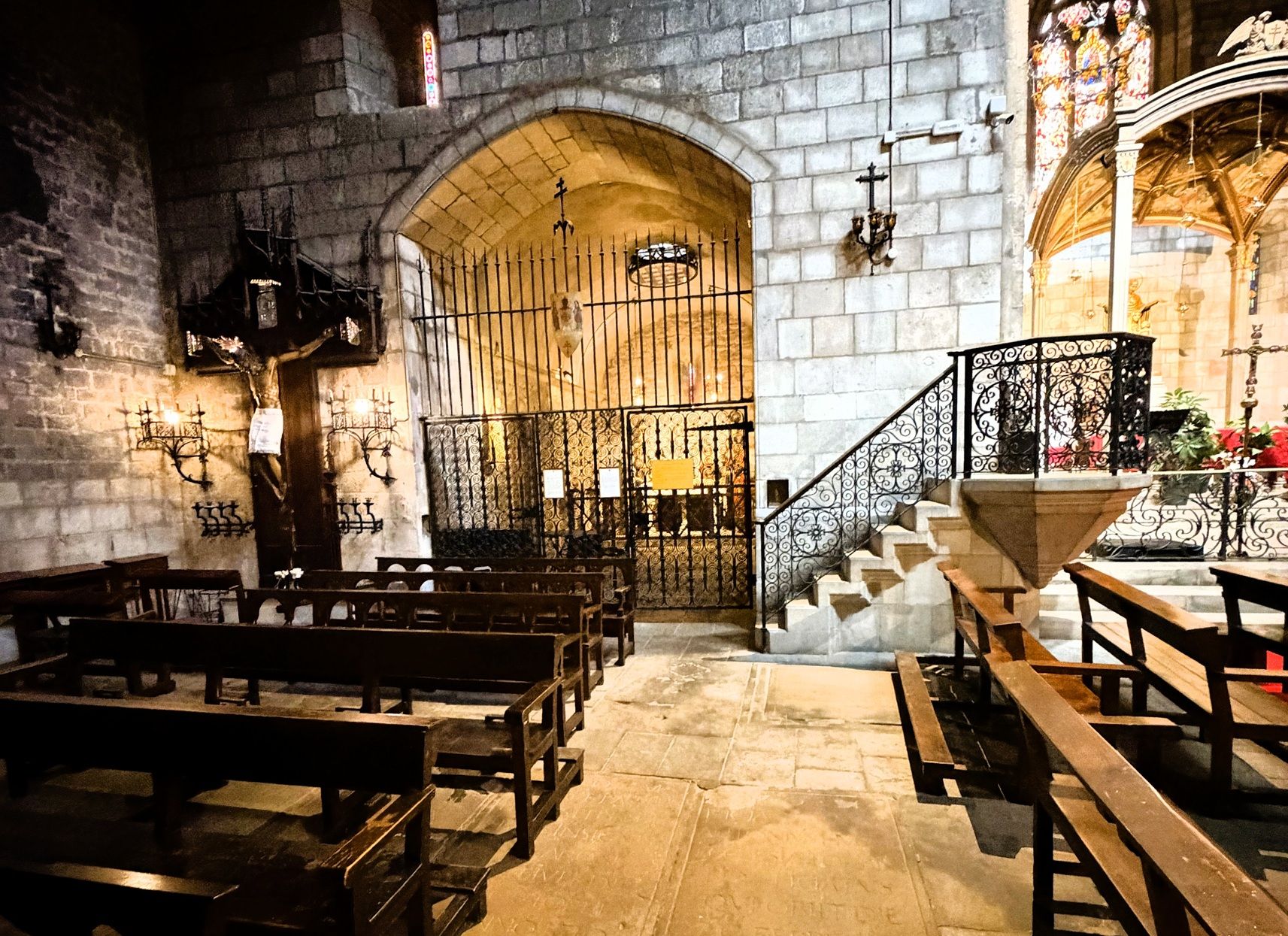
Opposite this, along the south side of the nave, stands the church’s wrought iron pulpit, raised on a small stone platform. Added during the Baroque period, when preaching assumed a more prominent role in parish life, the pulpit’s ironwork displays the characteristic Catalan taste for delicate volutes and open tracery that contrast with the heavy Romanesque Gothic masonry around it. From this elevated position sermons were delivered to the congregation seated in the nave, the acoustics of the vaulted ceiling carrying the preacher’s voice throughout the church. Its survival is notable, as many pulpits were removed during twentieth century reforms; here it remains an important witness to Santa Anna’s evolving liturgical history.

Over the centuries a series of chapels were added along the nave and around the apse, some retaining medieval stonework while others were transformed in the 17th and 18th centuries with gilded Baroque altarpieces, polychrome sculptures, and devotional paintings. The chapels of Santa Anna form a sequence of intimate devotional spaces that reflect the church’s long architectural and spiritual evolution. 

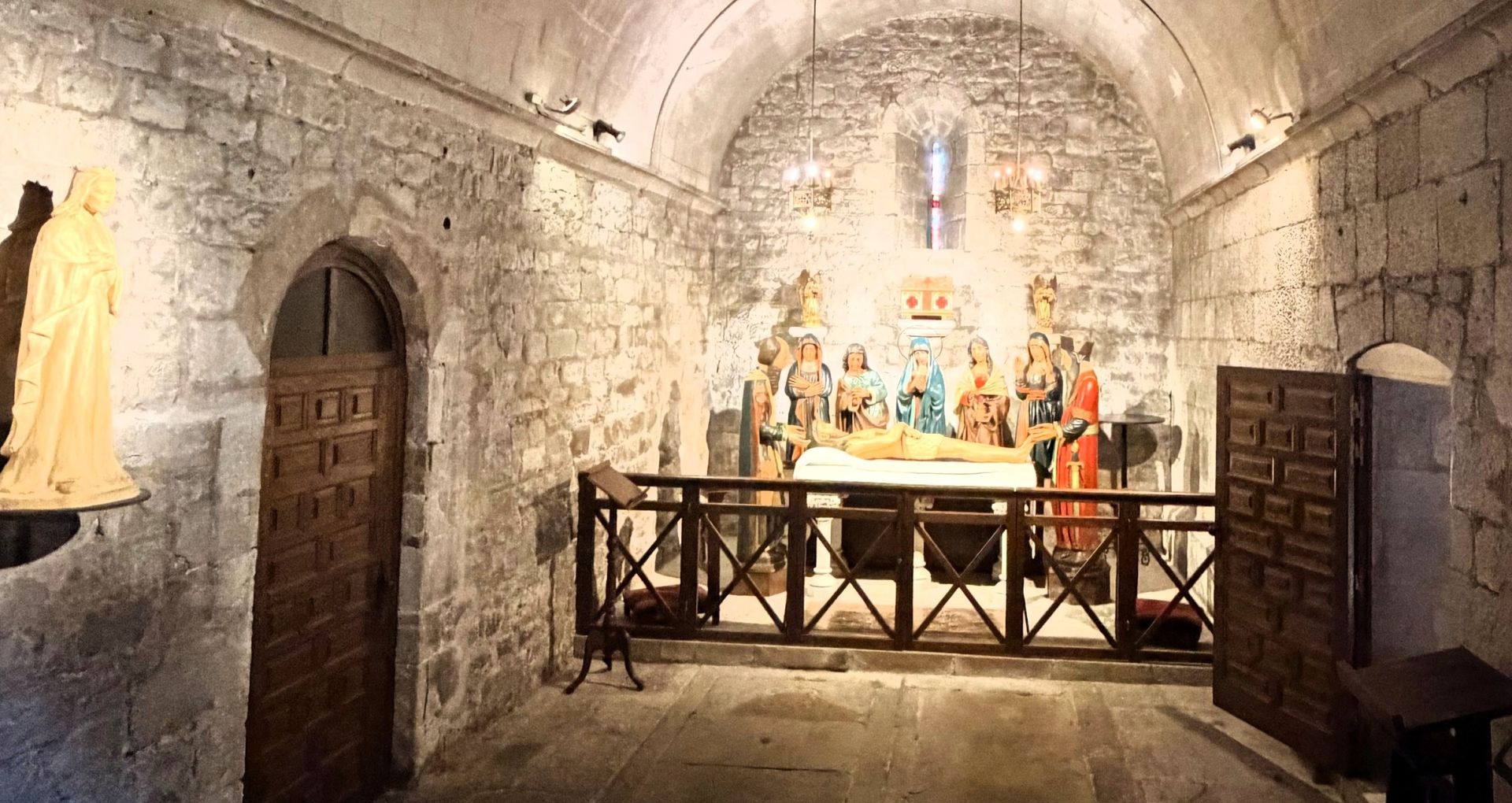
The Chapel of the Holy Sepulchre is one of the most historically significant spaces within Santa Anna, for it preserves the deepest link to the church’s origins under the Order of the Holy Sepulchre in the twelfth century. Tucked into a small, dimly lit chamber off the nave, the chapel retains the atmosphere of a medieval crypt: rough hewn stone walls, a low vaulted ceiling, and an intimate scale that contrasts sharply with the broader Gothic spaces of the church. At its centre stands the sculptural group of the Entombment of Christ, depicting the body of Jesus laid out horizontally, surrounded by figures of the Virgin, the holy women, and Joseph of Arimathea. This tableau — unique within Santa Anna — is the defining feature of the chapel and directly evokes the burial chamber of Jerusalem that the order was founded to honour and protect. The subdued lighting enhances the chapel’s contemplative character, casting soft shadows across the stone and drawing attention to the expressive carving of the figures. The space functions less as a decorative side chapel and more as a devotional memorial to the Passion, inviting the visitor into a moment of quiet reflection on Christ’s death and burial. Its survival is particularly important: it is the clearest architectural and devotional reminder of Santa Anna’s original identity as a house of the Holy Sepulchre, and it remains one of the most atmospheric and historically resonant corners of the church.


The Chapel of the Blessed Sacrament is one of the most atmospheric and spiritually charged spaces in Santa Anna. Set within a Gothic bay of thick medieval stonework, it combines the austerity of its original architecture with the soft colour of the stained glass window that illuminates the altar from behind. The wrought iron grille, with its delicate tracery and vertical emphasis, frames the chapel like a sacred threshold, inviting contemplation while preserving the reverence appropriate to the Eucharistic reserve. The subdued illumination heightens the chapel’s intimate scale, distinguishing it from the broader, more public expanse of the nave. Together, the filtered light, the stillness of the space, and the contemplative crucifix beside the grille create one of the most evocative corners of Santa Anna — a place where the church’s medieval spirit of quiet prayer continues to shape its devotional life.

Beside the Chapel of the Blessed Sacrament hangs a smaller, more intimate crucifix that serves as a devotional focus for those who pause to pray near the reserved Eucharist. Carved in the restrained Catalan Baroque manner, Christ is shown with elongated proportions and a gently inclined head, his expression marked by quiet sorrow rather than dramatic anguish. The dark wood of the cross stands out against the pale medieval ashlar, catching the warm glow of the candles that traditionally surround the sacramental chapel. Positioned just outside the tall wrought iron grille, the crucifix forms a visual and theological bridge between the Passion of Christ and the Eucharistic presence kept within the tabernacle, reinforcing the unity between sacrifice and sacrament at the heart of Catholic devotion.


The Chapel of the Virgin occupies the first bay on the north side of the nave and forms the opening point of Santa Anna’s Marian devotional sequence. Framed by a pointed Gothic arch belonging to the church’s medieval fabric, the chapel is enriched by later Baroque furnishings that reflect the enduring strength of Marian piety in Catalonia. At its centre stands the altarpiece of the Assumption of the Virgin, depicting Mary rising heavenward amid angels — a theme that emphasises her purity, her glorification, and her role as intercessor for the faithful. The painting is set within a carved and gilded frame whose restrained ornament harmonises with the chapel’s modest scale, creating a balance between medieval austerity and early modern devotion.

A small statue of a Franciscan saint stands to one side of the altar, a reminder of the Franciscan presence that shaped much of Santa Anna’s spiritual life. The warm ochre tones of the walls, the soft light filtering from the aisle window, and the gentle modelling of the altarpiece combine to give the chapel an atmosphere of quiet intimacy. As the first chapel encountered on the north aisle, it introduces the visitor to the church’s Marian focus and forms a symbolic counterpart to the Chapel of Saint Joseph opposite, reflecting the complementary roles of Mary and Joseph within the devotional life of the church. Today the Chapel of the Virgin remains one of the most serene corners of Santa Anna, inviting reflection on Mary’s place within the spiritual imagination of the community.


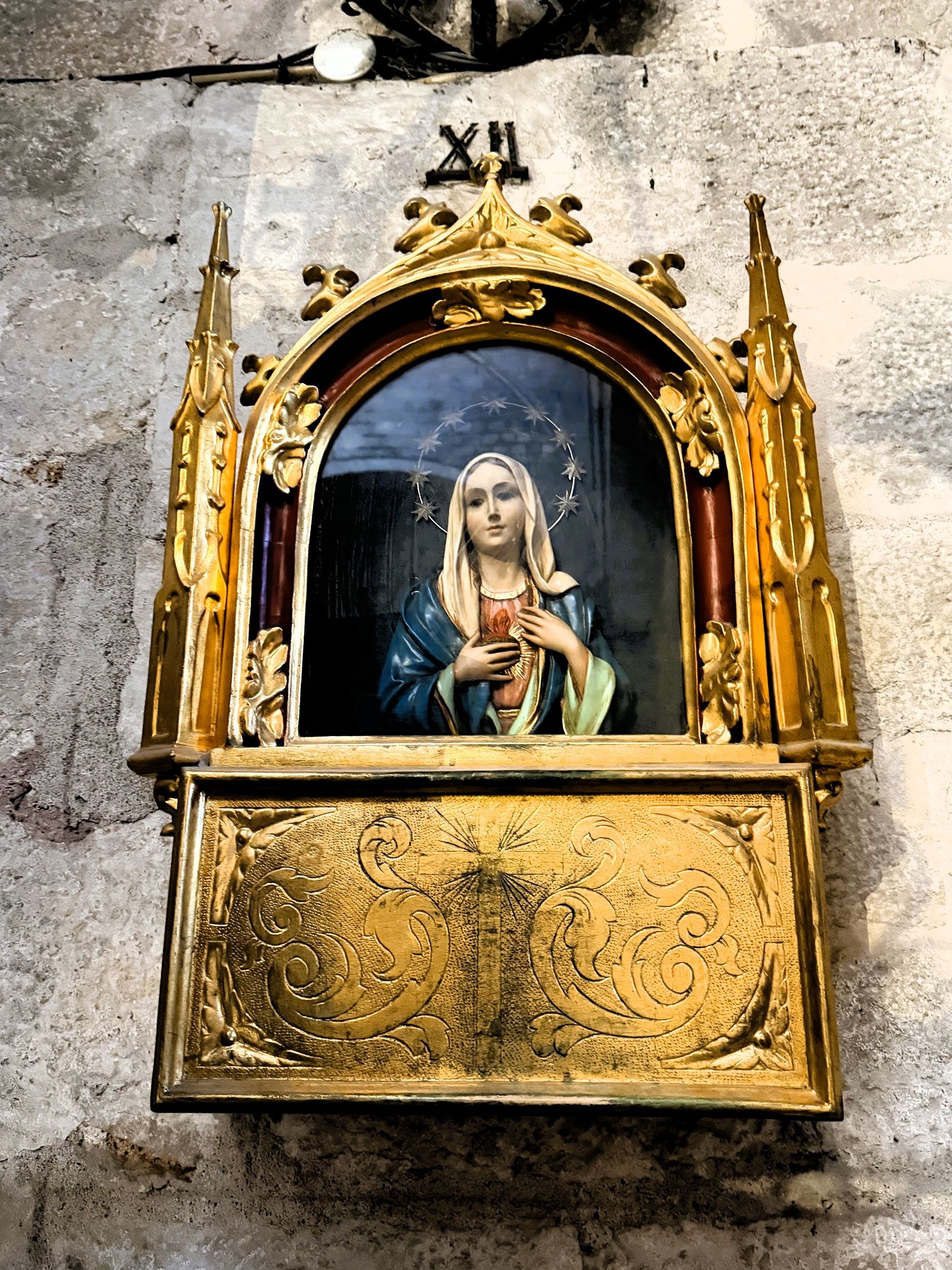
Mounted on the stone wall of the north aisle, the image of the Immaculate Heart of Mary is one of the most striking devotional artworks in Santa Anna. The painting depicts Mary with a halo of twelve stars, her heart visible on her breast and surrounded by rays of light — an iconography that became widespread in Spain from the seventeenth century onward, emphasising her purity, compassion, and spiritual union with the suffering of Christ. The serene expression, soft modelling, and luminous colours draw the viewer into a moment of quiet contemplation, making the image a focal point for personal prayer.

The painting is set within an elaborate gilded frame, a fine example of Catalan Baroque woodcarving. Its scrolling foliage, delicate finials, and pointed upper crest echo the Gothic vocabulary of the church while introducing the richer ornament of the early modern period. The contrast between the warm gold of the frame and the rough medieval stone behind it heightens the devotional presence of the image, allowing it to stand out even in the subdued light of the aisle. Positioned near several Marian chapels, the Immaculate Heart forms part of Santa Anna’s broader tradition of Marian devotion, offering a visual meditation on Mary’s role as intercessor and mother of the faithful.


The Chapel of Saint Joseph occupies the first bay on the right side of the nave and is one of the most characteristically Baroque spaces within Santa Anna. Set beneath a pointed Gothic arch, the chapel retains its medieval architectural frame, yet its devotional focus reflects the great rise of Josephine piety in the seventeenth and eighteenth centuries. At its centre stands the polychrome statue of Saint Joseph holding the Child Jesus, a tender and dignified image that became the standard iconography of Catalonia during the Counter Reformation. The figures are carved with soft, rounded modelling and painted in warm earth tones, their gentle expressions emphasising Joseph’s role as protector of the Holy Family and patron of workers, families, and the dying.

The statue is housed within a gilded Baroque retable whose pointed arches and tracery echo the church’s Gothic vocabulary while introducing the richer ornament of the early modern period. Flanking figures, delicate canopies, and painted panels complete the ensemble, creating a harmonious dialogue between medieval structure and Baroque devotion. Wooden pews face the altar, and a confessional booth stands along the side wall, reflecting the chapel’s continued use for personal prayer and sacramental life. The soft light filtering from the nave highlights the gilding and the warm tones of the sculpture, giving the chapel an intimate, contemplative atmosphere that contrasts with the more dramatic spaces elsewhere in the church. As the first chapel encountered on the south aisle, it serves as a quiet threshold into the devotional world of Santa Anna.


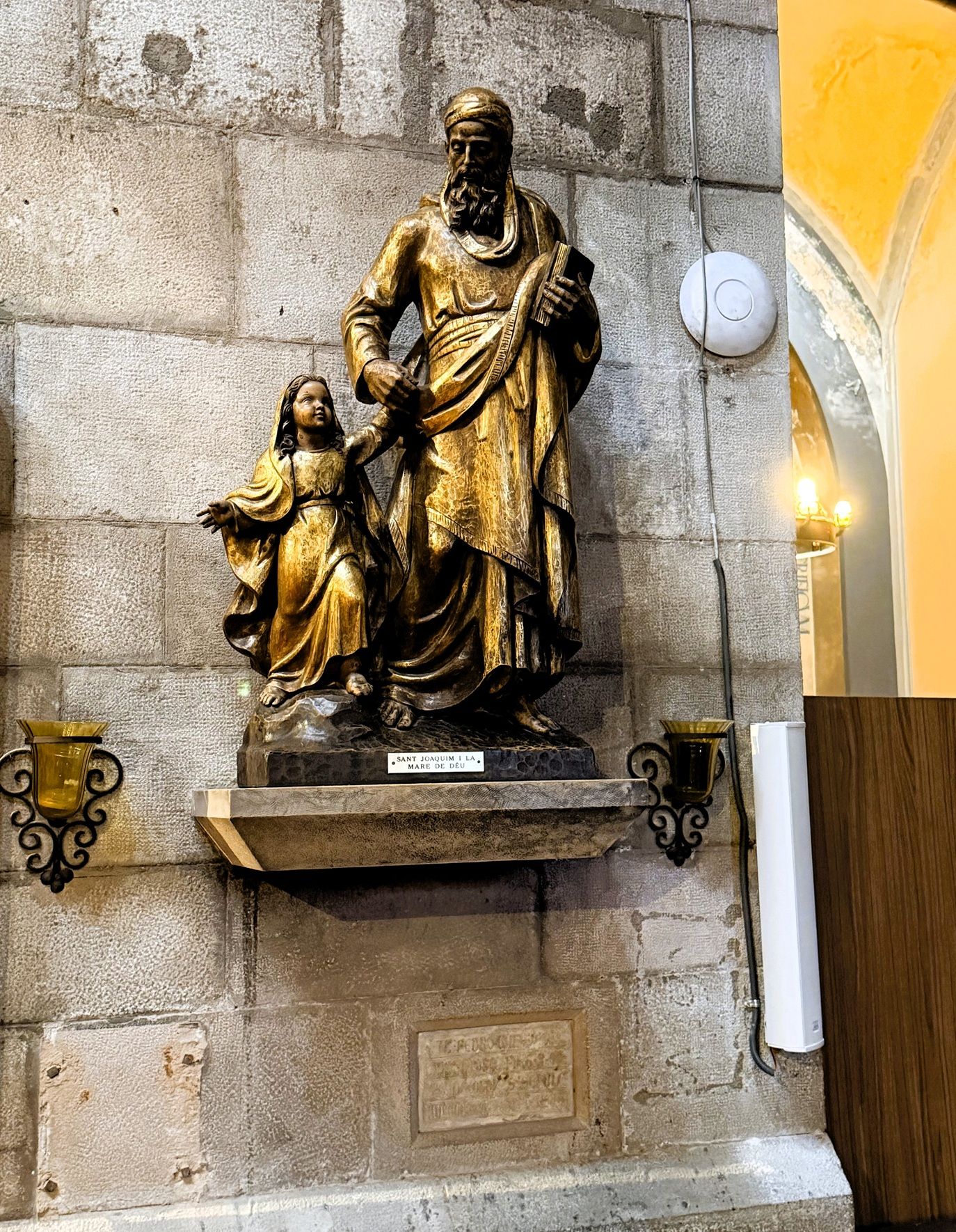
Mounted on the stone wall of the Chapel of Saint Joseph, a gilded sculpture of Saint Joseph with the Child Jesus is one of the chapel’s most expressive devotional works. The figures follow the classic Catalan Baroque iconography that became widespread in the seventeenth and eighteenth centuries: Joseph is shown as a gentle, bearded guardian, his posture protective yet serene, while the Christ Child stands beside him, symbolising both innocence and divine wisdom. The soft modelling of the robes, the flowing drapery, and the restrained facial expressions reflect the period’s preference for warmth and intimacy rather than dramatic theatricality.


The statue’s gilded surface catches the ambient light of the chapel, contrasting with the rough medieval ashlar behind it and giving the figures a quiet radiance. The small pedestal bearing the inscription San José y el Niño Jesús confirms the devotional identity of the piece and situates it firmly within the Spanish tradition of Josephine piety, which emphasised Joseph’s role as patron of families, workers, and the dying. Positioned to one side of the main altarpiece, the sculpture complements the central retable while offering a more personal focus for prayer. Its presence enriches the chapel’s layered dialogue between medieval architecture and Baroque devotion, making it one of the most tender and approachable images in Santa Anna.

The Chapel of the Rosary is one of the most significant later additions to Santa Anna, created during the late medieval or early Baroque period and centred on Marian devotion expressed through rosary symbolism. Its gilded carving reflects the craftsmanship of seventeenth century Catalan workshops, marking the moment when the church’s originally austere interior began to acquire richer decorative programmes. Along the nave and apse, several smaller chapels chart this same evolution: some preserve their original Gothic vaulting, while others were transformed with Baroque altarpieces, devotional paintings, and vividly coloured sculpture. Together they form a chronological record of Santa Anna’s artistic life, illustrating how a Romanesque monastic foundation gradually developed into a richly layered parish church.

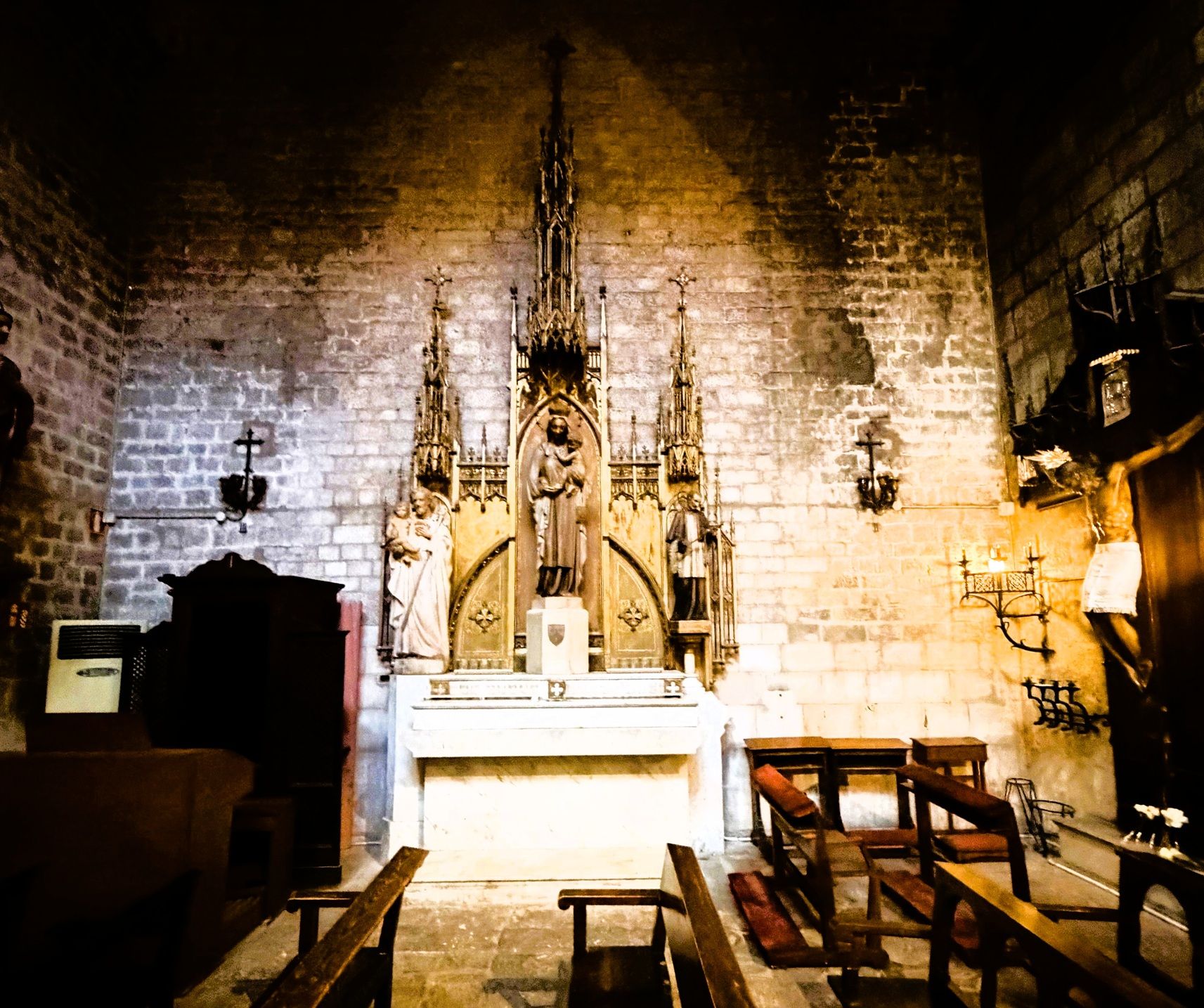
This particular chapel occupies one of the Gothic bays opening off the nave, its pointed arch and ribbed vault preserving the character of the thirteenth century expansion. Within this medieval framework stands a finely carved Baroque retable, centred on a statue of the chapel’s patron saint and flanked by two smaller figures set beneath Gothic inspired canopies. The warm gilding and painted surfaces of the altarpiece contrast with the rough ashlar masonry around it, reflecting the wave of seventeenth  and early eighteenth century refurbishments that reshaped many of Santa Anna’s chapels. Wooden pews face the altar, while a confessional and wall mounted candle holders emphasise the chapel’s later role as an intimate devotional space within the parish. The interplay of medieval architecture and Baroque ornament gives the chapel a layered, historically resonant character, illustrating the long continuity of worship that has shaped Santa Anna over the centuries.

The organ of Santa Anna occupies the traditional position on the west gallery above the main entrance, where its sound can project clearly down the length of the nave. Although the present instrument dates from the early twentieth century, it stands within a tall, elegant case whose design echoes the church’s medieval and Baroque vocabulary. The façade pipes rise in a gentle central tower flanked by lower flats, creating a balanced silhouette that complements the pointed arch of the gallery beneath. The casework, with its restrained carving and warm wood tones, harmonises with the surrounding stone and avoids the heavy ornament typical of earlier Catalan Baroque organs.

The instrument itself is built on electro pneumatic action, with three manuals and pedal and approximately forty to forty five stops, giving it the tonal resources of a small symphonic organ. Its specification favours warm foundations, lyrical flutes, and expressive reeds, making it well suited to both liturgical accompaniment and the Romantic repertoire that shaped organ building in Spain during the early twentieth century. Despite its relatively modest size, the organ fills the church effectively, the vaulted ceiling and stone walls providing a natural resonance that enriches its sound.
The organ plays an active role in the musical life of Santa Anna, supporting Sunday liturgies, weddings, funerals, and occasional concerts. Its presence above the entrance also preserves the traditional medieval symbolism of the organ as the “voice” of the church, greeting the faithful as they enter and accompanying them as they depart. Together with the choir gallery and the surrounding Gothic architecture, the organ forms an integral part of the church’s historic interior.


The cloister developed between the thirteenth and fifteenth centuries, it is enclosed by slender pointed arches resting on simple capitals, their restrained carving reflecting the austerity of the Canons of the Holy Sepulchre who founded the monastery. The small garden at its centre, with its fountain and shaded plantings, softens the surrounding stone and creates an atmosphere of deep calm that contrasts sharply with the busy streets just beyond the walls. Carved details such as medieval heraldic shields and figurative capitals hint at the cloister’s original decorative programme, while the intimate scale of the space recalls its function as a place for reading, prayer, and quiet communal life. Together with the church and the chapter house, the cloister forms one of Barcelona’s most complete surviving monastic ensembles, offering visitors a rare glimpse into the contemplative world that shaped Santa Anna in its earliest centuries.

The Chapter House, opening from the cloister, is the most architecturally refined and historically significant interior space of the Santa Anna complex. Built in the late twelfth or early thirteenth century, this square, rib vaulted chamber exemplifies early Gothic design in Catalonia: slender ribs spring from engaged columns, narrow windows admit soft light across exceptionally well cut stonework, and stone benches along the walls recall its original function as the meeting place of the canons of the Order of the Holy Sepulchre. Its calm proportions and deliberate simplicity preserve the austere spirituality of the medieval community far more clearly than the later Baroque chapels of the nave. A small altar at one end allowed the room to serve both administrative and liturgical purposes, and today its fine acoustics make it a favoured venue for concerts. Together with the church and cloister, the Chapter House forms one of Barcelona’s most complete surviving monastic ensembles, and despite its central location the entire complex retains a serene, contemplative atmosphere that offers visitors a rare and rewarding glimpse into the city’s medieval religious life.


References and Additional Information


https://www.santaanna.org

https://www.nomads-travel-guide.com/places/santa-anna-church-barcelona

https://www.oldbcn.com/en/tourism/monuments/monastery-santa-ana


​​​​​
 

              All  Photographs were taken by and are copyright of Ron Gatepain

  Site Map