





 |
|
|||||||||||||||
 |
||||||||||||||||











 |
|||
 |
Sicily Taormina Church of St Catherine of Alexandria – History, Architecture & Significance 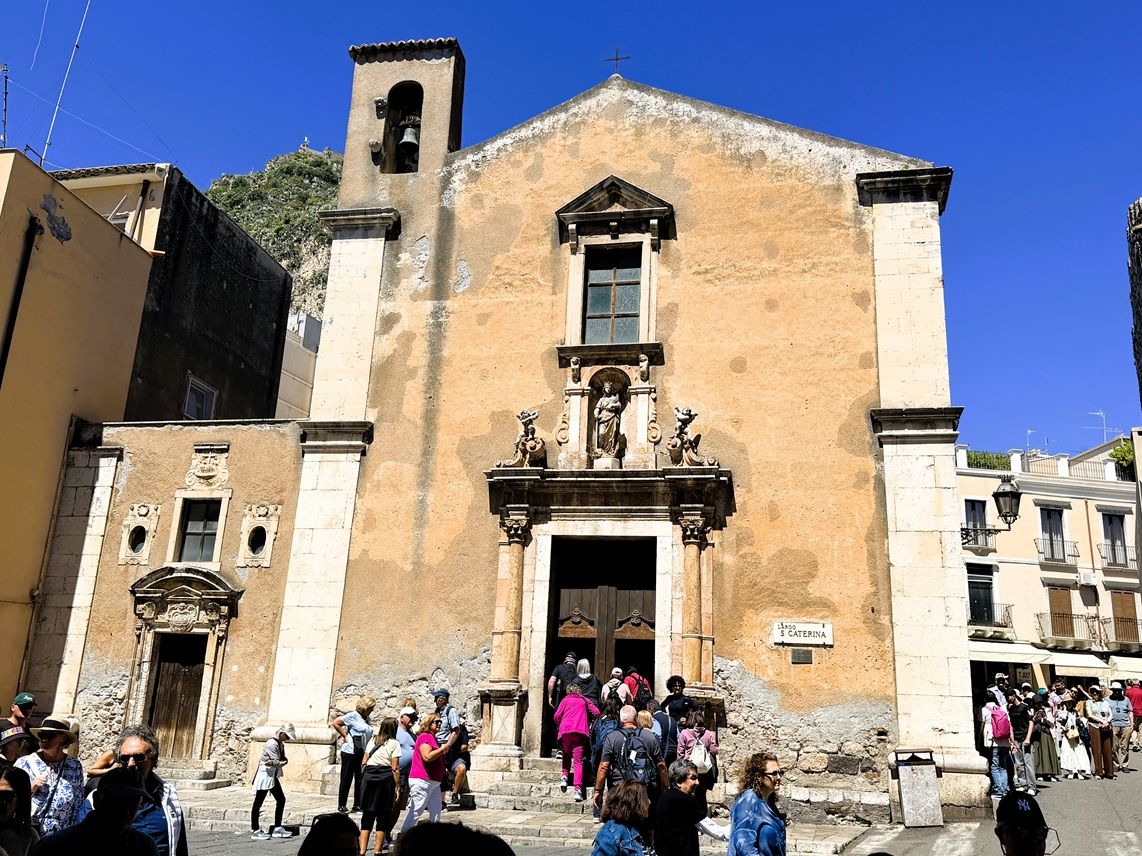
The church was built in the seventeenth century, replacing an earlier medieval chapel, and incorporates Roman masonry in its foundations. Excavations have shown that a small Roman temple or sanctuary once stood there, probably connected with the Odeon, and fragments of ancient walling and architectural blocks remain visible behind the apse. During medieval times, a chapel stood on the site, though little of that survives today. In the mid 17th century, Taormina’s civic and religious authorities commissioned a new church dedicated to St. Catherine of Alexandria (287-305), an early Christian martyr who was widely venerated in Sicily. Construction of the present building was completed around 1660 and incorporated some of the Roman masonry into its foundations and the reusing of some of the stone blocks in the lower walls. This church formed an example of Sicilian Baroque architecture which can be seen today. Sicilian Baroque flourished after the Counter Reformation (1545–1563), and is characterised by balanced proportions, restrained ornamentation, and an emphasis on devotional imagery. This is highlighted by its elegant façade, stuccoed interior, and its decorative works which are centred on St. Catherine. Over the centuries, the interior was enriched with stucco decoration, and paintings depicting St. Catherine, the Virgin Mary, St. Joseph, and other saints important to local worship Constructed in pale local stone and arranged as a single rectangular elevation, the church’s façade provides an example of Sicilian Baroque design. The main doorway is framed by paired pilasters and a broken curved pediment, giving the entrance a sense of dignity despite the limited space. Above the door, within the niche formed by the pediment, is a small statue of St. Catherine holding the martyr’s wheel, identifying the church’s dedication. 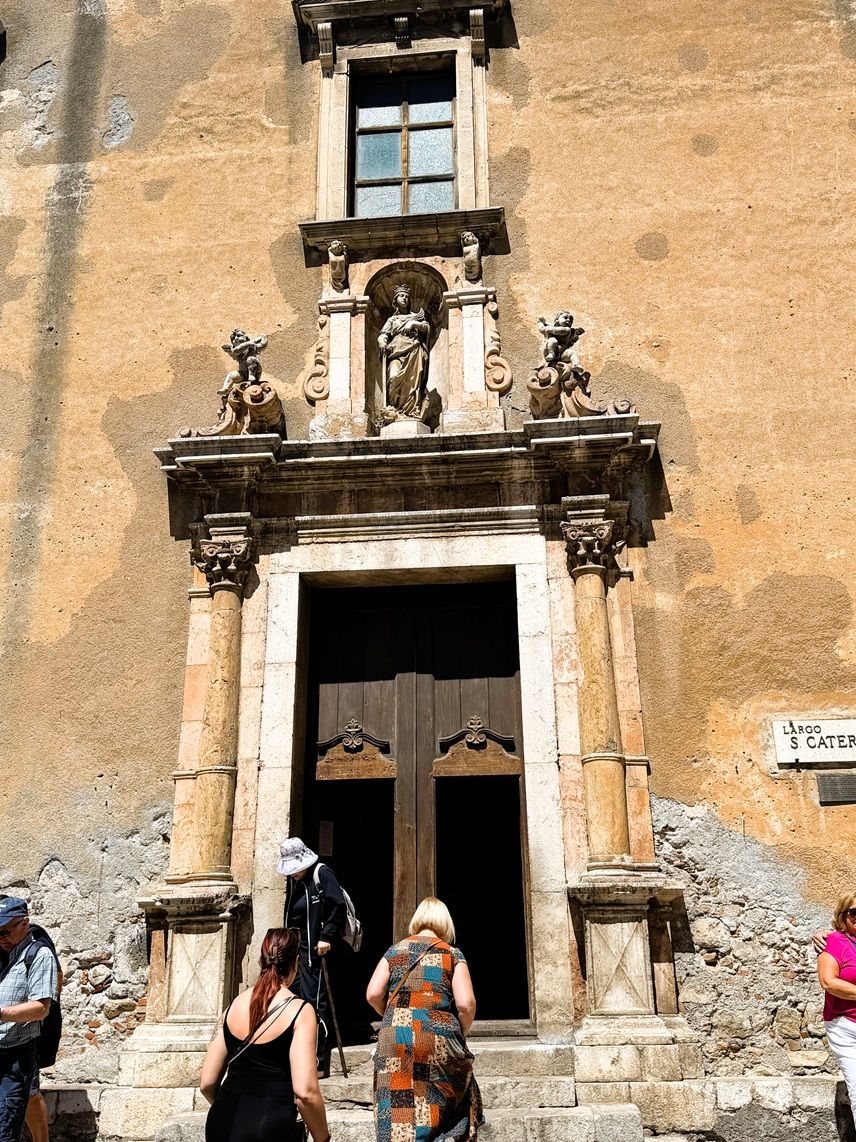 To the side is a simple square bell tower with a single arched opening for the bell. The overall effect is balanced and elegant, typical of smaller Sicilian Baroque churches where ornamentation is present but never excessive. Inside the church, it consists of a single nave with a short presbytery and a small apse. 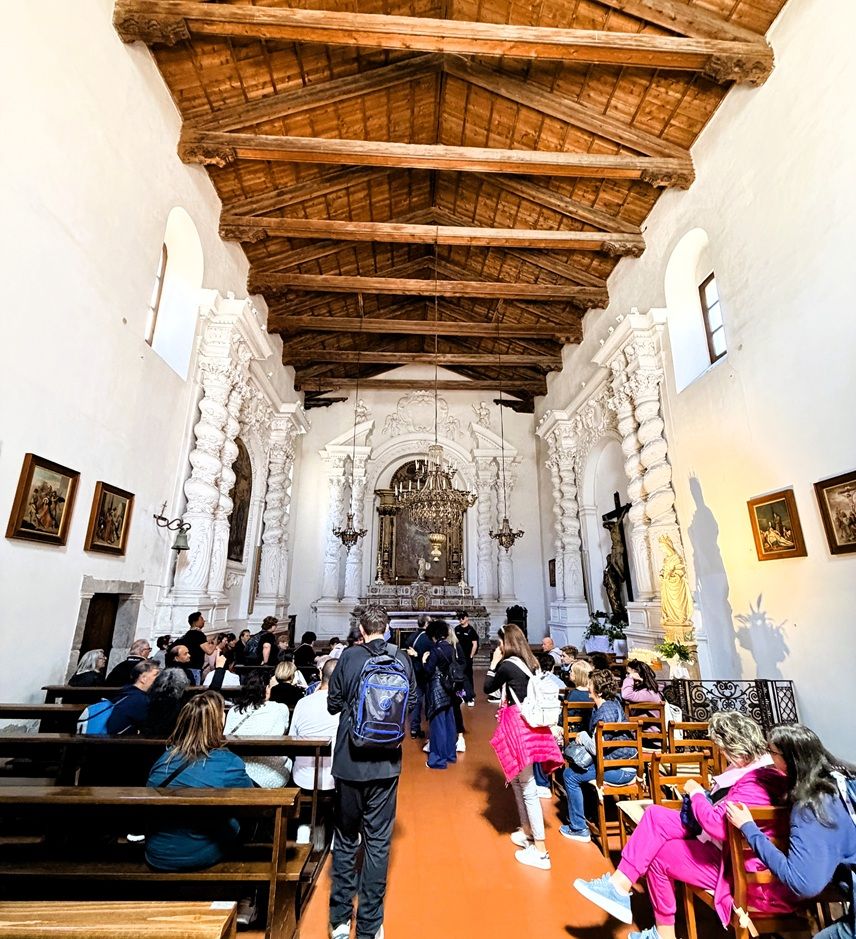 The interior is finished in light pastel colours that enhance the brightness of the space, and stucco pilasters divide the walls into bays containing small altars and devotional paintings. The ceiling is timber and decorated with Baroque stucco frames and floral motifs. The main altar is the focal point of the interior, framed by Corinthian columns, the lower part being made of polychrome marble with the upper part made of wood, inlaid and painted in the traditions of the 17th century. 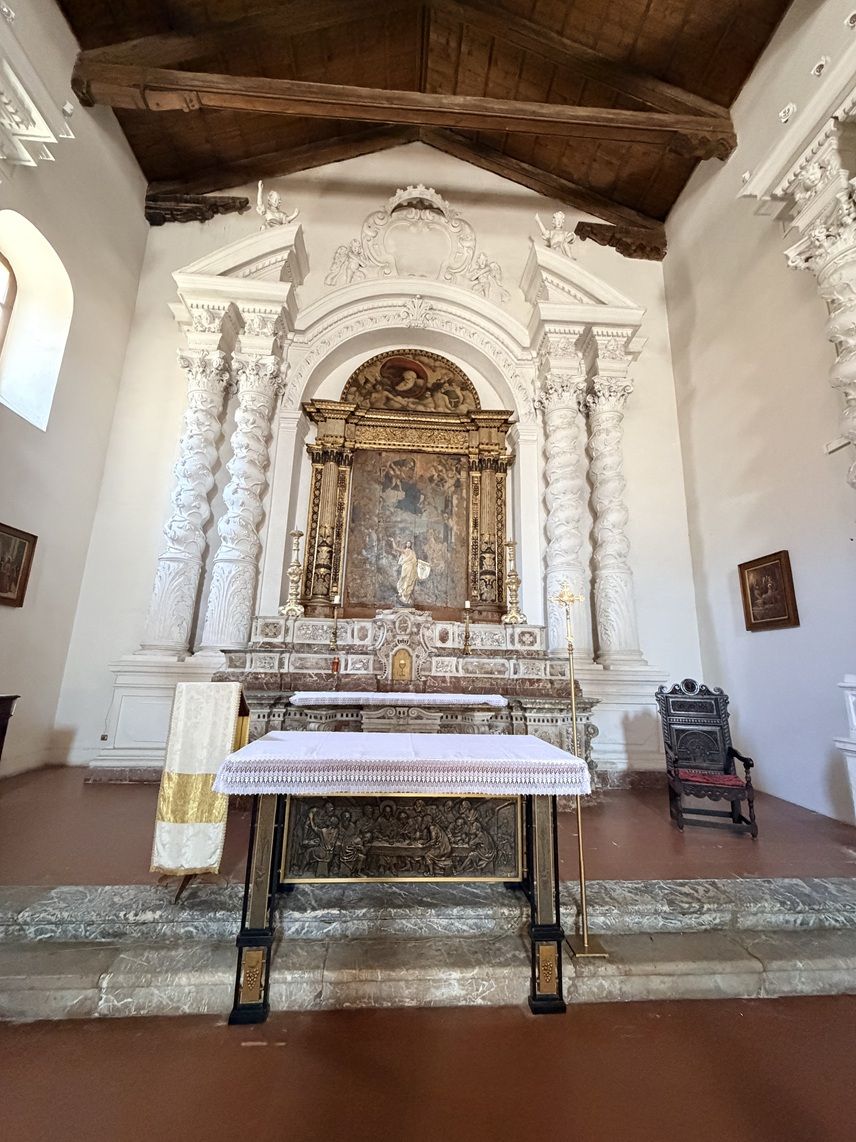 To the side is the altar, is the wooden crucifix with a statue positioned below. 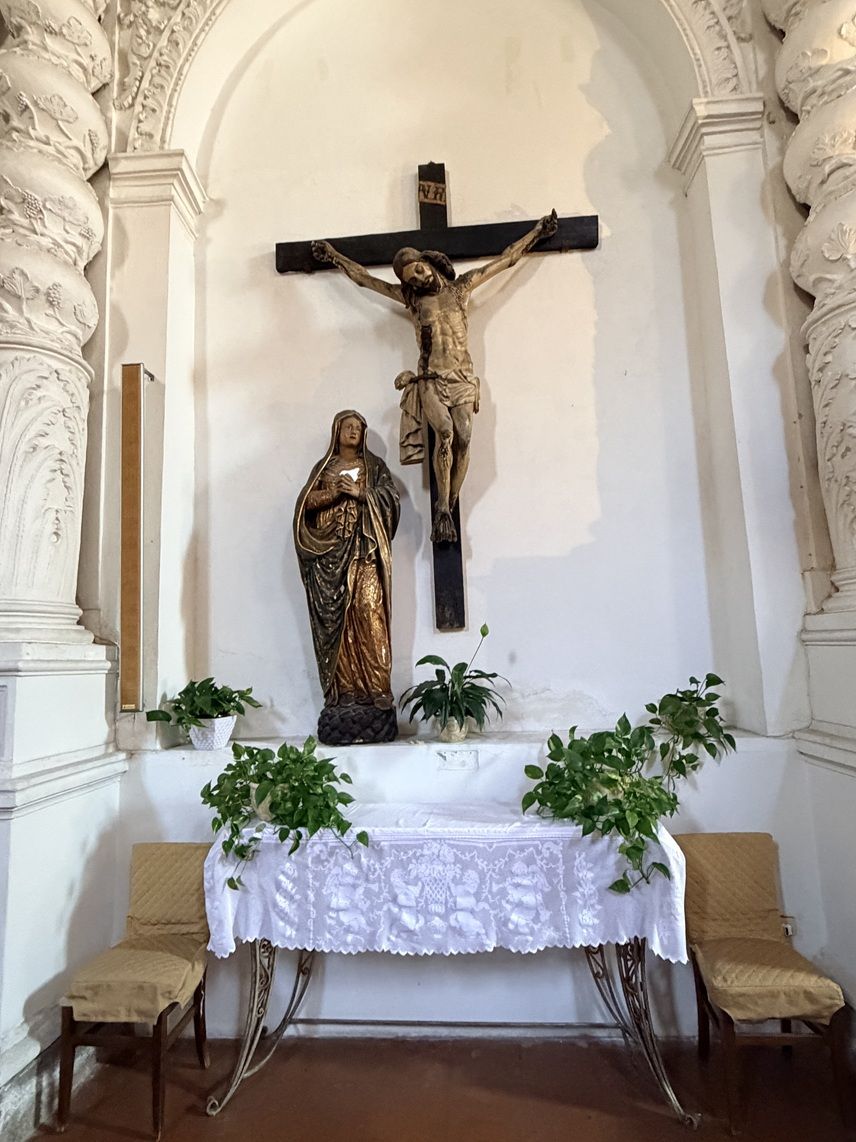 In the central niche stands a polychrome statue of St. Catherine, shown with her traditional attributes of the wheel and palm branch. 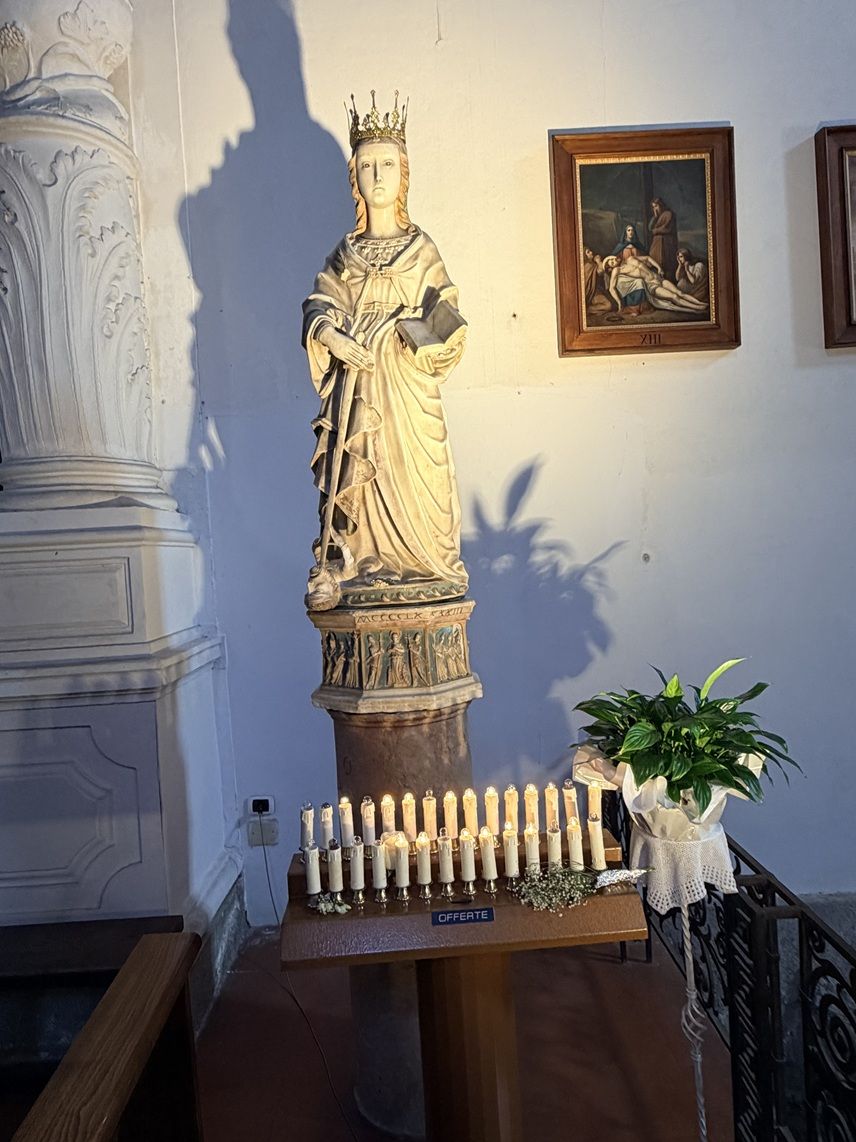 The side walls are decorated with two large paintings by contemporary artists. 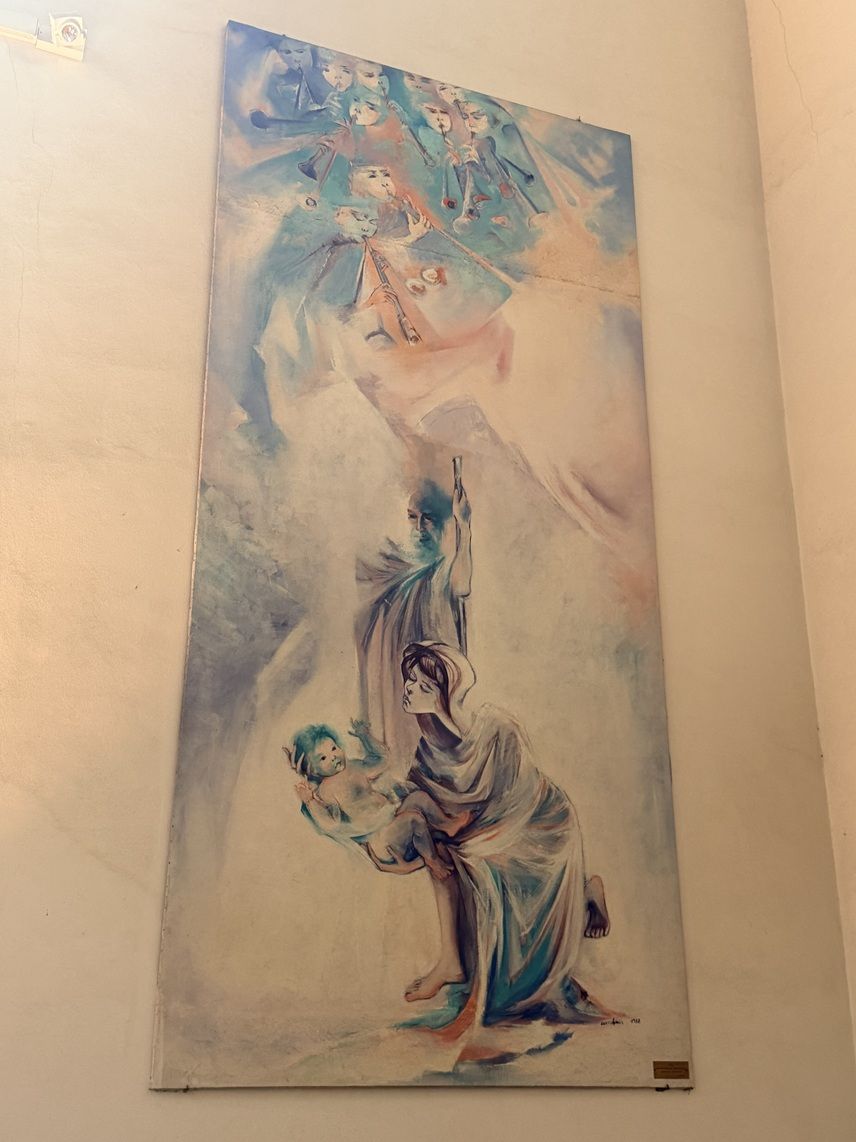 Also to be seen are 12 small paintings depicting the Passion of Christ. 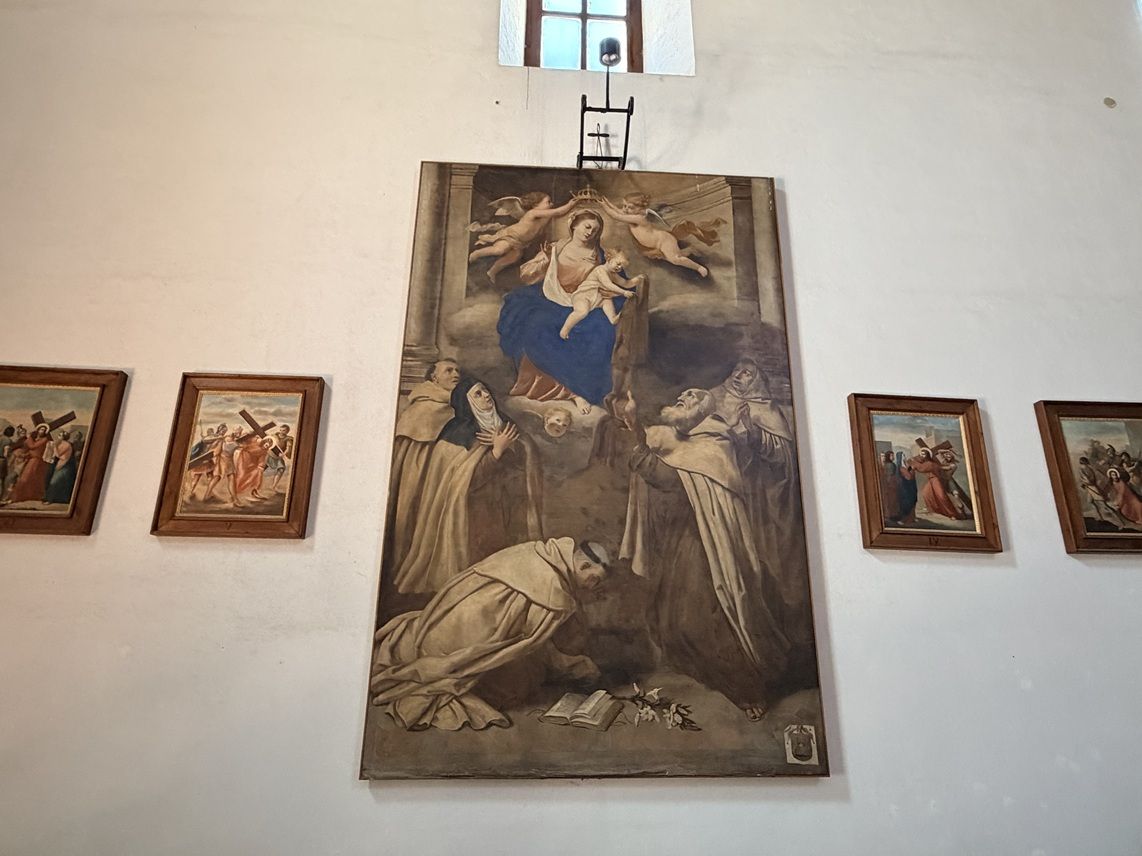 Within the Church is a short flight of steps that descends from the interior down to the archaeological area. These steps lead directly to the Roman remains that lie beneath and beside the church. This lower level contains the sections of ancient masonry, reused Roman blocks, and part of the structural platform that once supported a small Roman temple or sanctuary connected with the nearby Odeon. 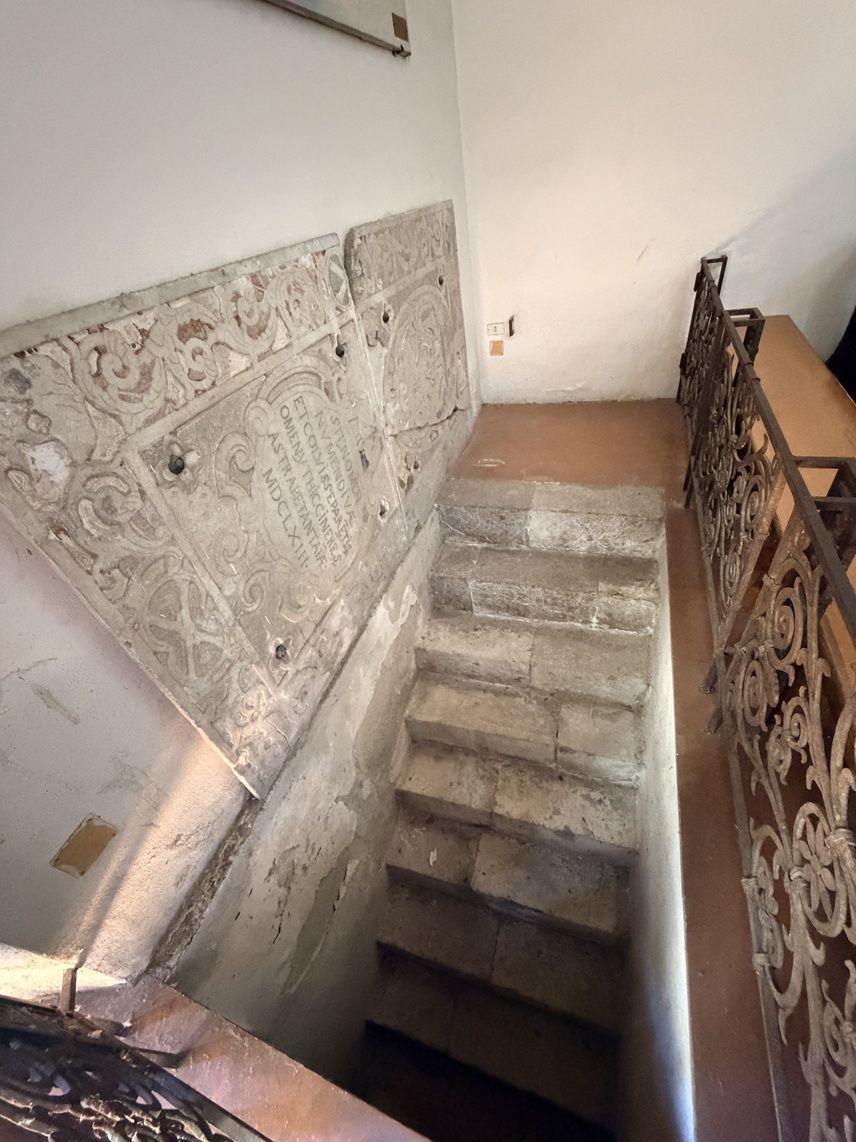 After the Second World War, the church stood in disrepair for more than 40 years, in the seventies, its restoration began and on November 25, 1977, the first mass was held here. The Church of St. Catherine of Alexandria offers a compact but rewarding insight into Taormina’s architectural and religious history. Its Baroque façade, stuccoed interior, devotional artworks, and Roman foundations spans nearly two thousand years. Despite its modest size, it remains one of the most informative and atmospheric churches in Taormina, combining archaeological interest with the quiet charm of Sicilian Baroque design. References and Additional Information http://lpsphoto.top/en/sicily/taormina-chiesa-di-santa-caterina-d-alessandria https://www.traveltaormina.com/en/churches/church-saint-catherine-taormina.html https://www.taorminaitalia.it/en/church-of-saint-catherine-of-alexandria-in-taormina/
 |
 |
|
 |
|||


All Photographs were taken by and are copyright of Ron Gatepain


| Site Map |