





 |
|
|||||||||||||||
 |
||||||||||||||||











 |
|||
 |
Villefranche‑sur‑Mer Citadel – History, Architecture & Significance 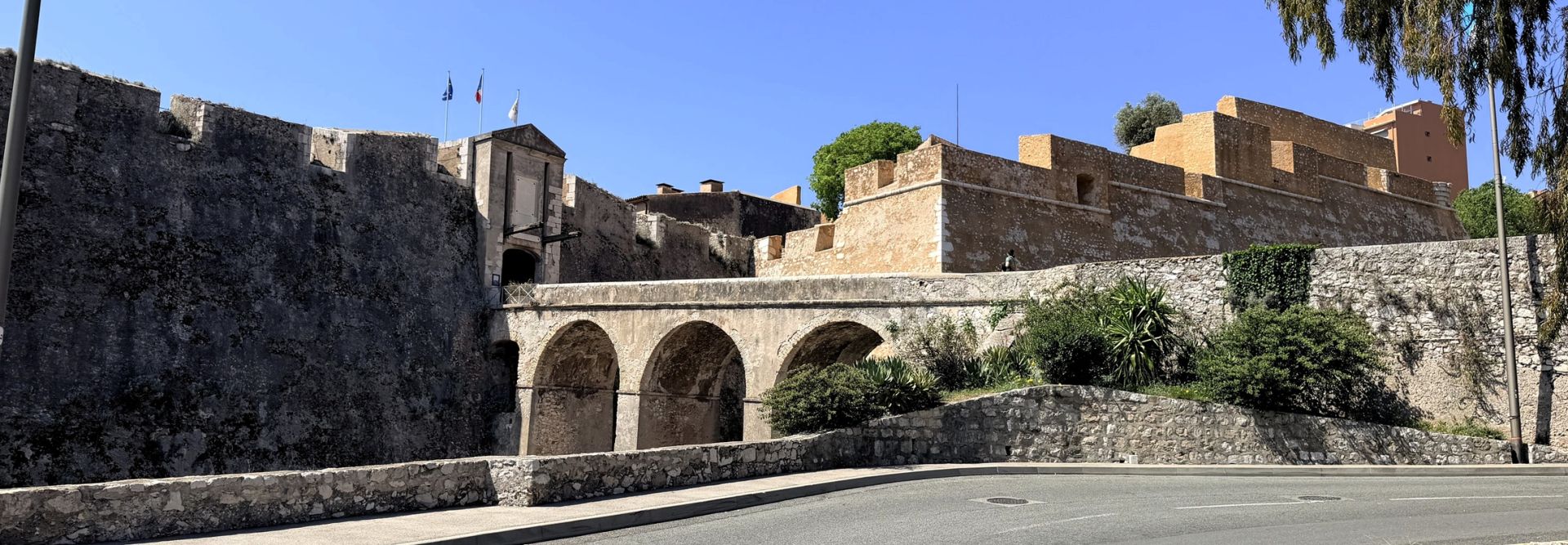
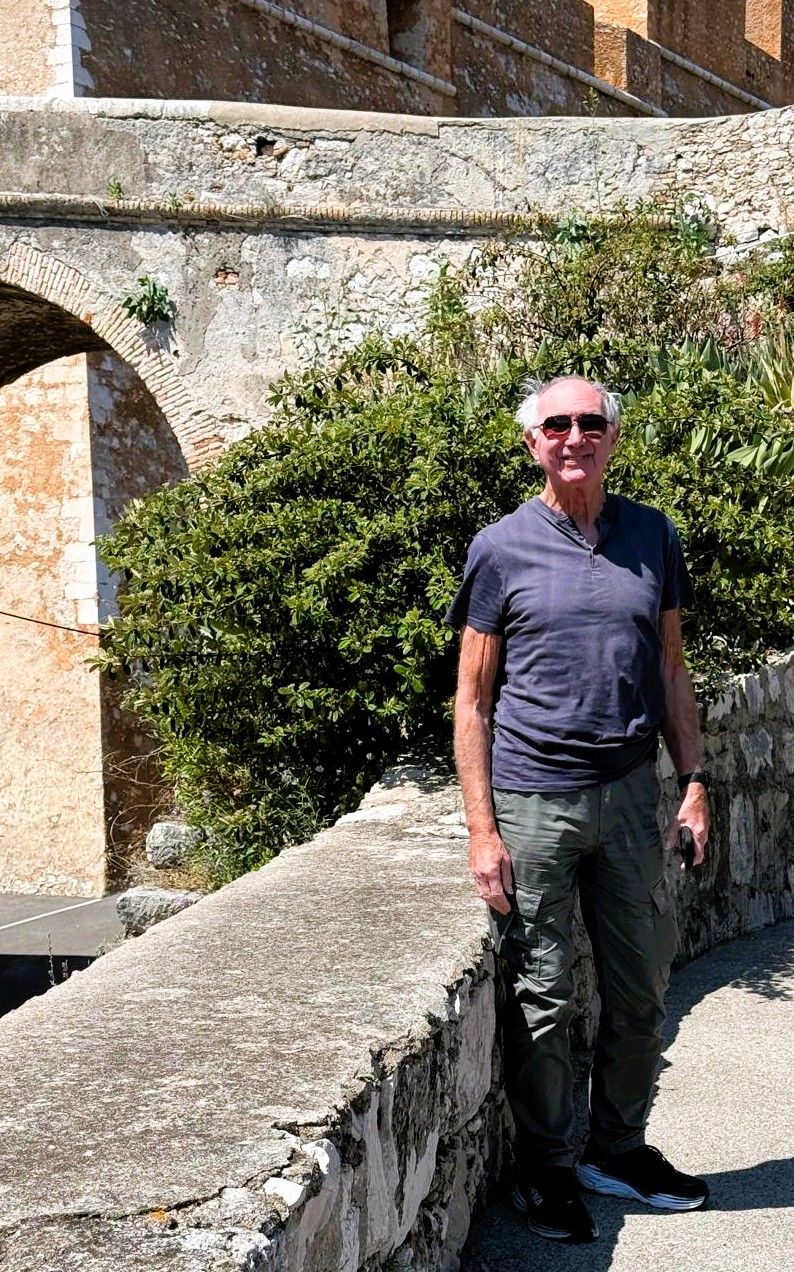
The Citadel of Villefranche‑sur‑Mer is also known by its historic name Citadelle Saint‑Elme. It is a 16th‑century coastal fortress overlooking one of the deepest natural harbours on the French Riviera. It is one of the earliest examples of bastioned fortification in Europe and today serves as Villefranche’s cultural centre. The fortified citadel was built between 1554 and 1567 to protect the strategic bay of Villefranche, then part of the Duchy of Savoy. Its construction followed the devastating 1543 Franco‑Ottoman attack on the region, prompting Duke Emmanuel‑Philibert of Savoy to strengthen his coastal defences. Its design consists of a classic star‑fort layout, reflecting the shift from medieval vertical defences to low, angled bastions designed to resist artillery and positioned to dominate the bay and control access to the deep-water harbour. Consisting of massive stone ramparts, bastions, and a moat typical of early modern military engineering, its Watchtowers and original cannons are still visible along the walls. 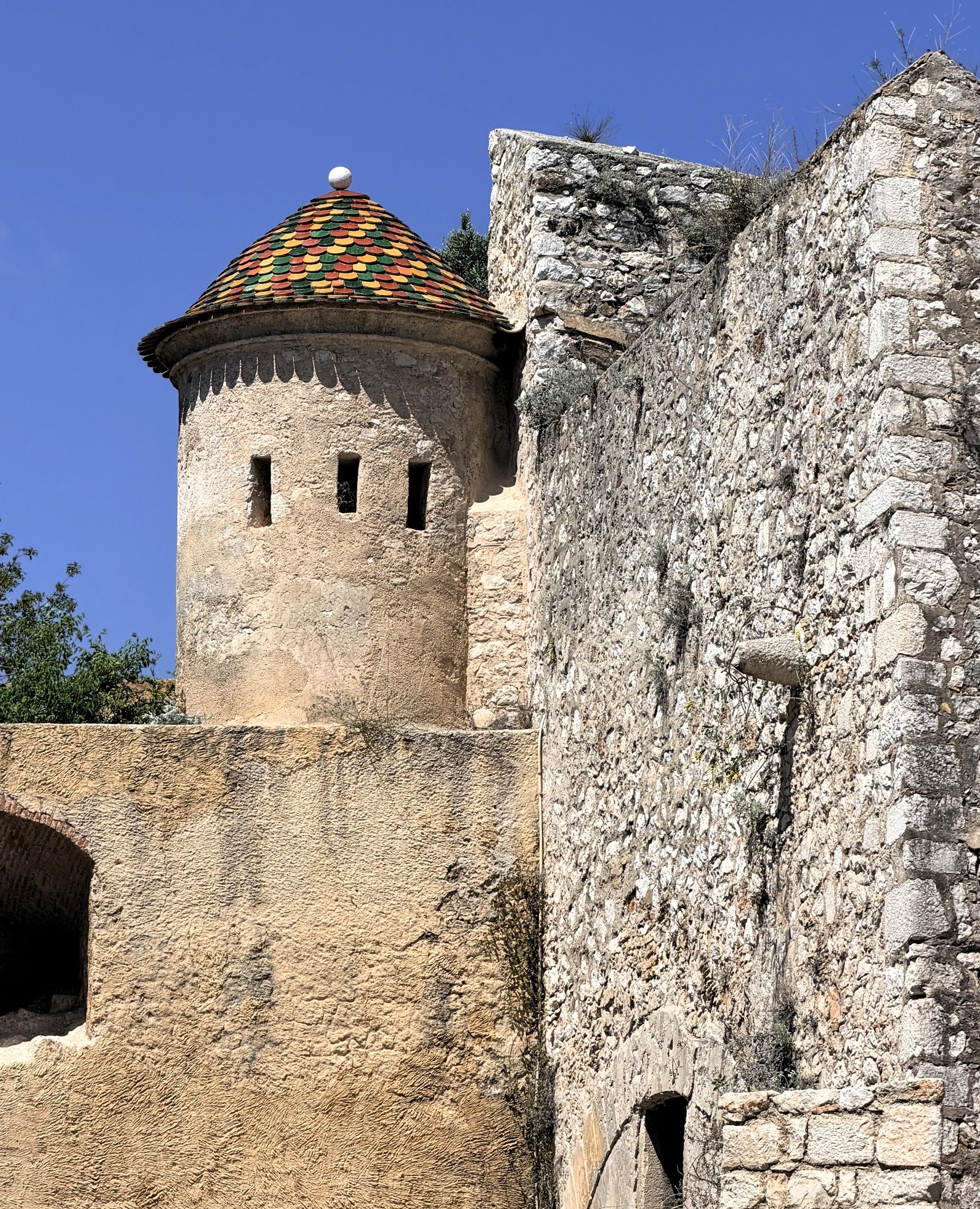 With a single point of access for control, the citadel has a deep, narrow passage to slow intruders and high walls and angled bastions surrounding it. The entrance is a thick, arched portal cut directly into the rampart wall. It was designed to be easily defensible: narrow, deep, and flanked by high masonry so that attackers could be controlled or trapped. 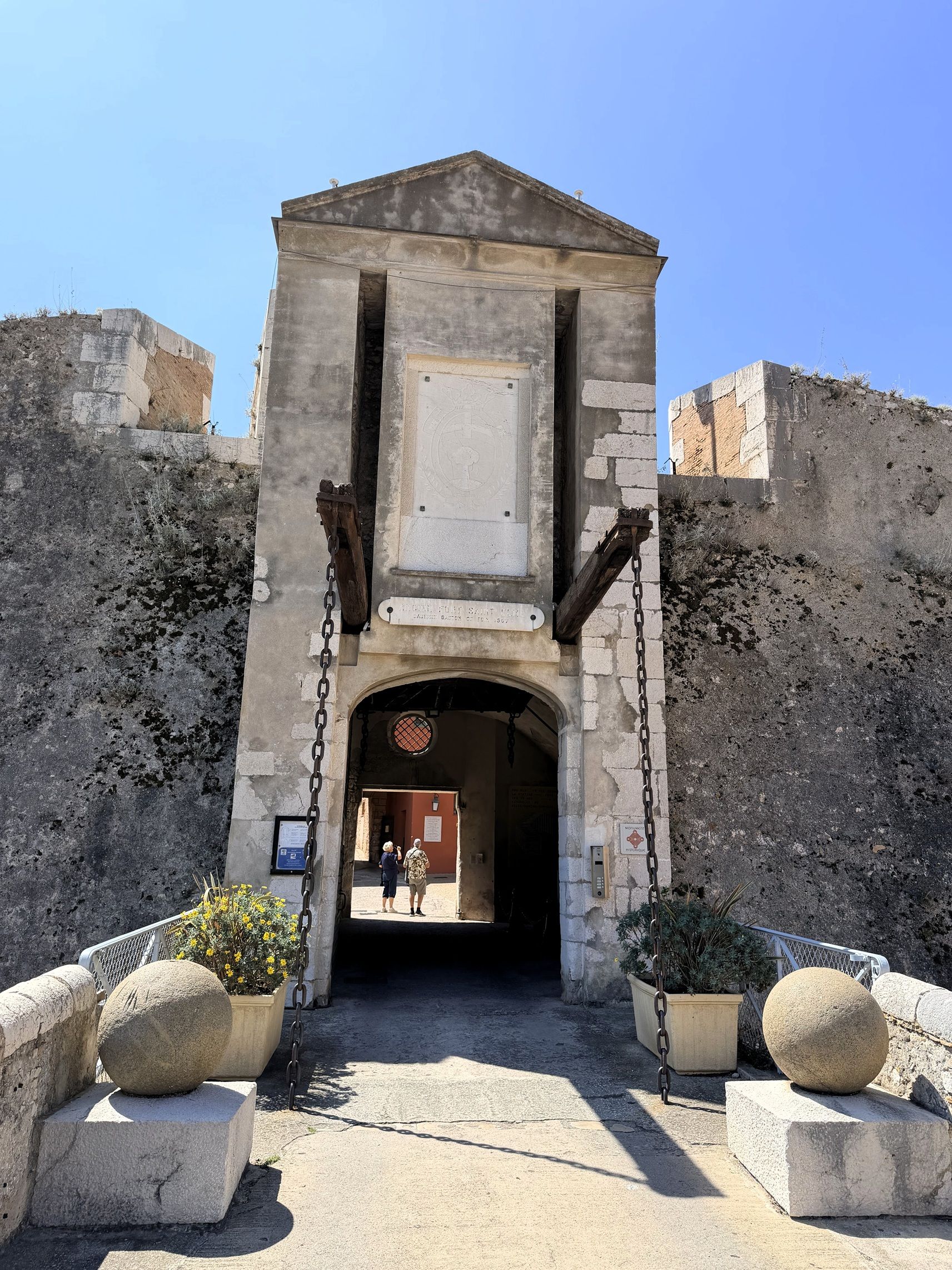 The approach is via a bridge over the moat - which no longer contains water - the bridge is narrow and restricts movement to the entrance. today the approach is a raised stone path although originally it was a drawbridge. The gate itself is a 16th‑century fortified portal: a deep, barrel‑vaulted stone passage cut through the rampart, with a rounded arch, massive voussoirs, and the unmistakable thickness of early bastioned‑fortification walls. It is the citadel’s single controlled entry point, designed to slow, expose, and channel anyone entering. It is one of the most distinctive architectural elements of the fortress: a compact, defensive, almost tunnel‑like portal built for control, compression, and intimidation. Its construction as a rounded stone arch, built from large, regular voussoirs; has a slightly flattened profile typical of mid‑1500s Savoyard military masonry. The entrance is through a long, tunnel‑like throat, with the wall several meters thick. The barrel‑vaulted ceiling is a continuous stone vault that reinforces the passage against bombardment. The gate is unlike ceremonial city gates, as it is purely military: no coats of arms, no sculptural reliefs, no triumphal ornament. Its austerity is the message. With a single entrance it was easier to defend and with the deep, narrow throat, attackers were forced to reduce their speed, making them more exposed. Its vaulted stones were resistant to cannon fire and the angled bastions flanking the approach enabled defenders to fire along the gate axis. This is classic early‑modern fortification logic, predating Vauban (Sébastien Le Prestre, Marquis de Vauban (1633–1707) — the most influential military engineer in European history and the man who effectively invented the modern fortress. He served under Louis XIV and reshaped both siege warfare and defensive architecture so profoundly that his methods dominated Europe for more than a century.) but already moving toward the star‑fort system. Looking back after passing through the gate, located above the gate is a thick defensive timber framework that can be lowered to provide additional support to the doorway. 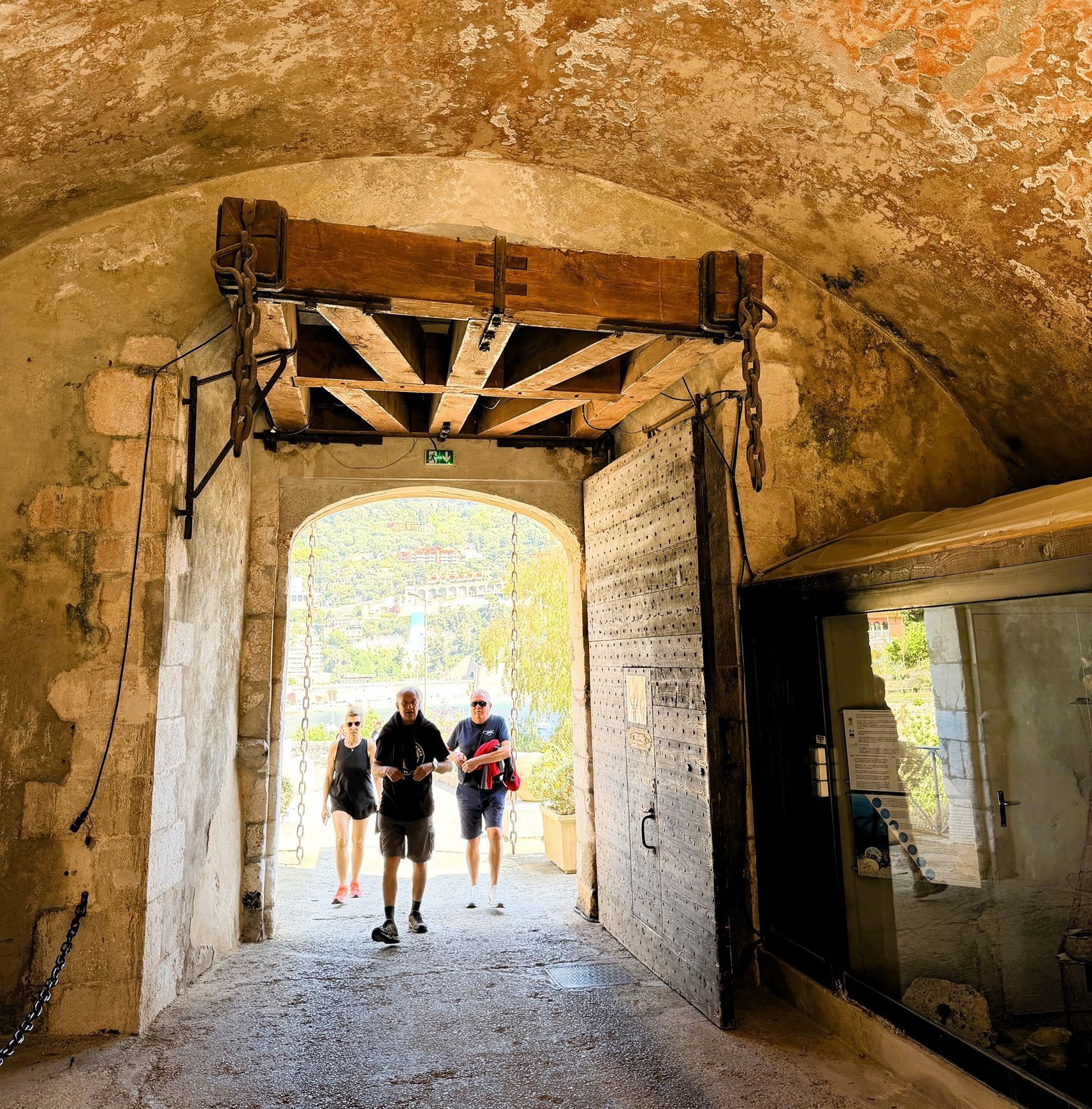 Within the tunnel is a display of broken bits of pottery. They’re not part of a formal museum display, or ancient artifacts but are recovered maritime ceramics from Villefranche’s historic harbour, displayed as a small interpretive exhibit about the port’s past. 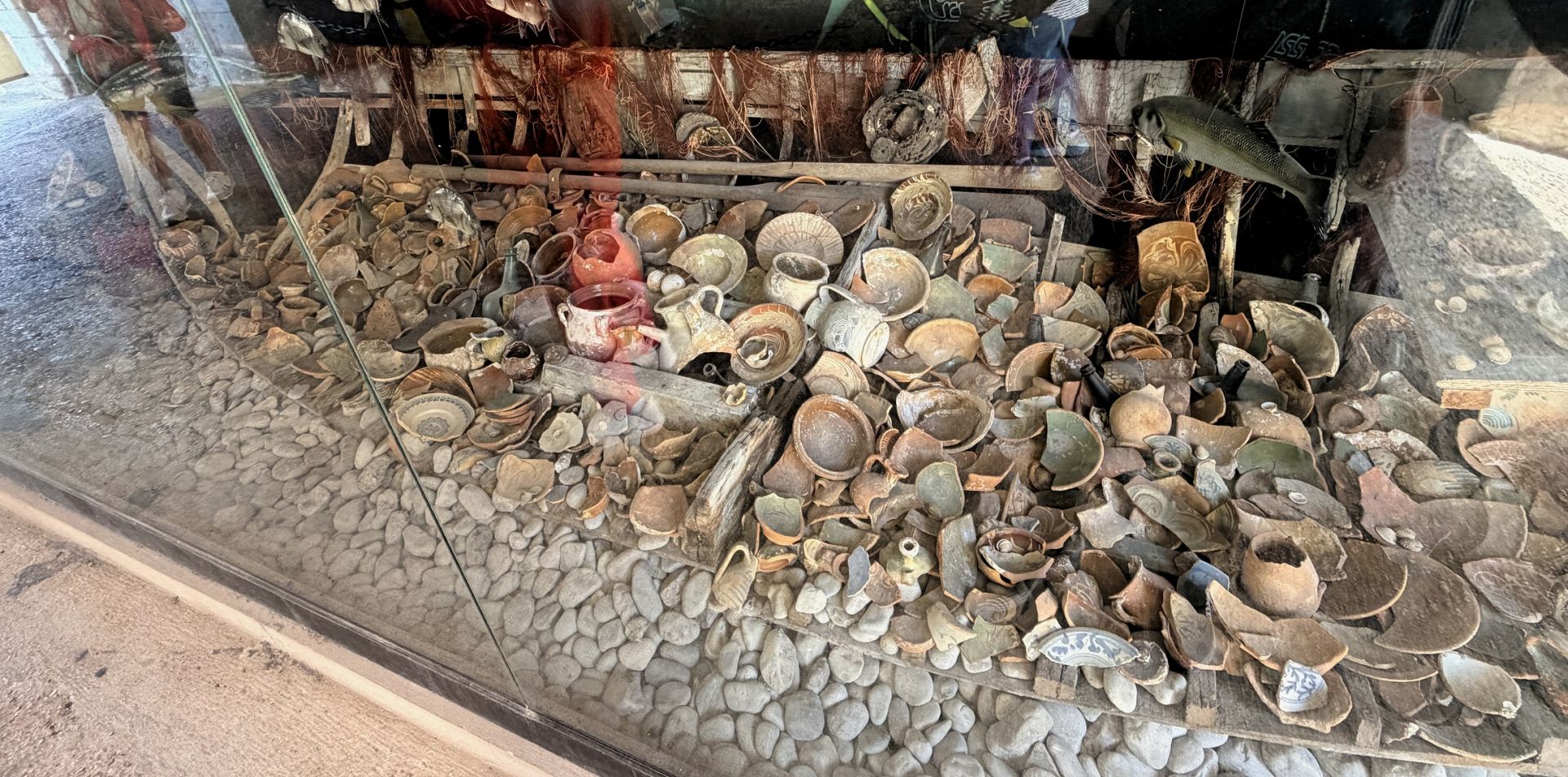 Immediately beyond the gate tunnel, the space opens into a small forecourt and leads to the Cour du Ricin which is one of the first interior spaces you encounter once you’ve passed the defensive throat of the entrance. 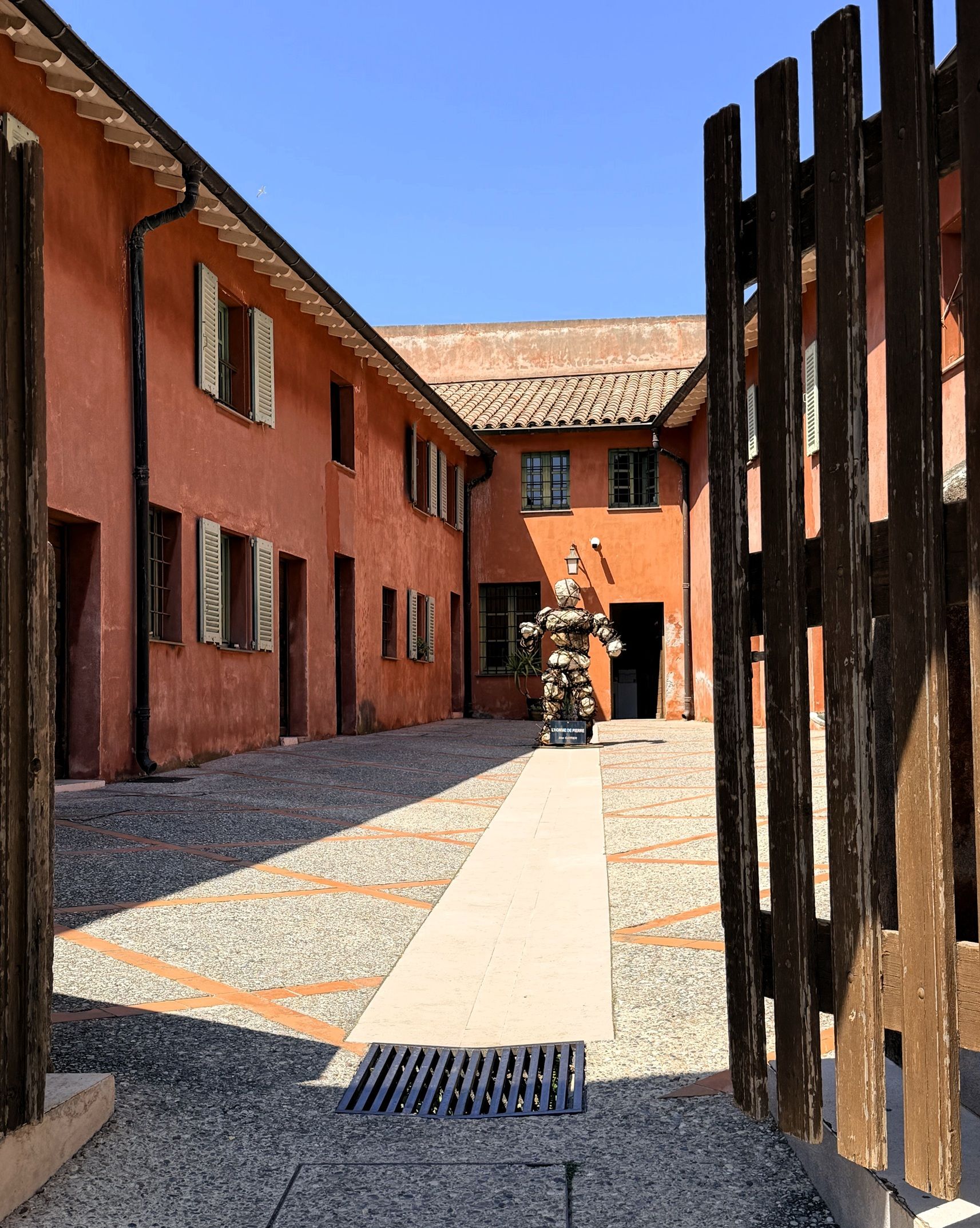 Within this courtyard is the statue of Max Cartier’s Man of Stone (Homme de pierre, 1990). This is one of a series consisting of five to eight unique monumental stone figures, though these are not publicly documented. The 1990 Homme de Pierre owned by MAMAC (Musée d’Art Moderne et d’Art Contemporain) in Nice, is now installed as a public sculpture in Nice. The rest are known only through group exhibitions at Espace Chubac in Tourrette‑Levens and at MAMAC but does not list them individually. All the sculptures share a rough, upright, humanoid form emerging from stone, yet each one is distinct in scale, posture, and degree of emergence, reflecting Cartier’s idea of “warriors of the impossible” — beings that are both ancient and futuristic. The others likely remain in Cartier’s studio in Levens, making the full series partially documented and partially private. 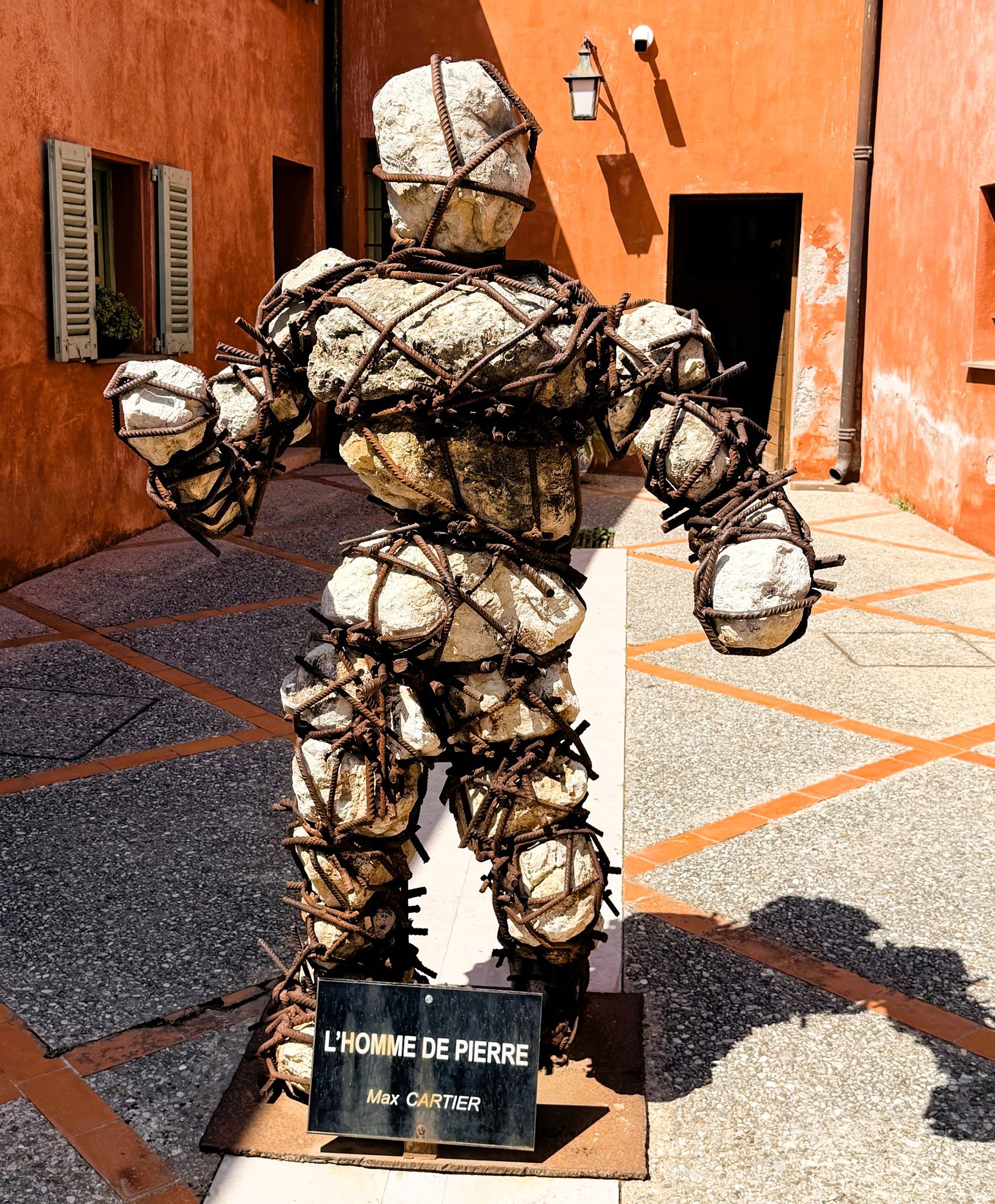 The citadel contains three museums each displaying different types of collections, spread across the old casemates and vaulted rooms. The Volti Museum, dedicated to the work of Antoniucci Volti (1915–1989), a French‑Italian sculptor celebrated for his powerful, sensual depictions of the female form. The museum displays bronze, terracotta, and copper sculptures, along with drawings and studies that reveal Volti’s process. His figures are monumental yet intimate, often reclining or seated, their forms rounded, expressive, and deeply human. It focuses on the beauty and strength of the human body. 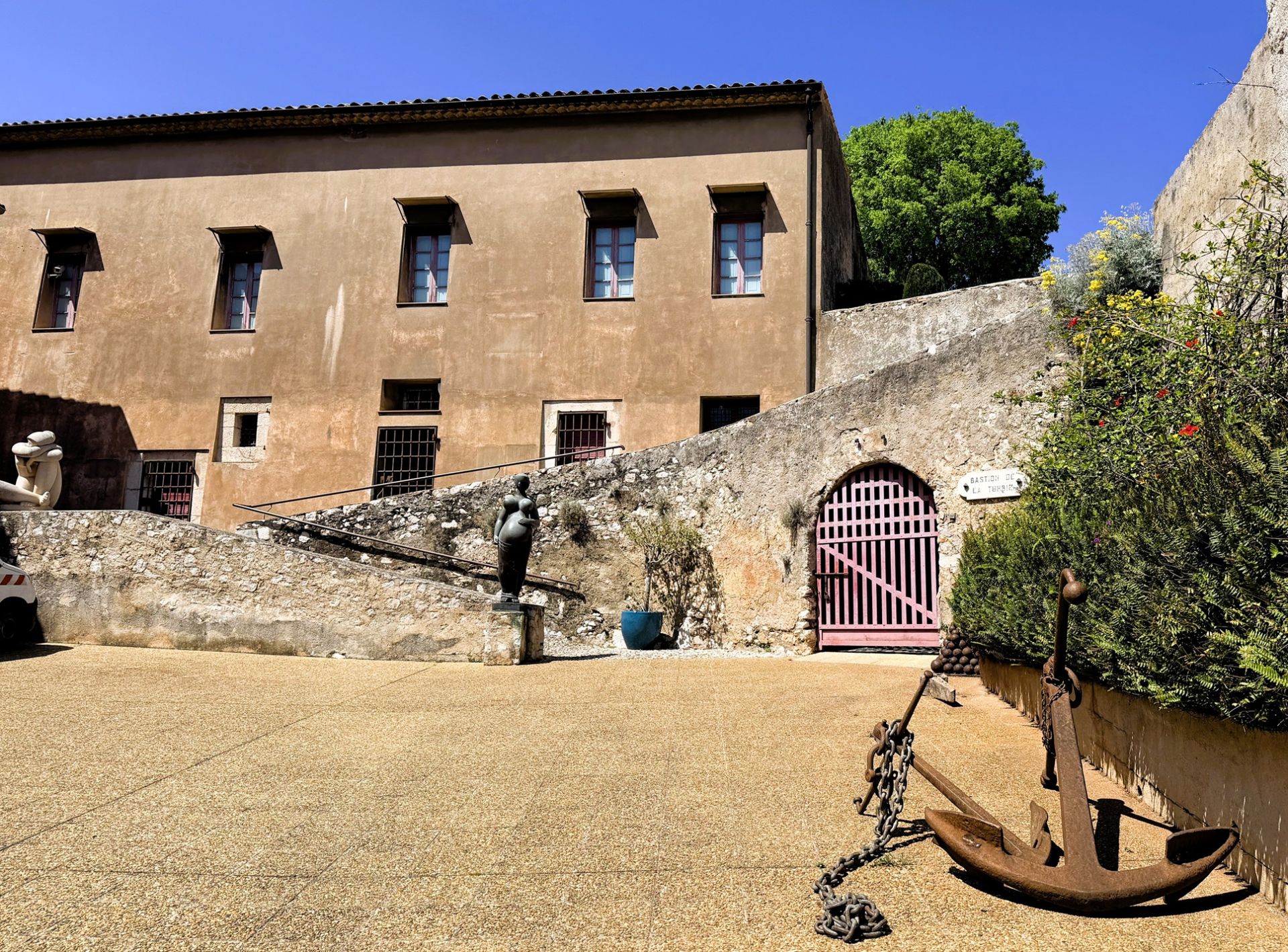 The Goetz‑Boumeester Museum is the citadel’s collection that brings together the intertwined work of Henri Goetz and Christine Boumeester, two major figures of 20th‑century abstraction, along with pieces by such as Picasso and Miró. The museum contains abstract paintings, engravings, experimental works, and colour studies, all showing how the couple pushed the boundaries of form and texture. Goetz is known for his lyrical abstraction and for inventing the technique of carborundum engraving (A printmaking technique that uses carborundum grit to create textures on a plate, allowing ink to cling to its surface and produce rich, textured images), while Boumeester’s work leans toward subtle, poetic minimalism with delicate colour harmonies. The Roux Collection is a display of more than 300 finely crafted ship models, naval dioramas, and miniature maritime scenes created by the Roux family of Toulon, a dynasty of 18th‑ and 19th‑century marine painters and model‑makers. The collection includes everything from Mediterranean galleys and French ships‑of‑the‑line to merchant vessels, fishing boats, and harbour craft, each model built with extraordinary precision and historically accurate rigging, hull forms, and fittings. Many pieces illustrate the evolution of French naval power, while others capture everyday maritime life along the Riviera. Displayed in the citadel’s vaulted rooms, the models form a vivid, almost encyclopedic portrait of seafaring in the age of sail — a quiet, absorbing world of craftsmanship and naval history brought to life in miniature. Apart from the museums there are a number of courtyards displaying various items; in one is a cannon. It is part of a small, military heritage corner. The cannon is displayed under the Chasseur motto is a 19th‑century French field gun, preserved as a tribute to the Chasseurs - France’s elite light‑infantry and light‑cavalry units. 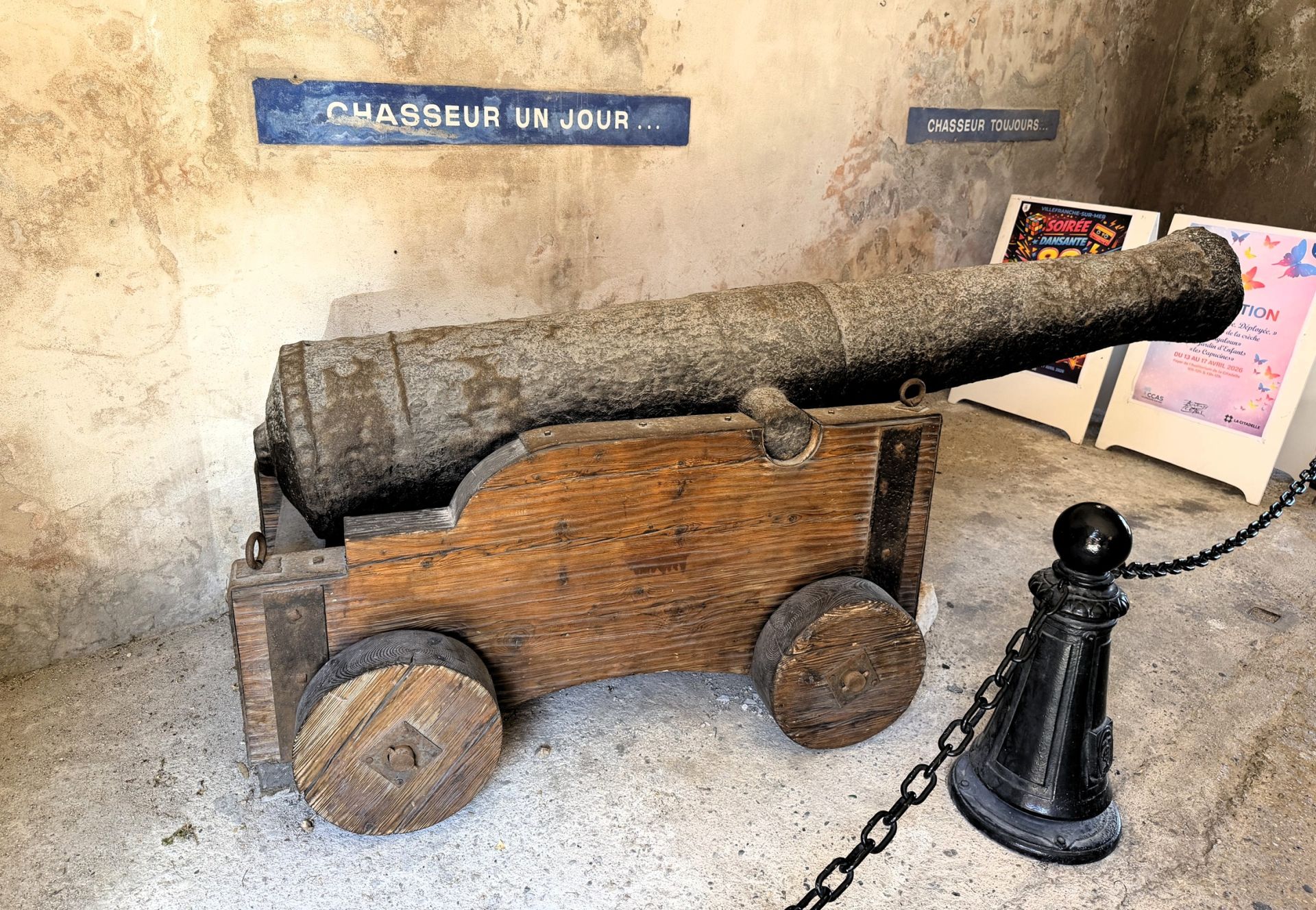 The cannon is not a naval gun from the citadel’s original 16th‑century armament. It is a symbolic regimental piece, placed there by veterans’ associations connected to the Chasseurs. This type of cannon is a short‑barrelled cast‑iron mounted on a simple wooden carriage. It is designed for rapid deployment rather than fortress defence. Located off one of the interior courtyards, close to the cultural rooms and exhibition spaces is the Chapel of Saint‑Elme, which is the citadel’s original military chapel, built as part of the 1557 Savoyard fortress. It served the garrison stationed in the citadel and was dedicated to Saint Elmo (Saint Erasmus), the patron saint of sailors and those who work at sea. 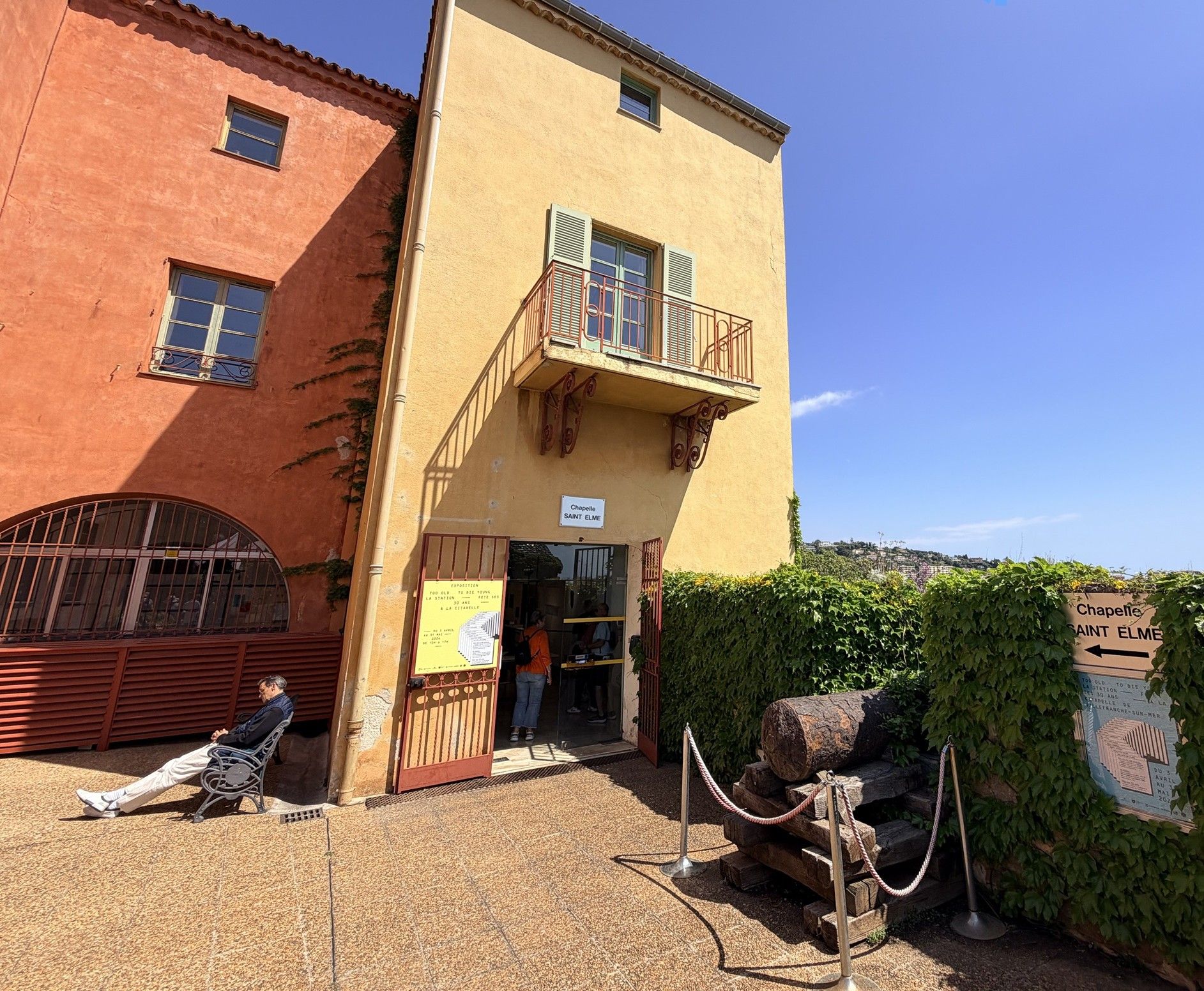 The chapel door leads directly from the courtyard into the small, single nave chapel vaulted interior with its minimal decoration. 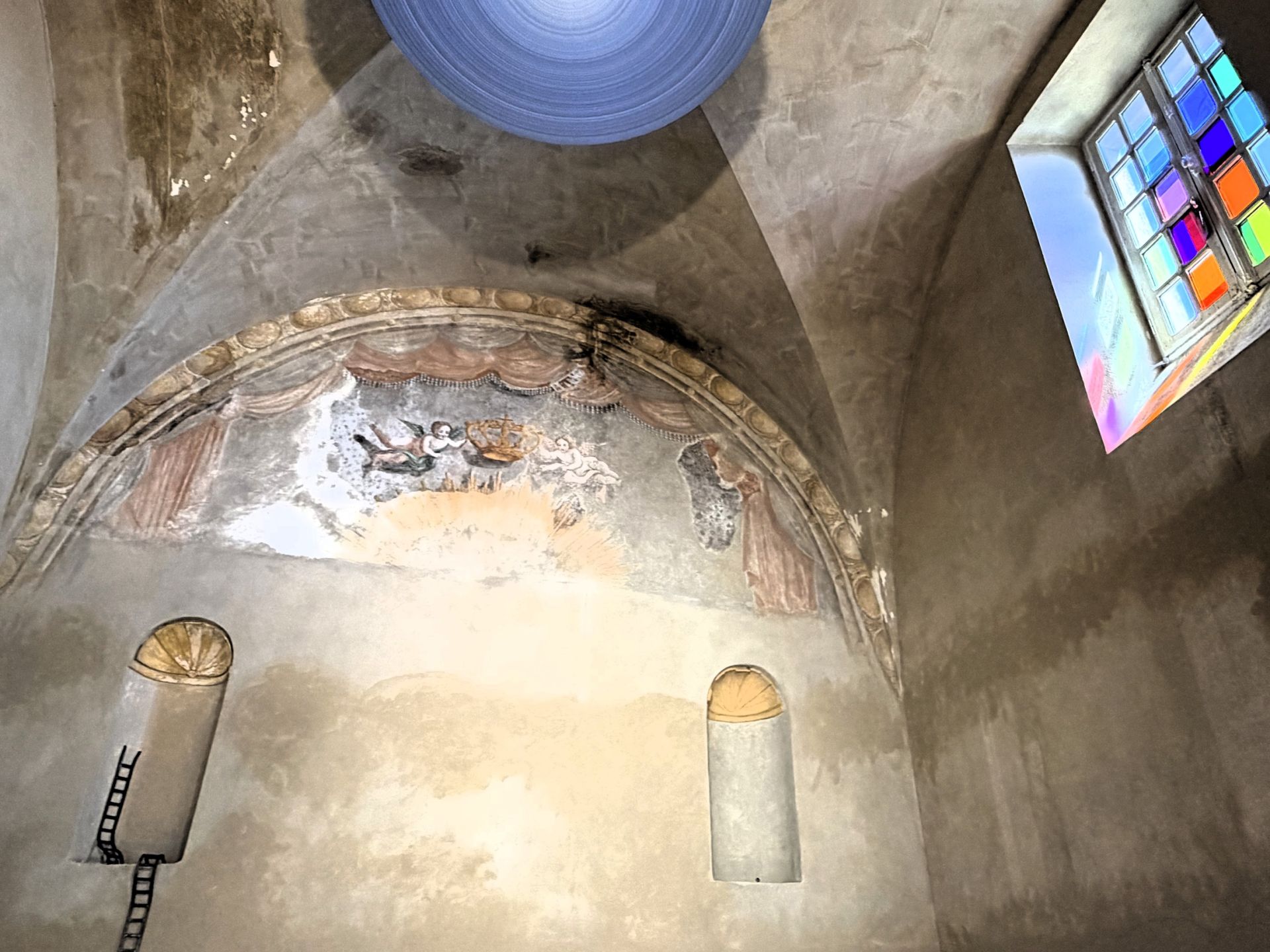 In 1981, the citadel was transformed into a cultural complex and municipal centre and is the location of the Villefranche Town Hall. It houses an open‑air theatre, auditorium, and exhibition spaces used for concerts and cultural events as well as the three specific museums. It also contains gardens, shaded courtyards, and rampart walks with panoramic sea views. 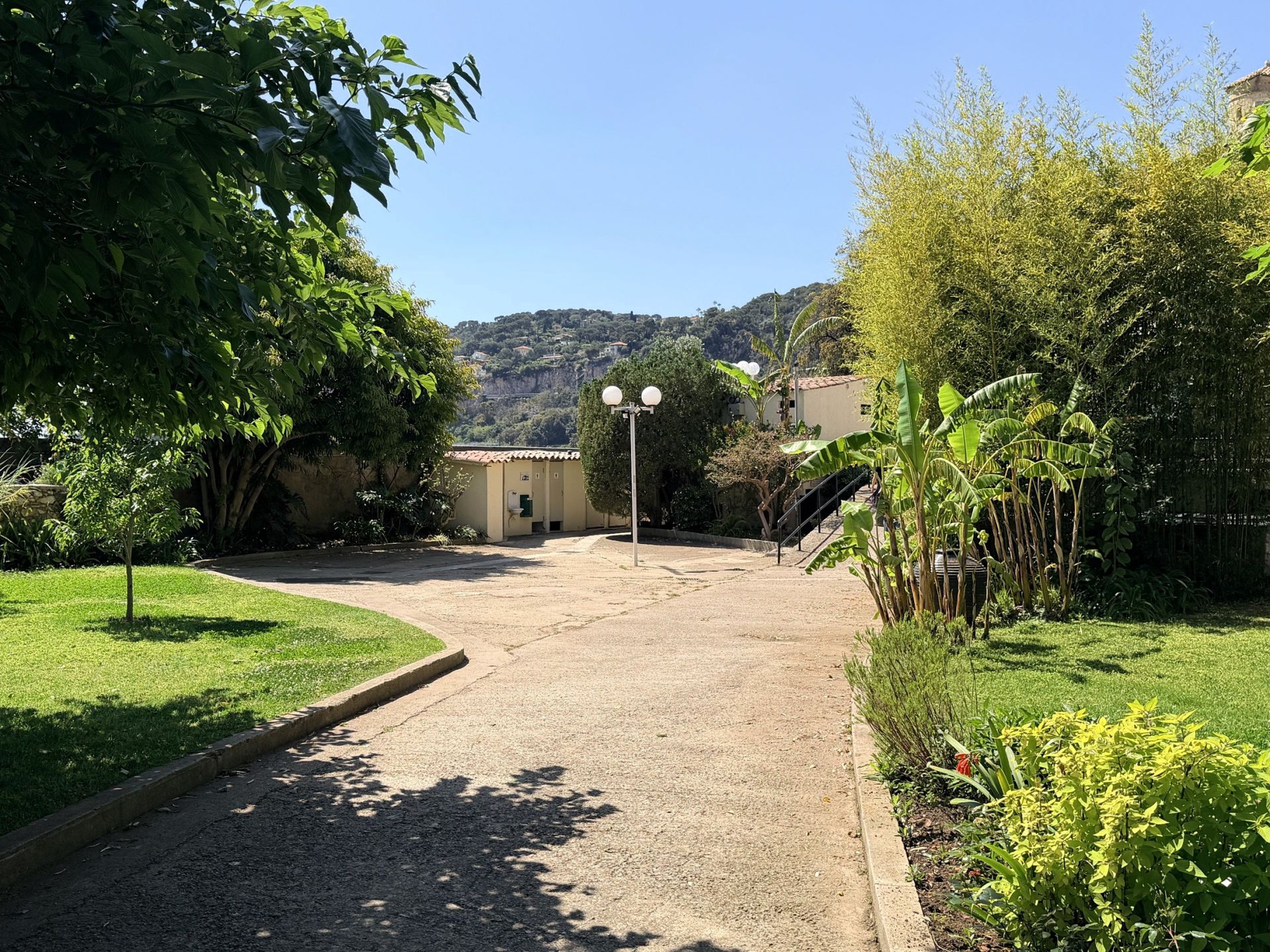 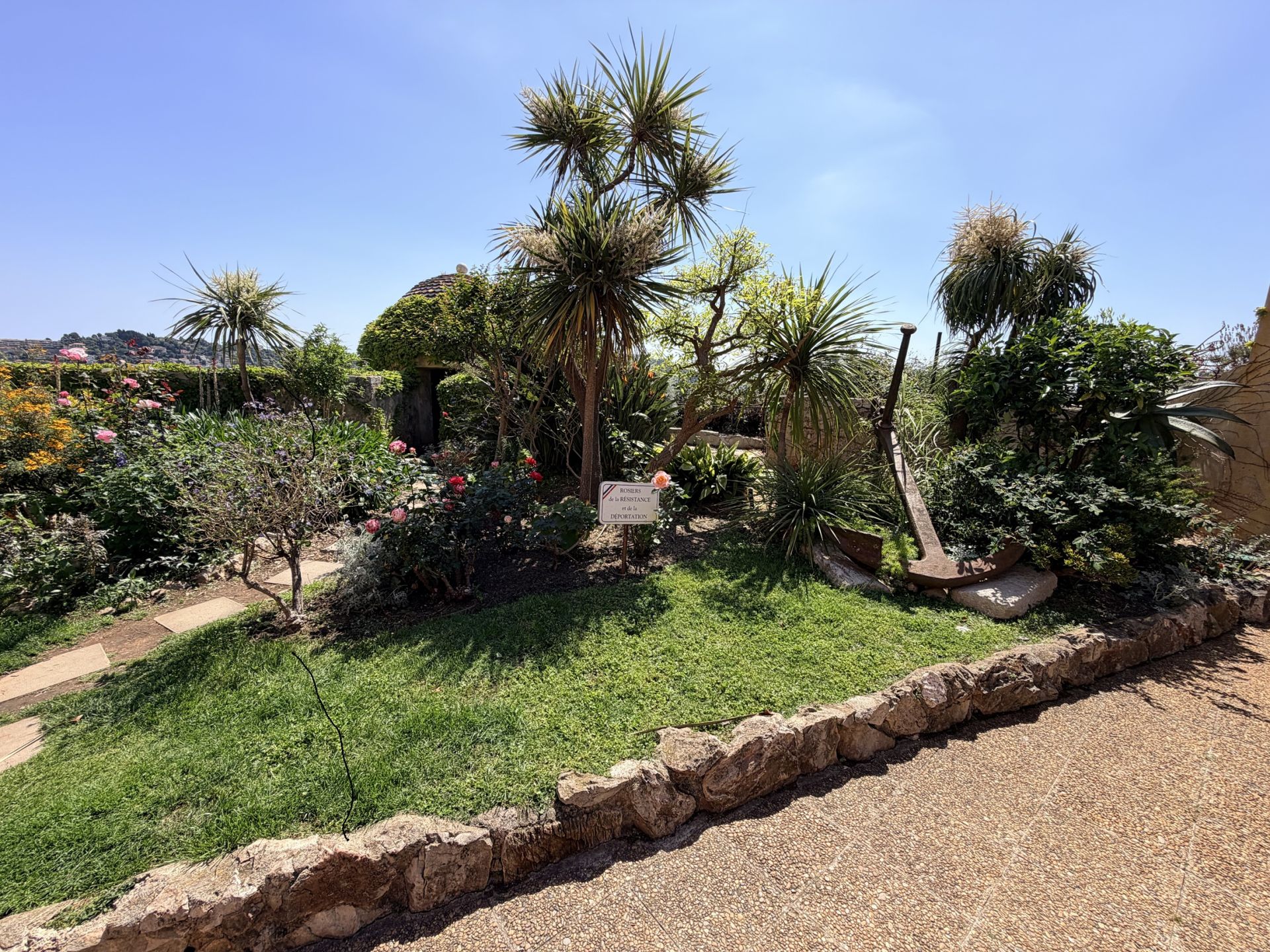 It is also possible to walk up to and along the Ramparts which follow the same elevated defensive paths used by 16th‑century soldiers as they patrolled the fortress. The path moves along thick stone walls overlooking the deep natural harbour and the tiled roofs of the old town. The walk goes past bastions, arrow‑slits, and lookout points, revealing how the citadel controlled the coastline and protected the anchorage. 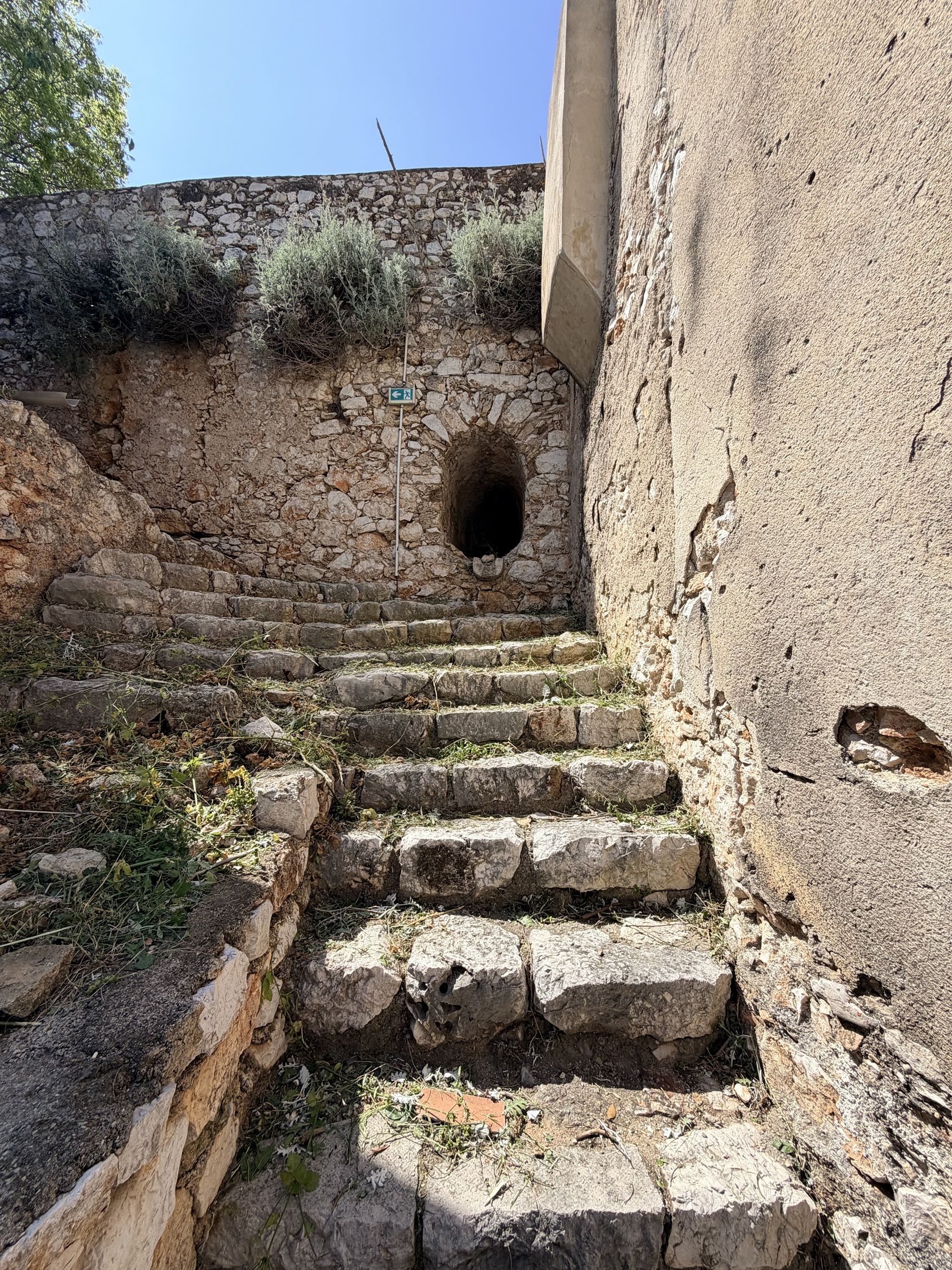 Since 2019 the site has been undergoing renovation work which includes reinforcing the walls, expanding the exhibition areas and refurbishing interior space. 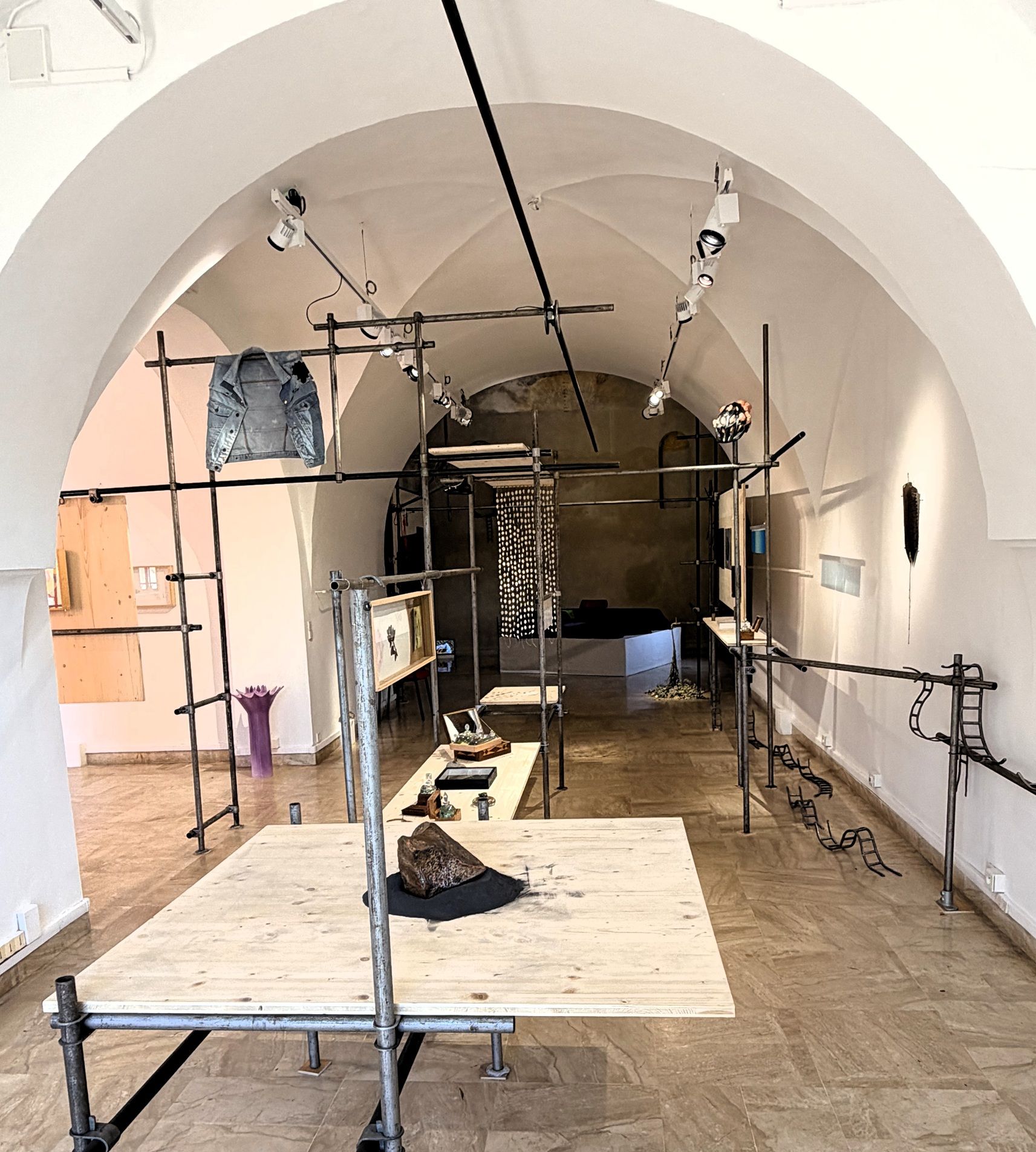 Admission to the citadel is free, and the site is open year‑round except for a few major holidays. References and Additional Sources of Information https://visitvillefranche.com/citadel/ https://www.explorenicecotedazur.com/en/culture/citadelle-saint-elme-de-villefranche-sur-mer/ https://fr.wikipedia.org/wiki/Citadelle_Saint-Elme https://www.britannica.com/biography/Sebastien-Le-Prestre-de-Vauban https://provencelovers.fr/en/visit-citadelle-saint-elme-villefranche-sur-mer/ https://en.wikipedia.org/wiki/Chasseur
|
 |
|
 |
|||


All Photographs were taken by and are copyright of Ron Gatepain


| Site Map |