






 |
|
|||||||||||||||
 |
||||||||||||||||











 |
|||
 |
Mumbai Elephanta Caves – History, Architecture & Significance 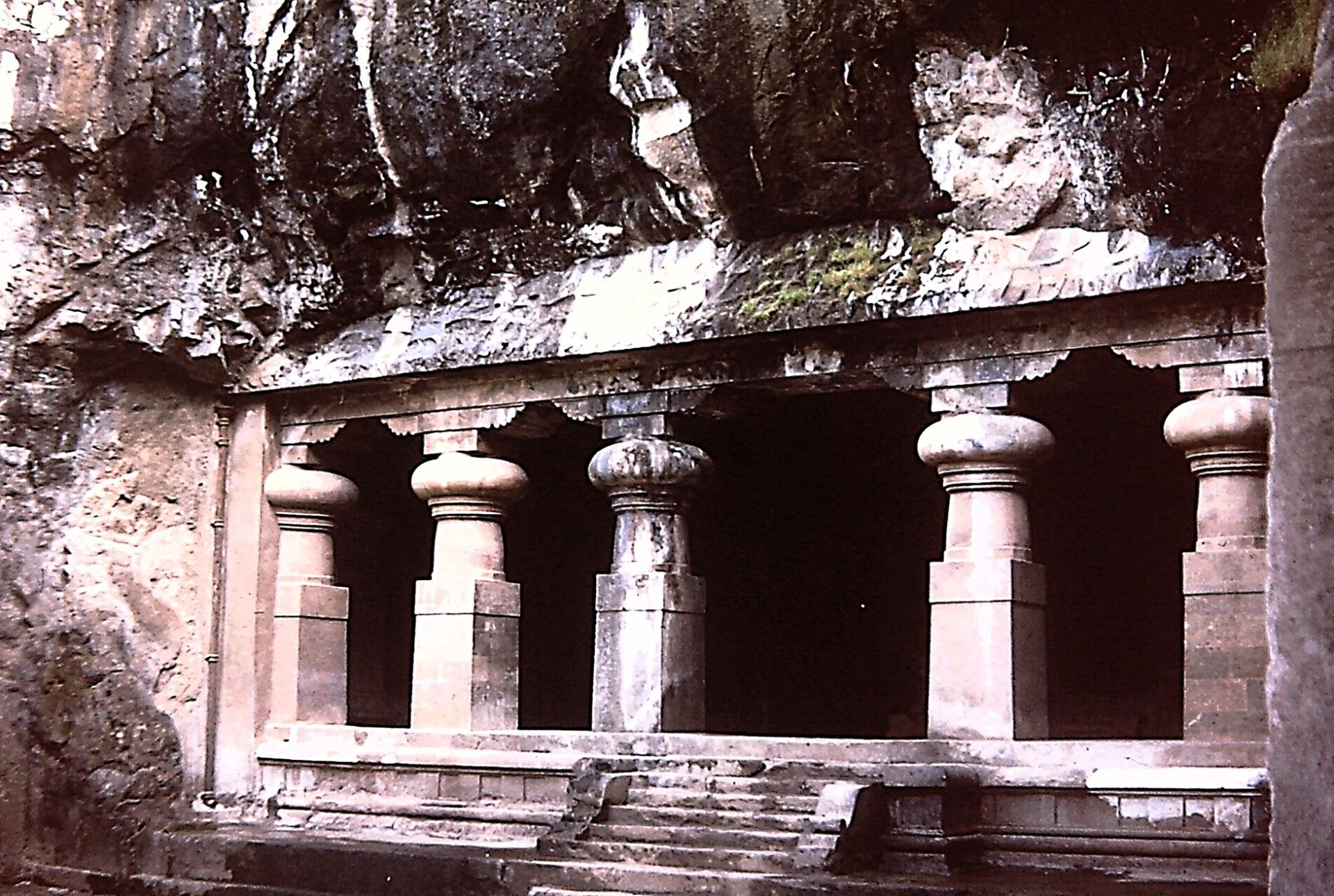
The Elephanta Caves are located on Elephanta Island (Gharapuri), about 10 km east of Mumbai (known until 1995 as Bombay) which is reached by a one‑hour ferry from the Gateway of India. The caves form a complex of ancient rock‑cut temples, carved between roughly the 5th and 7th centuries CE. most likely under the Kalachuri dynasty, (who ruled in the region of Mahishmati from around 550 to 620 CE) though some scholars suggest Chalukya ( who ruled large parts of southern and central India between the 6th and the 12th centuries.) or Rashtrakuta dynasty (that ruled large parts of the Indian subcontinent from around 753 to 982 CE). In 1987 The Elephanta Caves were officially inscribed as a UNESCO World Heritage Site, when it was recognised for both their artistic mastery and their cultural significance as one of the finest examples of early medieval Indian rock‑cut architecture. They represent a high point of Hindu religious art between the 5th and 7th centuries. The caves got their name in 1534 from the Portuguese who named the island “Elephanta” after finding a large stone elephant near the entrance. In 1864 the British tried to ship the elephant to England but the crane failed and the elephant shattered into pieces. The pieces were moved to Victoria Gardens (Byculla Zoo) and in 1914 it was Reassembled. Today it stands at the Bhau Daji Lad Museum, Mumbai. Carved from solid basalt, the caves consist of seven caves, five of which are Hindu with monumental Shaivite sculptures dedicated to Shiva, and two Buddhist caves and older Buddhist stupa mounds dating back to the 2nd century BCE. The caves are arranged across two hills: Gun Hill and Stupa Hill. The caves suffered damage during the Portuguese occupation when they controlled the region from 1534 until the late 17th century. They used the island as a strategic military position when they vandalised parts of the caves. They built cannon posts and used the caves for shelter and storage. Restoration began under the British in 1909, although repairs occurred mainly in 1960s–70s, and post‑1987 with the work focusing on stabilisation, cleaning, and preservation, but not reconstruction. The work included structural stabilisation; filling cracks in the basalt; securing loose fragments and preventing further flaking. It also included cleaning by removing soot, grime, and biological growth and clearing salt deposits from humidity. No major sculptural reconstruction was carried out although fractured sections of the relief were supported and the rock face behind the sculpture was stabilised. On arrival at the island, visitors either walk or now take the small toy train to the base of the hill before walking up the 120 steps to the caves. Not all of the entrances are in good condition which shows the damage caused by time and the Portuguese. 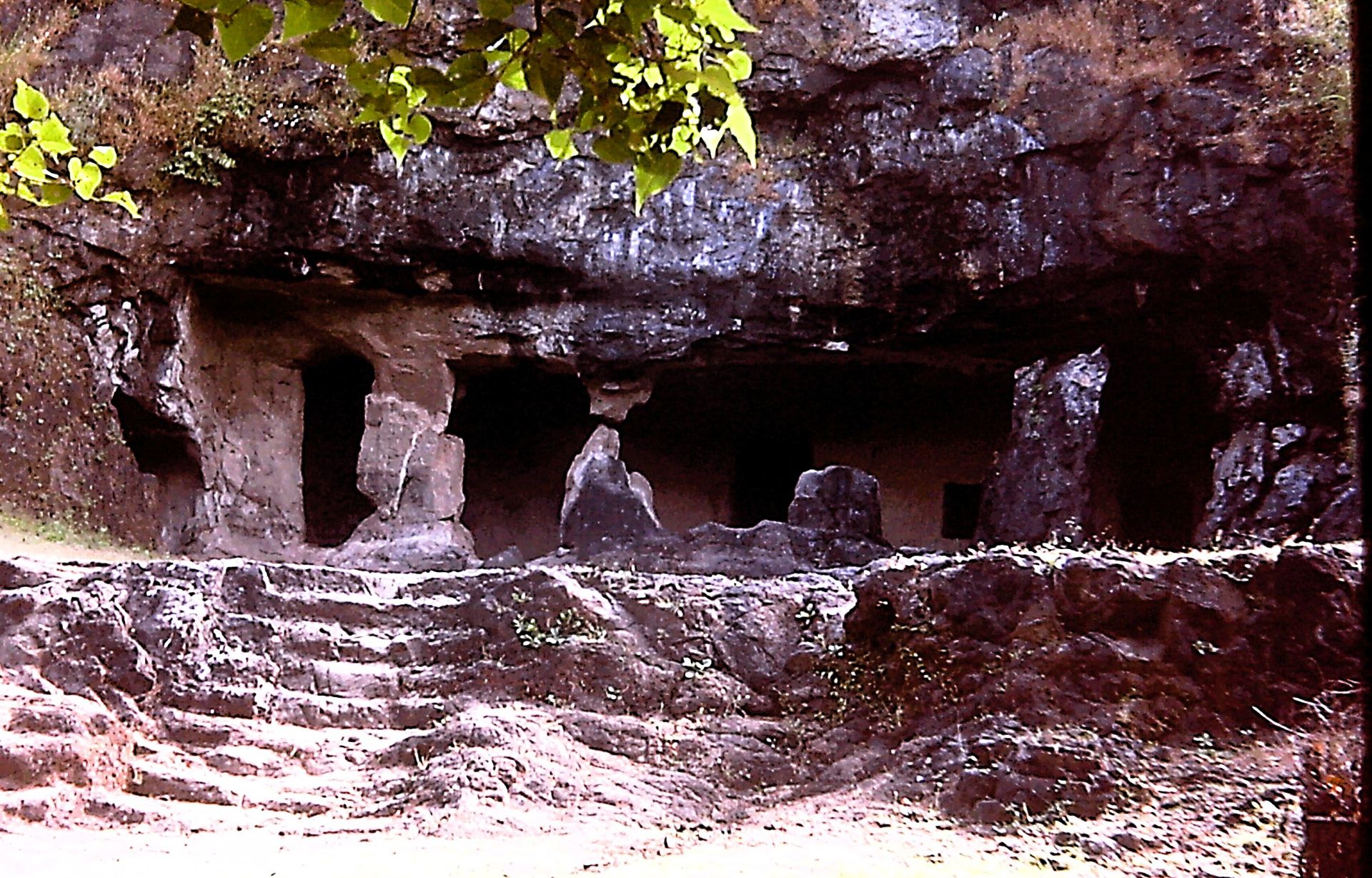 The centrepiece of the Elephanta Caves is the Great Cave (also known as Cave 1). At the main entrance are four pillars, with three open porticoes and an aisle at the back. The interior consists of a pillared hall. The cave is a 39-meter square rock-cut hall (mandapa) supported by rows of six large pillars which divide the hall into a series of smaller chambers. 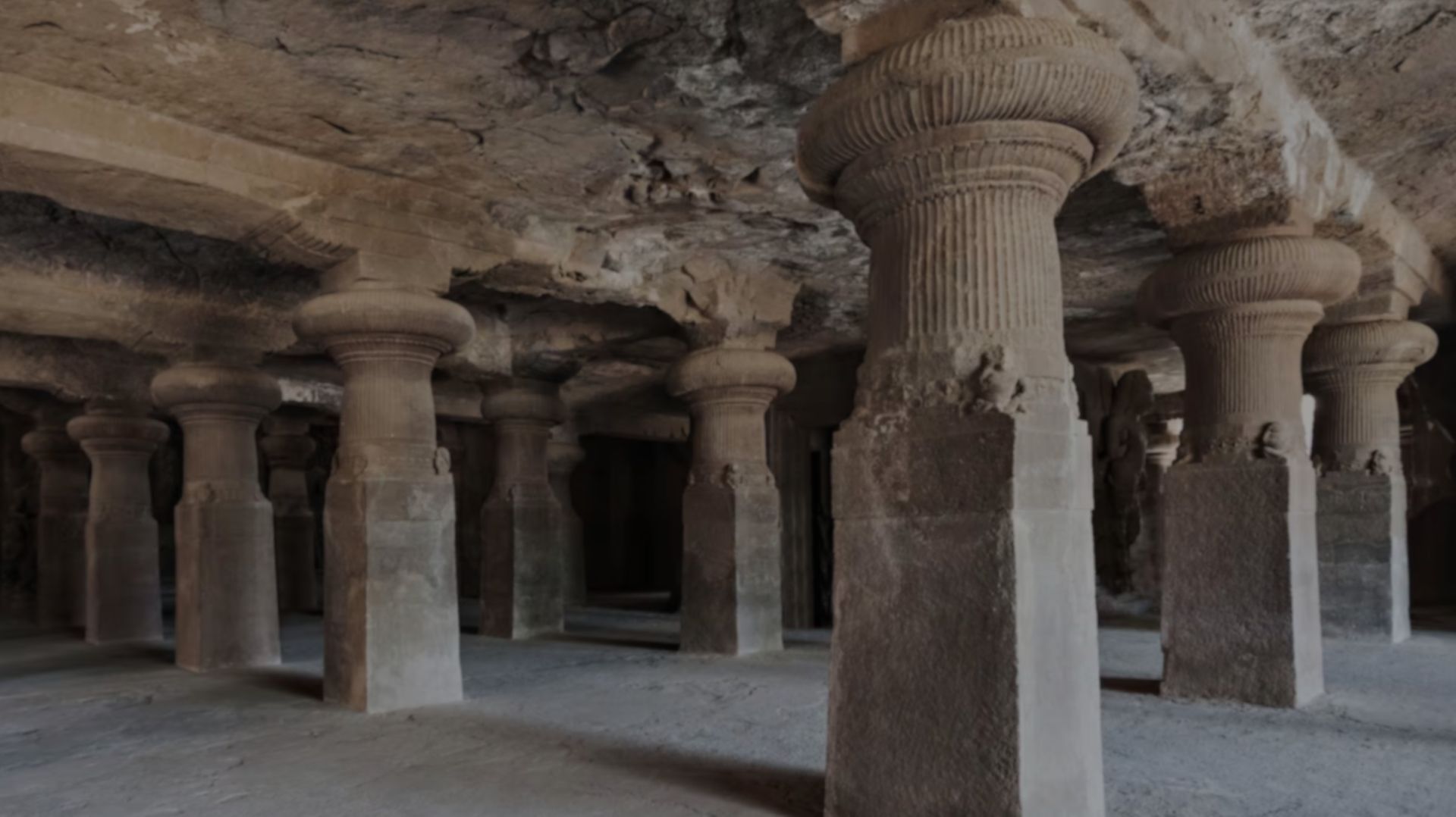 Set out in a mandala‑like plan which means the cave is laid out like a simple, balanced diagram with a centre point and important things placed around it in the four main directions. At Elephanta, the central Shiva lingam shrine is the middle of the design, and the big carvings - like Nataraja, Yogishvara, Ardhanarishvara, and Gangadhara - are arranged around it so the whole cave feels organized, symmetrical, and easy to understand as a sacred space. The Great Cave is famous for its large bas-reliefs depicting various manifestations of Shiva. The most iconic is the Trimurti (Sadashiva), this 20-foot-tall (7m) monolithic sculpture depicts Shiva with three heads, representing his roles as Creator (Vamadeva/Uma), Preserver (Mahadeva), and Destroyer (Bhairava/Aghora). Carved in high relief from the basalt rock; The Trimurti (also called Sadashiva) is the most celebrated sculpture in the Elephanta Caves. It is widely regarded as one of the great masterpieces of Indian art. It stands at the spiritual and architectural centre of Cave 1, dominating the main axis of the temple. UNESCO describes it as the 7‑metre‑high masterpiece that anchors the entire cave. 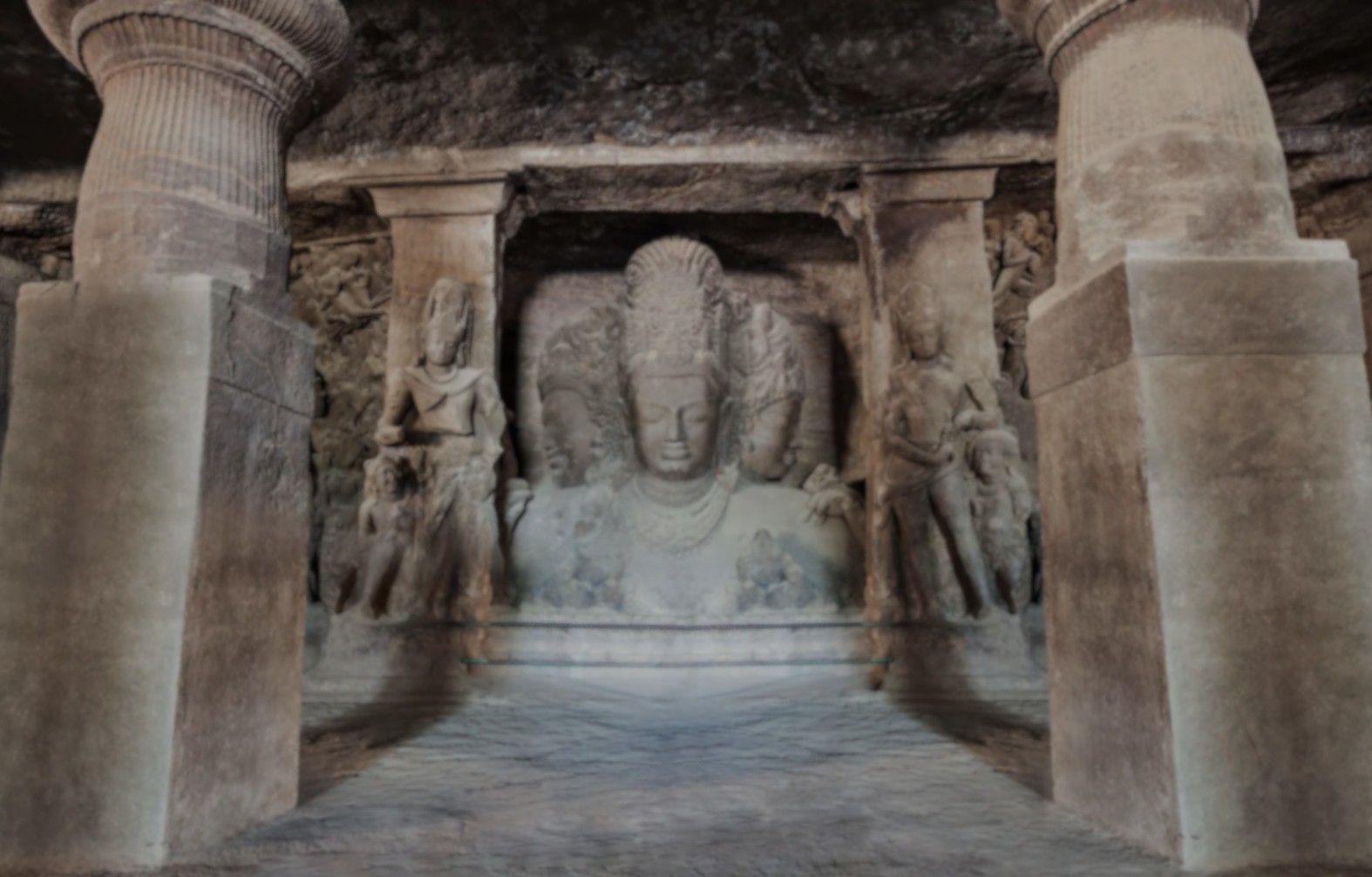 Scholars place the creation of the Trimurti between the 5th and 7th centuries CE, with many agreeing on a completion date around 550 CE. It emerges from a long artistic tradition but shows “refreshing innovation” in its scale, symbolism, and execution. Another two works considered masterpieces of Indian rock‑cut art are: 1 - Nataraja (Shiva as Lord of Dance) is Shiva performing the Ananda Tandava — the Dance of Bliss — which keeps the universe in motion. It is one of the most powerful and refined images in Indian art representing a vision of cosmic rhythm, creation, destruction, and liberation expressed through dance. The form crystallised in South India, especially under the Chola dynasty (9th–13th century), whose bronzes are considered masterpieces. 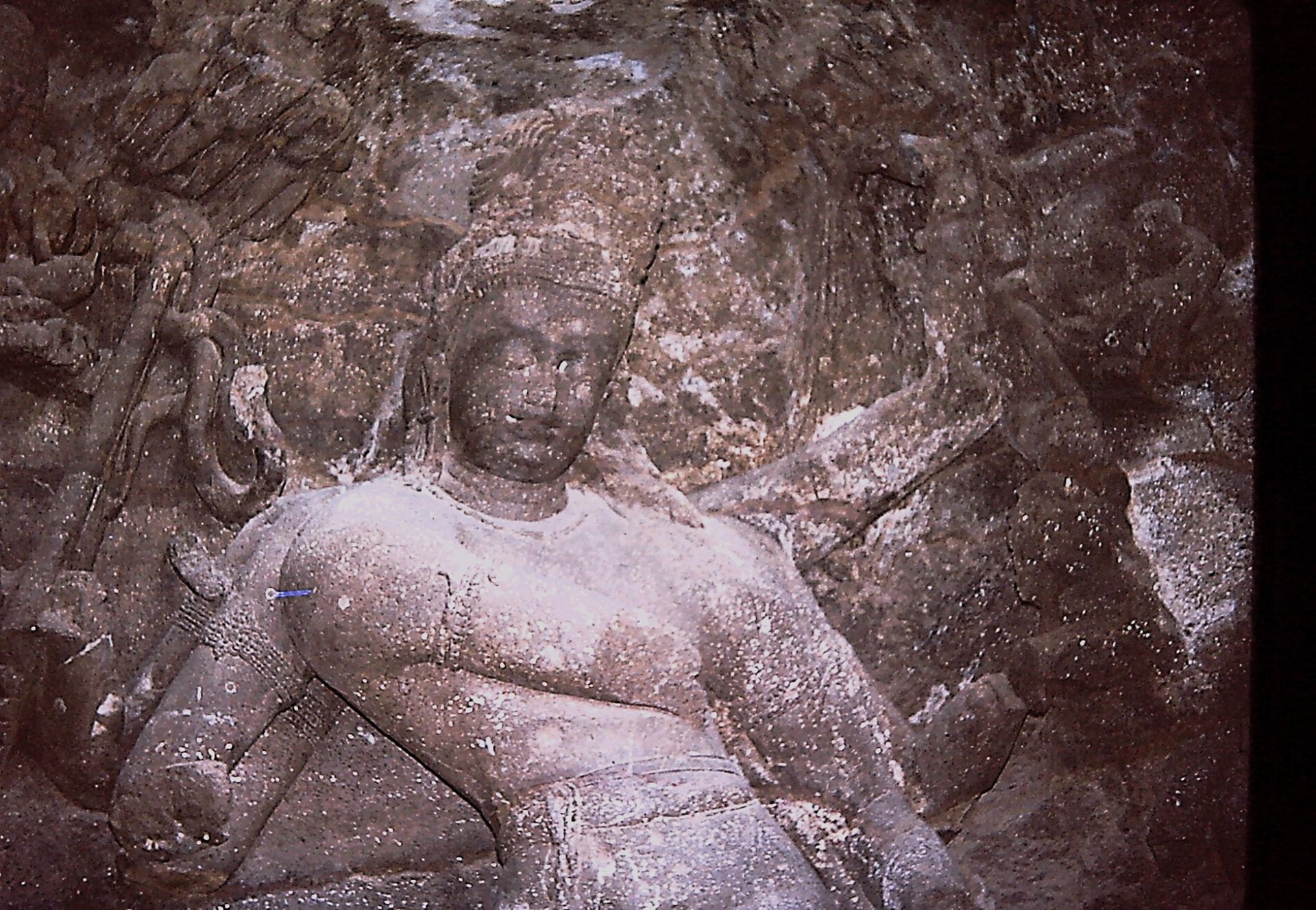 The relief has suffered damage over the centuries — especially during Portuguese occupation — and has been stabilised and conserved multiple times (1909, 1960s–70s, post‑1987), but never re‑carved. Where Nataraja expresses the cosmic dance, Yogīśvara expresses the cosmic silence. Together, they form a deliberate polarity inside the Great Cave: dynamic cosmic rhythm on one side, transcendent inner stillness on the other. The Yogīśvara relief is placed on the north wall, directly opposite the Nataraja on the south wall. This is not accidental — it’s ceremonial choreography. 2 - Yogishvara (Lord of Yogis) depicts Shiva as the supreme yogi, the master of meditation, austerity, and inner realisation. It is one of the most quietly powerful and philosophically rich images in the Elephanta Caves. The relief shows Shiva seated with eyes half‑closed in deep meditation, his body composed and still and surrounded by attendant figures, often sages or ganas. The relief emphasizes: Meditation; Renunciation; Self‑control and withdrawal from the world 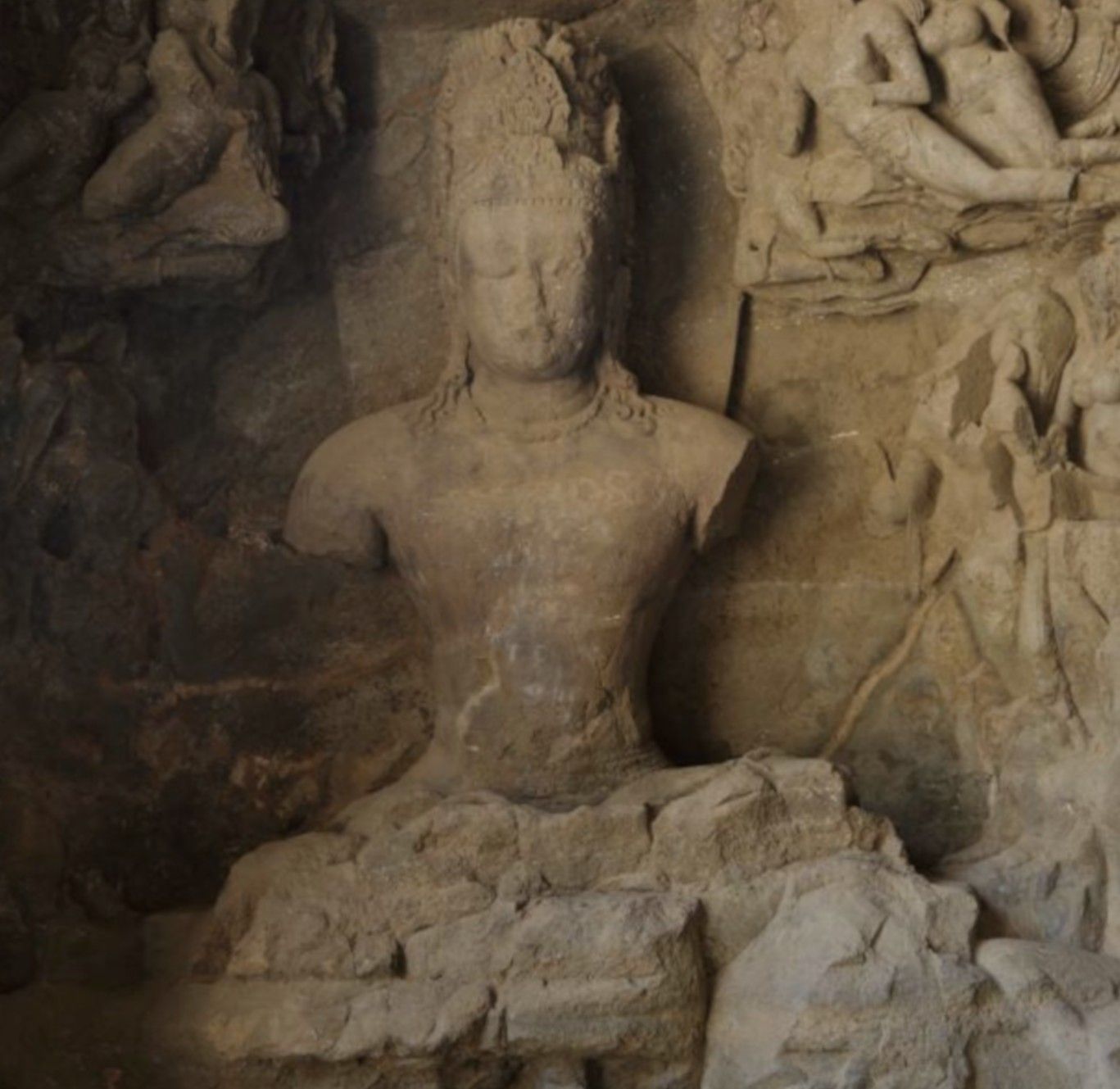 Other significant carvings include the marriage of Shiva and Parvati (Kalyanasundara), Shiva slaying the demon Andhaka, and Ravana shaking Mount Kailash and the Lingam, which remains a site of pilgrimage and worship today. A lingam is a smooth, rounded stone or pillar that stands for Shiva’s infinite, formless nature. Instead of showing Shiva as a person, it shows him as pure energy, pure consciousness, and the source of creation. It always sits in a circular base called the yoni, which represents Shakti, the creative power of the universe. Together, the lingam and yoni show the union of stillness and energy, the balance that creates all life. 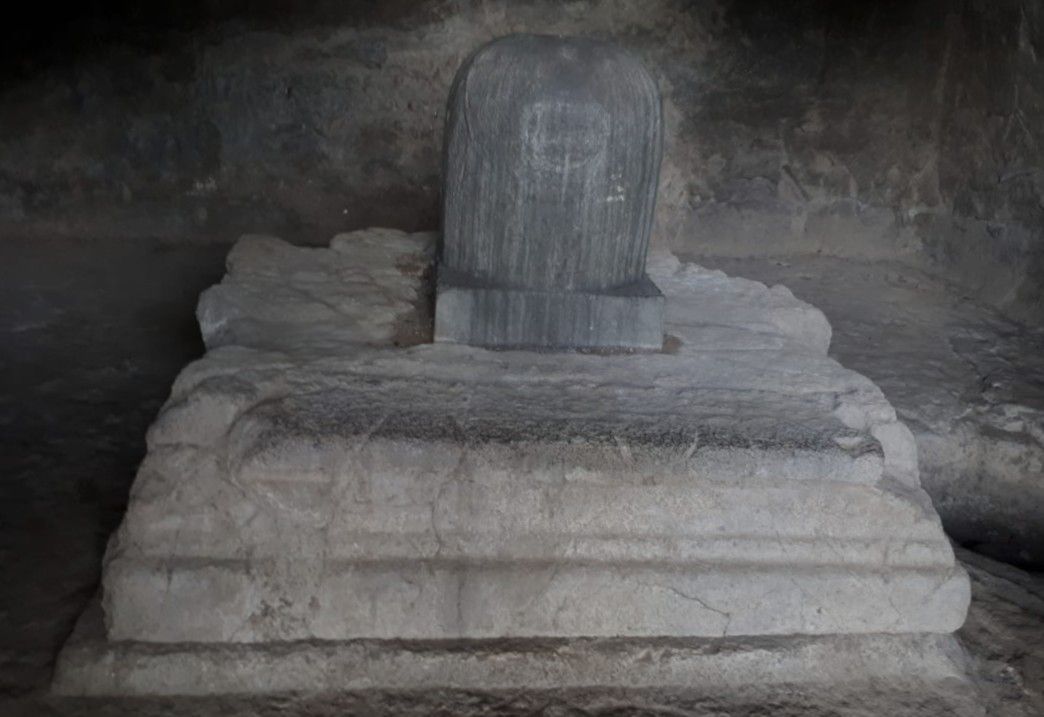
|
 |
|
 |
|||


All Photographs were taken by and are copyright of Ron Gatepain


| Site Map |