







 |
|
|||||||||||||||
 |
||||||||||||||||











 |
|||
 |
Athens Theatre of Dionysos – History, Architecture & Significance 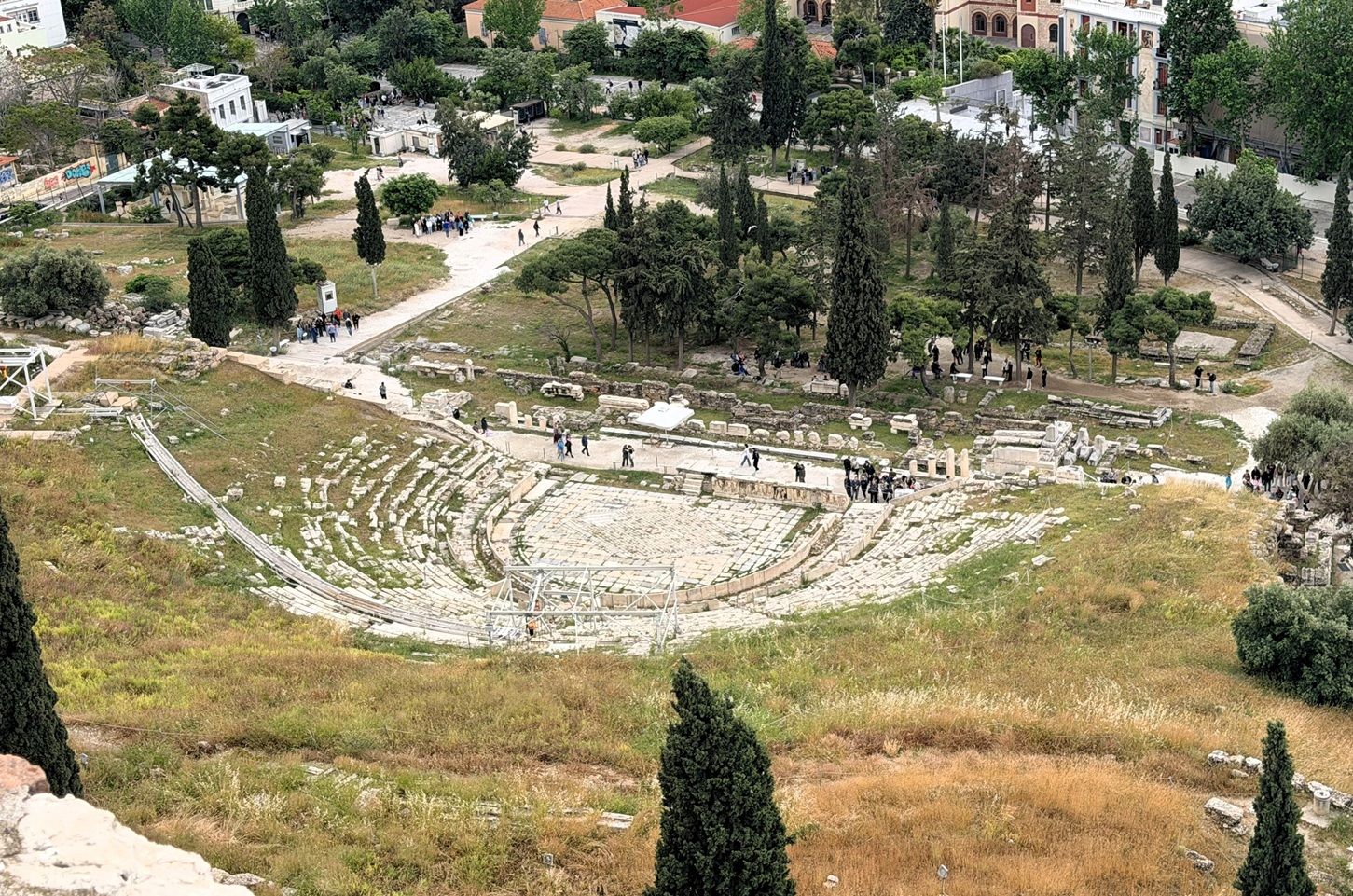
The Theatre of Dionysos on the south slope of the Acropolis in Athens is widely regarded as the birthplace of Western drama and the earliest known theatre in the world. Its origins lie not in architecture but in religion, for the site first formed part of the Sanctuary of Dionysus Eleuthereus, established in the mid sixth century BCE when the cult of the god was introduced to Athens. Dionysos was the ancient Greek god of wine, vegetation, fertility, festivity, religious ecstasy, and theatre, one of the Olympian gods and especially associated with the dramatic festivals held in his honour, including the City Dionysia at Athens where Greek theatre was born. The sanctuary contained an early temple that housed the ancient wooden cult statue, and an altar that stood at the centre of the earliest performance space. Around this nucleus, the dramatic traditions that would shape Greek culture began to take form. In its earliest phase, the theatre was little more than a circular earthen orchestra cut into the slope, with spectators seated on the hillside or on temporary wooden bleachers known as ikria. These wooden structures had previously been erected in the Agora, where their collapse during a performance is thought to have encouraged the relocation of dramatic events to the natural amphitheatre of the Acropolis’ southern flank. Archaeological excavations have revealed a polygonal terrace belonging to this early period, one of the oldest identifiable theatrical features in Greece and a rare survival from the Archaic age. By the fifth century BCE, the Theatre of Dionysos had become the principal venue for the City Dionysia, the great festival at which tragedy, comedy, and satyr drama were performed in honour of the god. It was here with the Acropolis in the background that the works of Aeschylus, Sophocles, Euripides, and Aristophanes were first staged, and where the innovations of Thespis, credited with introducing the first actor to step out from the chorus, helped define the very nature of drama. The theatre of this period remained largely simple in form, with a circular orchestra about eighteen metres across and a skene that was probably wooden and temporary, yet it was already the cultural heart of democratic Athens. Performances were understood not merely as entertainment but as civic education, shaping the values and identity of the citizen body. 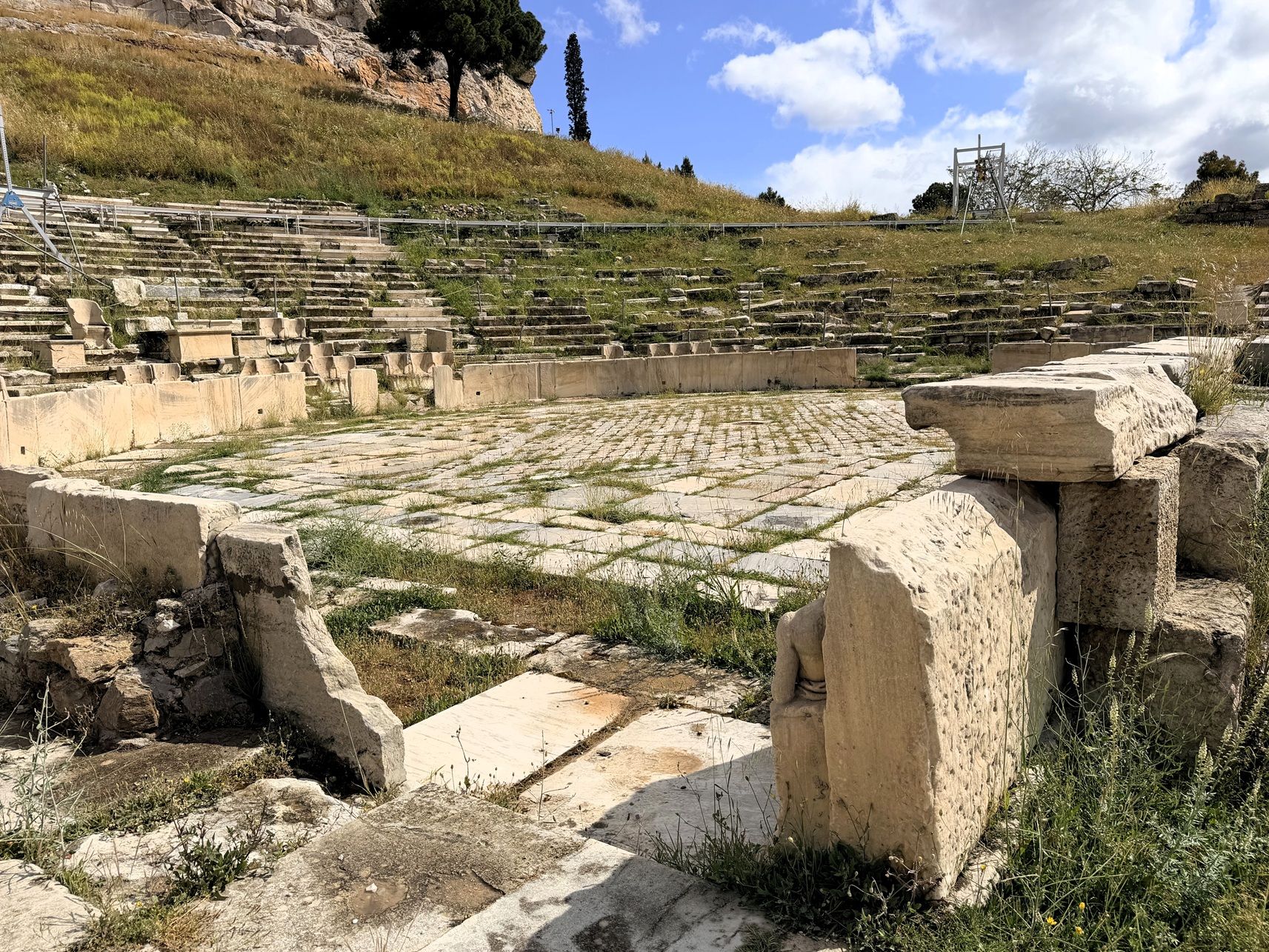 The theatre assumed its monumental stone form in the fourth century BCE during the programme of building works overseen by the statesman Lycurgus. This reconstruction created the first fully stone-built theatre in the Greek world, establishing the architectural model that would be adopted across the Mediterranean. The auditorium was carved into the hillside and furnished with stone seating arranged in steeply raked tiers, capable of accommodating between sixteen and twenty five thousand spectators. The front row was reserved for priests and civic officials, and the marble seats that survive today include the distinguished seat of the Priest of Dionysus at the centre. 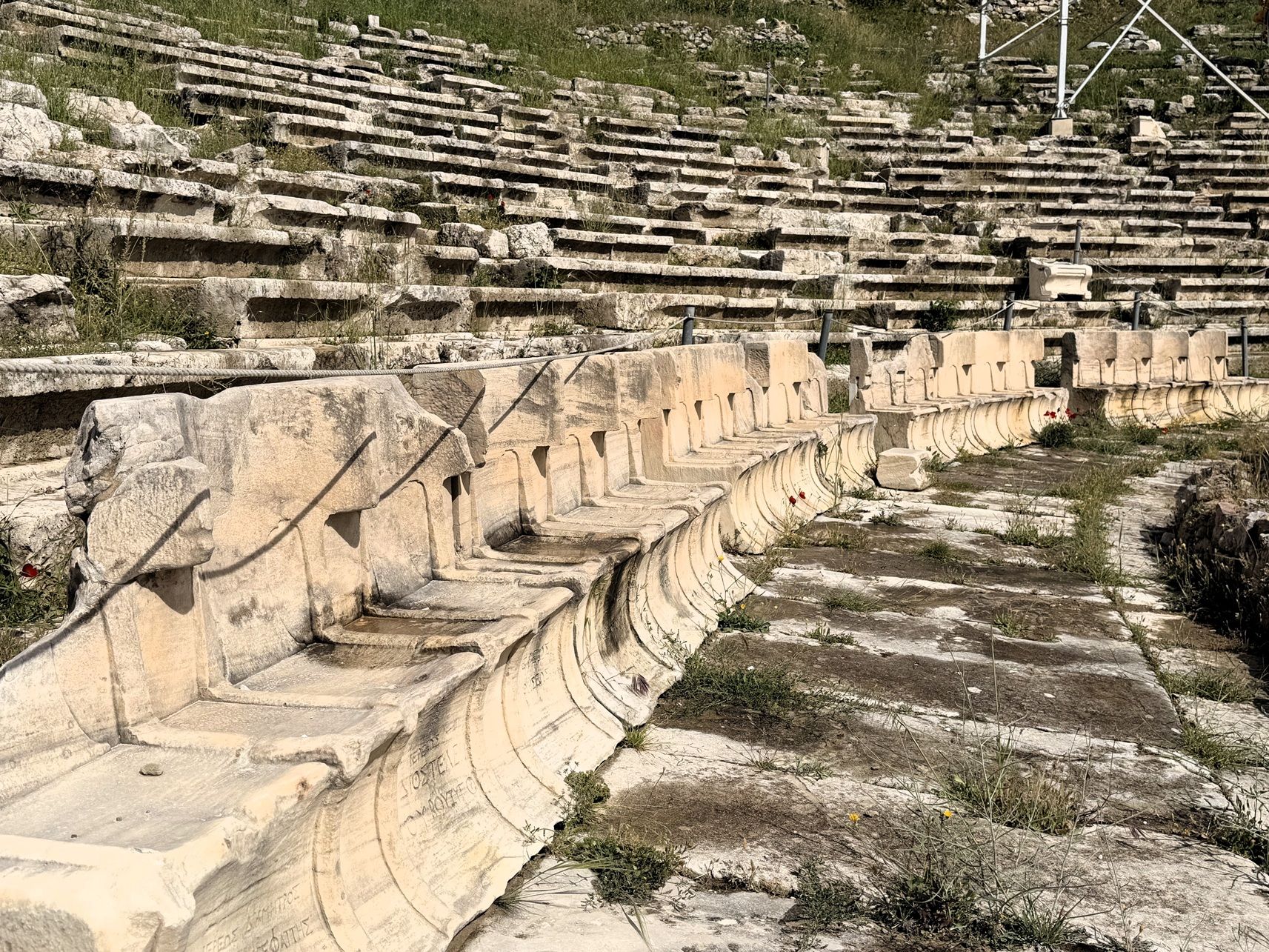 Behind the orchestra rose a more substantial stone skene, which in its later form included two storeys and could support movable stage elements, suggesting a more sophisticated approach to staging than is often assumed for Classical drama. A notable feature on the south slope above the theatre is the Statue of Menander, a Roman period copy of the honourific portrait erected by the Athenians after the playwright’s death in 291 BCE. Menander, the leading figure of Athenian New Comedy, wrote more than one hundred plays, and his gentle, character driven style later shaped Roman comedy and, indirectly, the structure of modern theatrical humour. The statue depicts him seated in a relaxed pose, draped in a himation, with the thoughtful expression seen in many surviving Roman copies of his portrait type. Although the sculpture now displayed is a later reproduction, it stands on an ancient inscribed base that once supported the original work by the sculptors Kephisodotos and Timarchos. This base confirms the statue’s identity and forms part of a wider sculptural programme that once included portraits of Aeschylus, Sophocles, and Euripides, honouring the great dramatists whose works were performed in the theatre below. Weathered but still expressive, the statue of Menander provides a tangible link to the playwright whose refined comedies were among the last great flowering of Athenian drama. 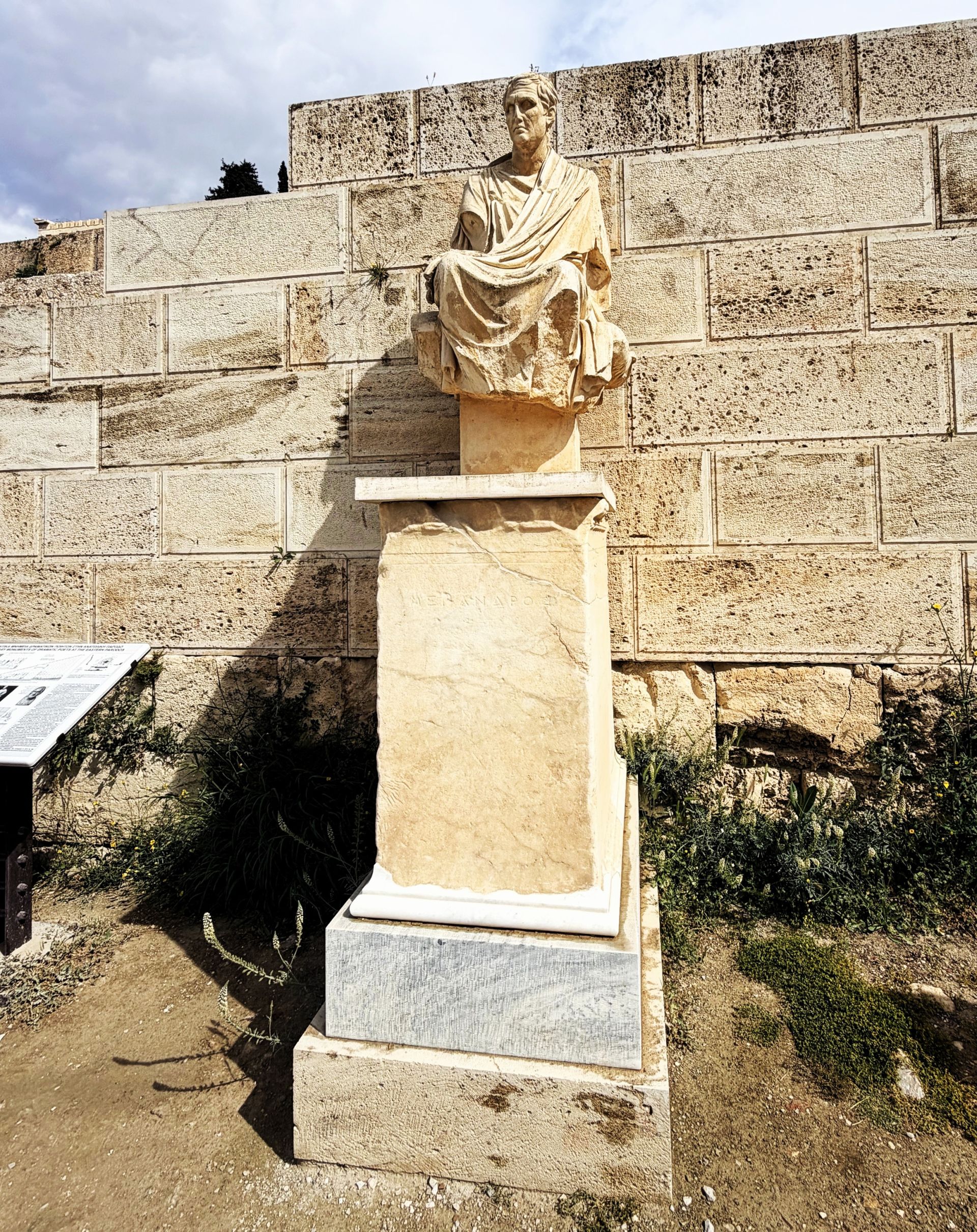 The Roman period brought further alterations to the theatre, particularly during the reign of Nero in 61 CE, when a raised stage was introduced and the skene was embellished with new architectural decoration. These changes reflected Roman theatrical tastes, yet the theatre continued to serve as a major performance venue well into antiquity. Over time, however, it fell into disuse, its structures plundered for building material and gradually buried beneath centuries of debris. It was not until the eighteenth century that the site was rediscovered, and systematic excavations in the nineteenth century, especially those led by Wilhelm Dörpfeld, clarified the sequence of its development and revealed many of the features visible today. Among the earliest finds from the sanctuary is a pediment fragment depicting satyrs and nymphs, dating to the period when the cult of Dionysus first took root in Athens. Such discoveries along with other materials of the theatre scattered around the site highlight the deep religious origins of the site, long before it became the architectural prototype for all later Greek and Roman theatres. The combination of a circular orchestra, hillside seating, and a permanent stone stage building established here would influence theatre design for centuries. 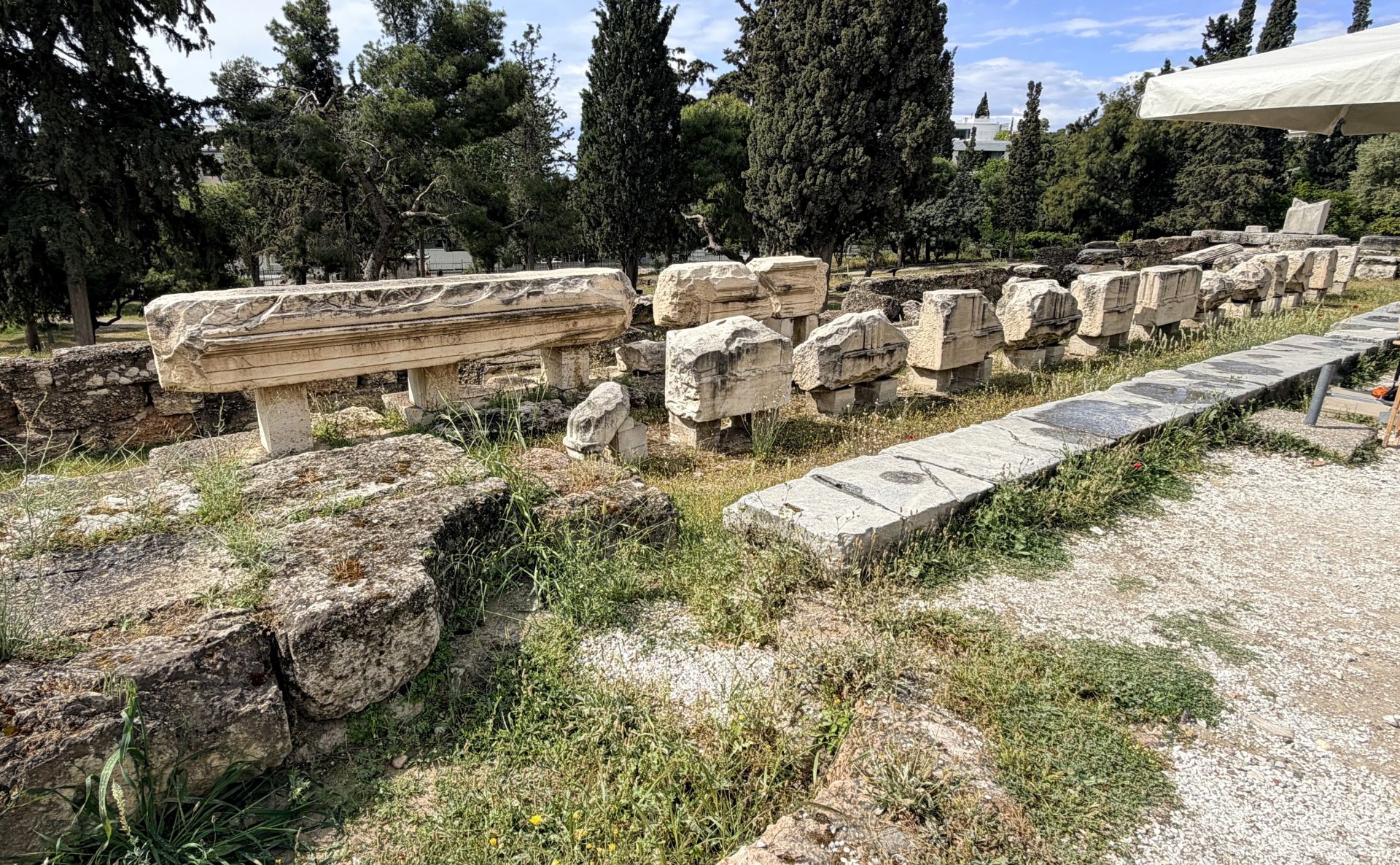 Around the site are information boards informing visitors about the theatre. 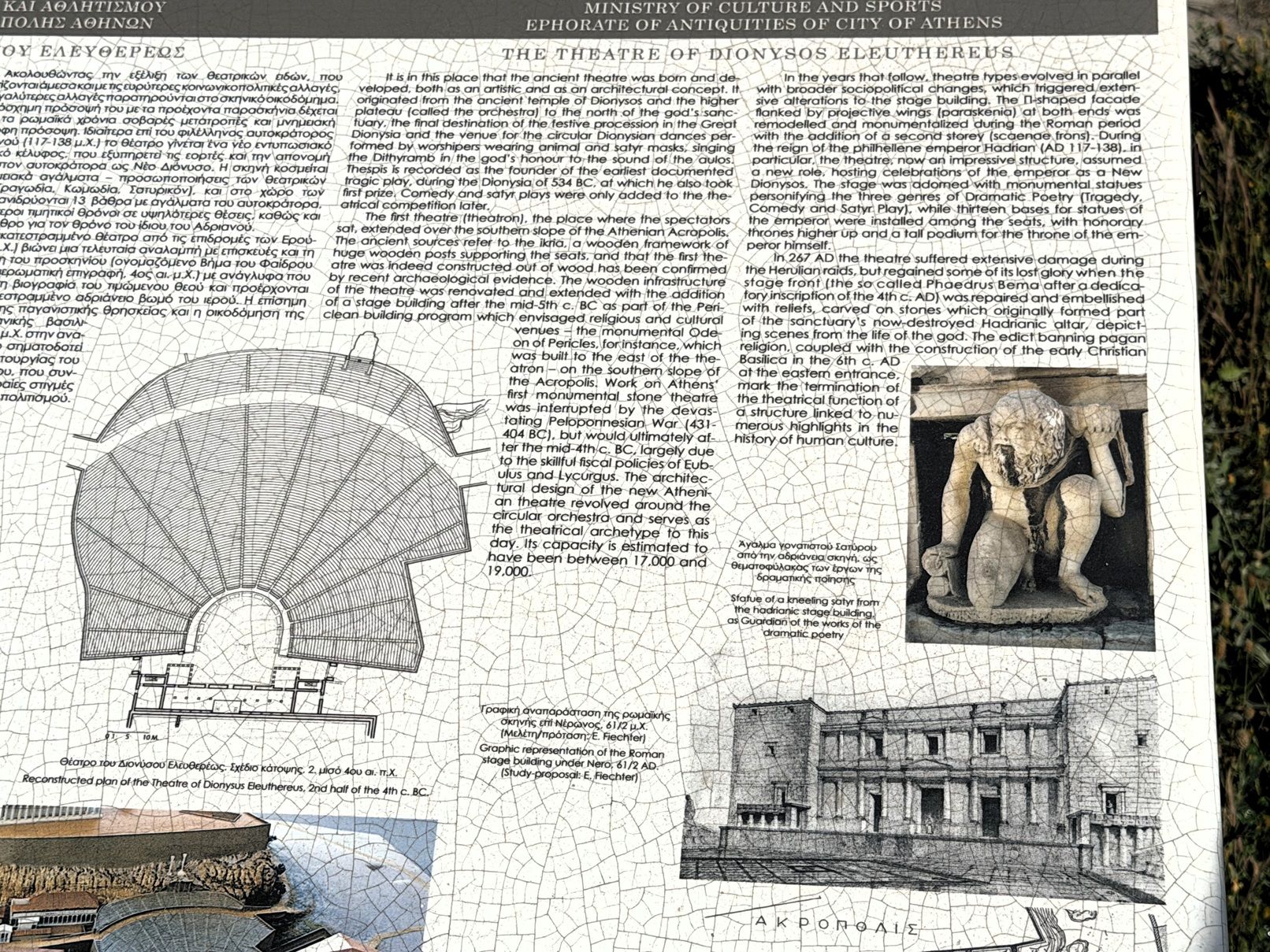 Today, the Theatre of Dionysos stands as one of the most historically significant monuments on the Acropolis slope. Although much of its structure survives only in fragments, the outlines of the orchestra, the tiers of seating, and the marble seating of the prohedria allow visitors to imagine the great festivals of the City Dionysia and the first performances of the plays that shaped Western literature. Its long history, from sacred sanctuary to monumental theatre and eventual rediscovery, makes it a site of exceptional cultural importance and a key landmark in the story of ancient Greek drama. References and Additional Information https://www.britannica.com/topic/Theatre-of-Dionysus https://www.thisisathens.org/antiquities/theatre-dionysus https://en.wikipedia.org/wiki/Theatre_of_Dionysus https://www.worldhistory.org/article/814/theatre-of-dionysos-eleuthereus/
|
 |
|
 |
|||


All Photographs were taken by and are copyright of Ron Gatepain


| Site Map |