





 |
|
|||||||||||||||
 |
||||||||||||||||











 |
|||
 |
Tromsø Tromsø Cathedral – History, Architecture & Significance 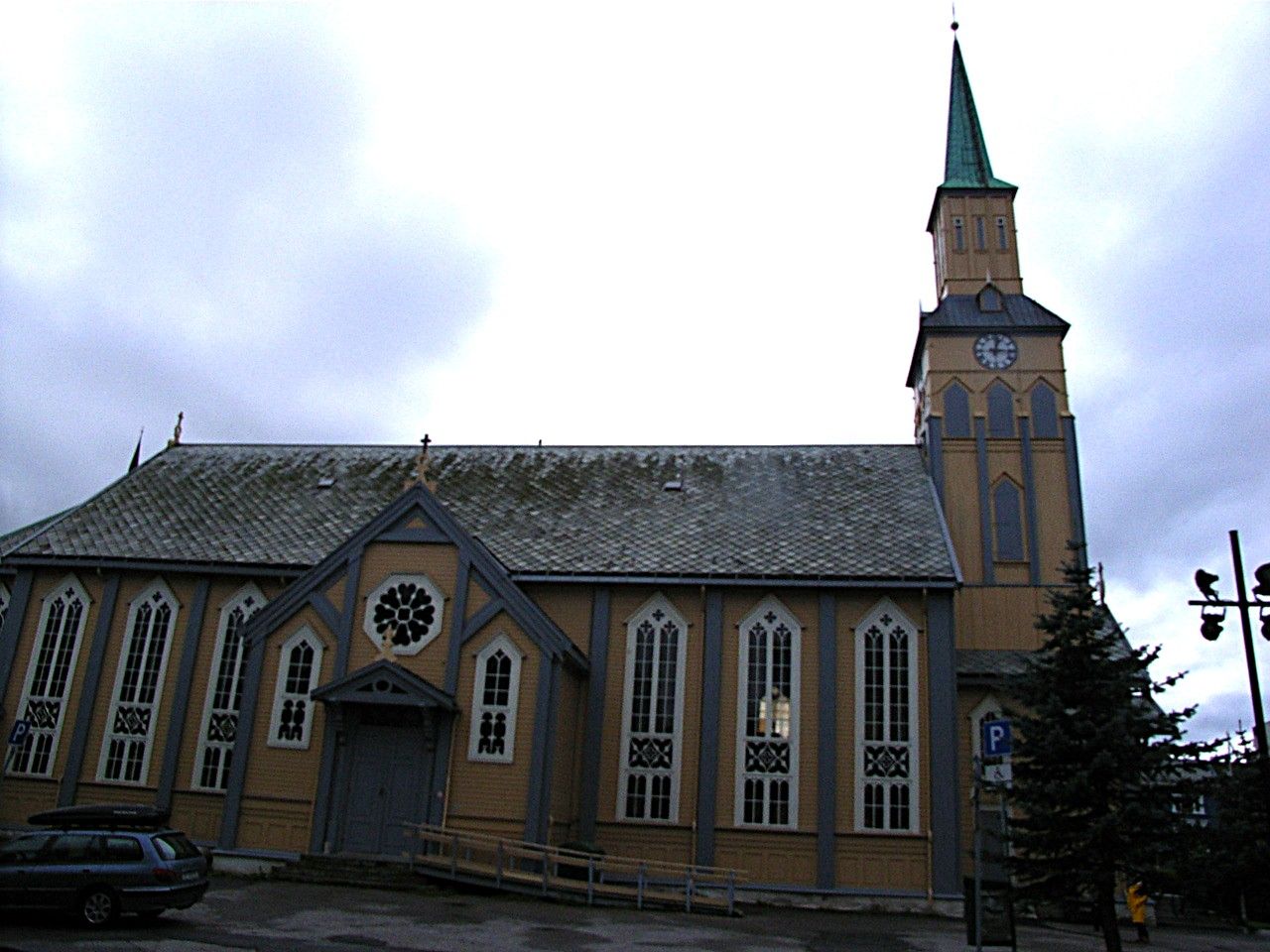
Located in the middle of Tromsø, the Lutheran Cathedral stands along Storgata, the city’s main street, and faces Stortorget, the central square. Situated within a few minutes’ walk of the Catholic Church of Our Lady, both of which were built in the same year. The first church on the site was built by King Haakon IV in 1252 as a royal chapel, known in medieval sources as “St. Mary’s near the Heathens” - a reference to its frontier location near Sámi territories. This church was replaced in 1711 and in 1803 that one was also replaced and was moved a few hundred metres south of the city boundary in 1860 to clear the site for the new 1861 cathedral. This kept the 1803 church in use as a parish building although it was moved again further up the hillside in the early 1970s. The nave, chancel, tower, and structural frame of the current cathedral were all erected in 1861, so the cathedral is officially dated to 1861. Although the Interior fittings (pulpit, pews, altarpiece) were installed over several years after 1861. Tromsø Cathedral is a rare example of a wooden Gothic Revival cathedral, in fact, the only Protestant cathedral in Norway built entirely of timber. Its design blends 19th‑century ecclesiastical formality with traditional Norwegian wooden craftsmanship. Designed by Christian Heinrich Grosch, one of Norway’s most influential 19th‑century architects in the Gothic Revival style, it is built entirely of wood, with use of traditional cog‑joint construction. It has a long‑church plan and its verticality and pointed‑arches of Gothic architecture, give it a softer, warmer character than stone Gothic churches. Its exterior has a tall west‑front tower with pointed‑arch openings and a steep spire reaching about 40 m (131 ft) in height. The exterior with its white trim and a light yellow vertical wooden panelling gives it a high visibility. 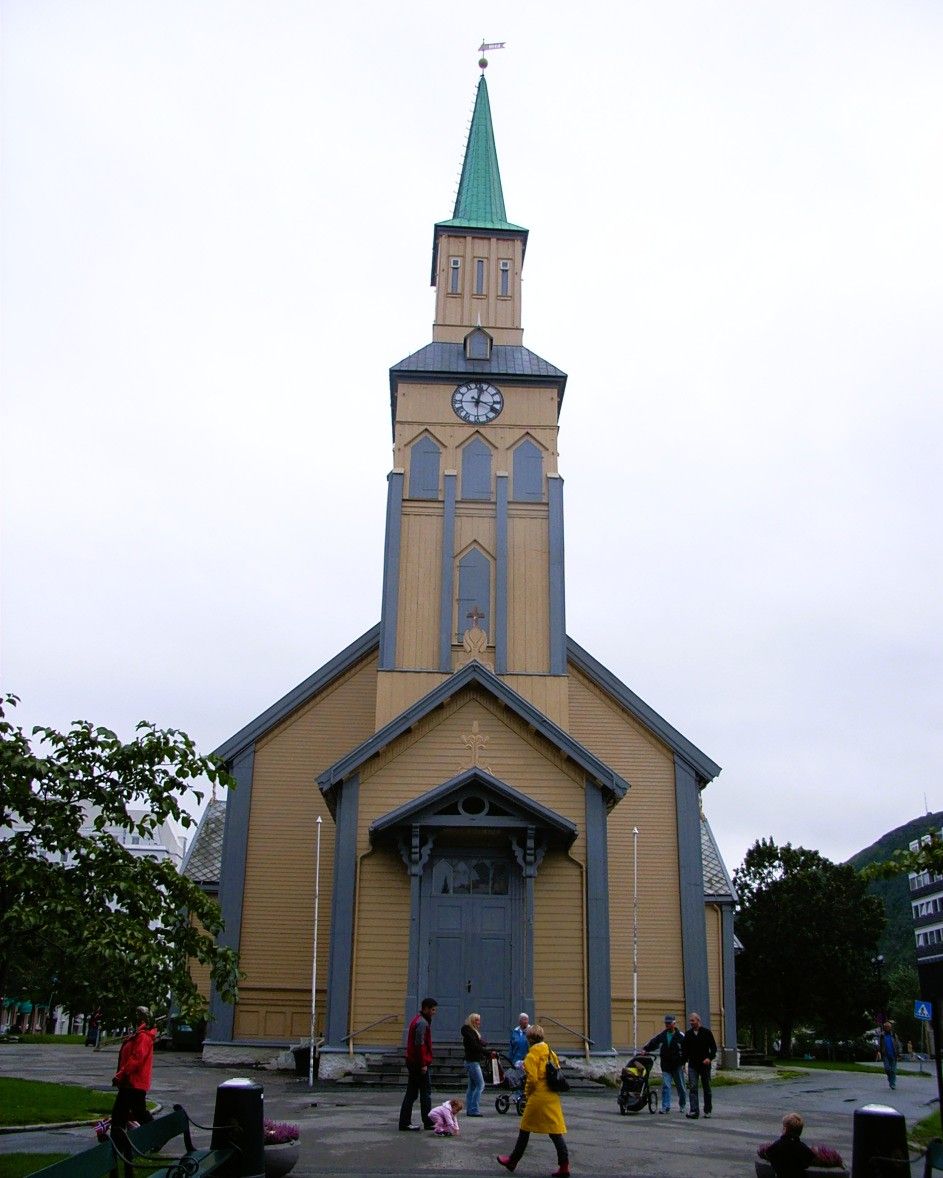 The interior is simpler than stone Gothic cathedrals, although it retains key stylistic elements. It has a bright, airy interior created by pale timber surfaces. Pointed‑arch windows, these were originally clear glass, but stained glass was added in the mid‑20th century, primarily during restoration and modernisation phases in the 1950s–1960s. The interior has been modified over time, including the removal of rear pews. Originally it had 984 seats whereas following work carried out in the late 20th century to create a rear gathering space, today it has 618 seats. 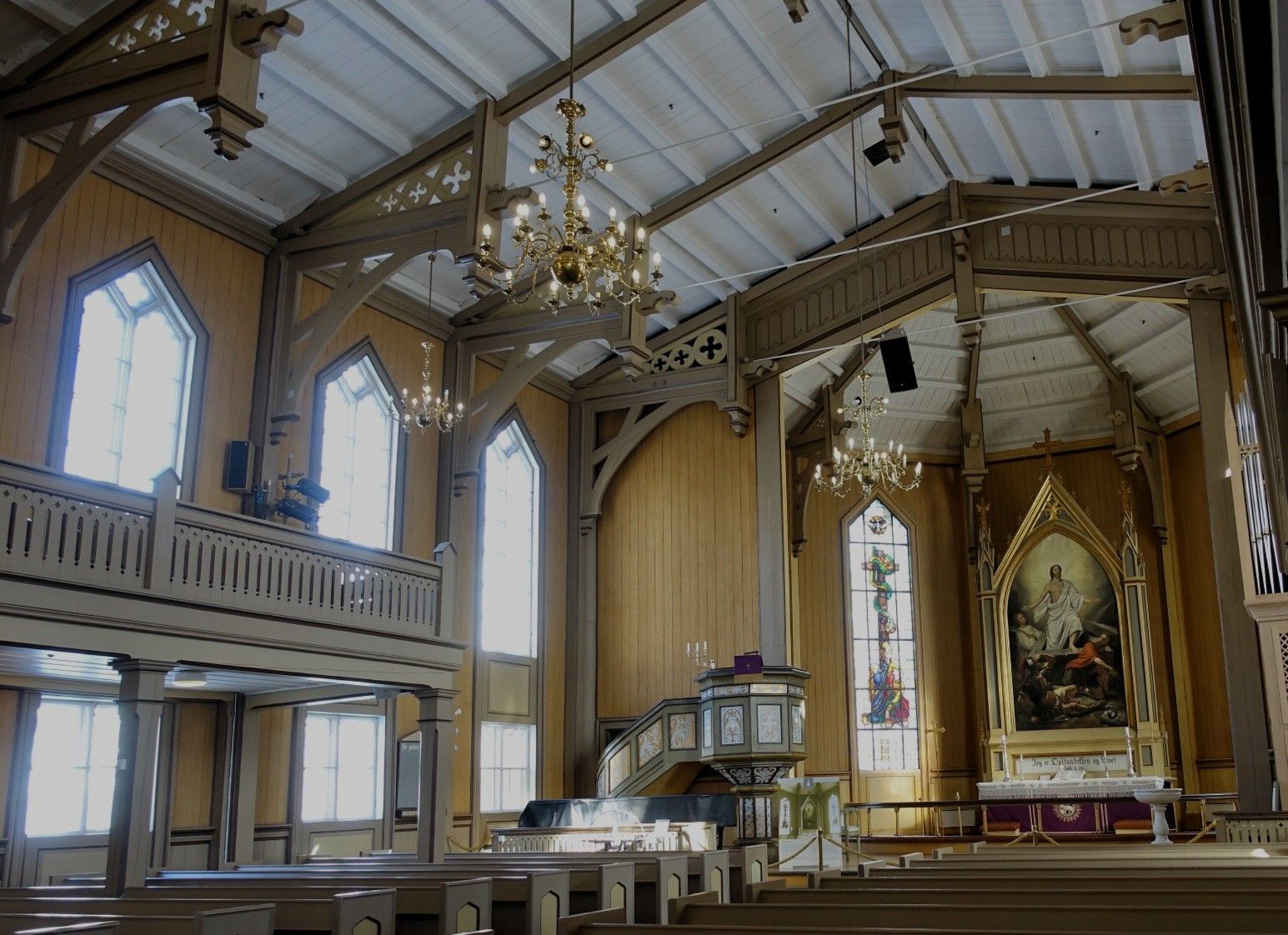 At the eastern end of the cathedral, in a slightly raised chancel, is the rectangular altar table with the reredos (altarpiece) that features a copy of Adolph Tidemand’s painting “The Resurrection” behind it. Tidemand was one of Norway’s most important 19th‑century painters and his religious works were widely reproduced for churches across the country. It was installed in the cathedral during the completion of the interior decoration in the 1880s and framed in a Gothic Revival wooden structure. Beneath the altarpiece is a quotation from John 11:25: “Jeg er Opstandelsen og Livet” (“I am the Resurrection and the Life.”)  The baptismal font stands in the chancel, near the altar rail. This is made of wood, consistent with the cathedral’s all‑timber construction. As the wood cannot hold water without damage, a metal bowl is inserted when needed. The pulpit is Gothic Revival, but in the restrained Lutheran manner with clean vertical lines, minimal ornamentation - it dates from the late 19th or early 20th century. 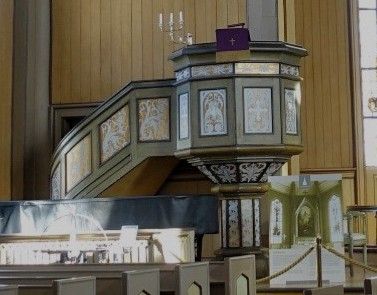 The cathedral has had three major organs; the first was installed in 1860s, this was replaced in 1890s which was again replaced in 1965 with a large, multi‑manual Jørgensen organ, typical of mid‑century Scandinavian cathedral organs. This was due to the existing one becoming unreliable and too small for the cathedral needs. Today, the organ is central to: Sunday services; Weddings and funerals; Concerts and festival and the cathedral’s strong choral tradition. The Cathedral is known for its active music program, and the organ is a key part of the city’s cultural life. The cathedral remains a hub for worship, concerts, civic ceremonies, and community gatherings. |
 |
|
 |
|||


All Photographs were taken by and are copyright of Ron Gatepain


| Site Map |