







 |
|
|||||||||||||||
 |
||||||||||||||||











 |
|||
 |
Virginia Colonial Williamsburg George Wythe House 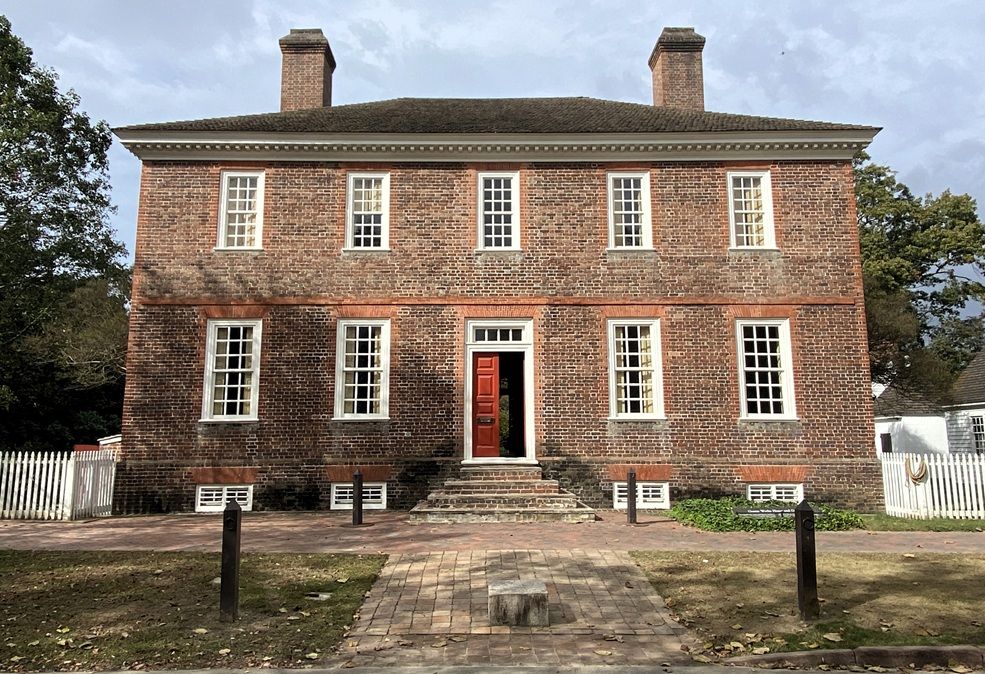
The George Wythe House is a Georgian-style building constructed in the 1750s which was once home to George Wythe (1726 - 1806) - signer of the Declaration of Independence, mentor to Thomas Jefferson, and America’s first law professor. It also briefly served as George Washington’s headquarters during the Revolutionary War. Built in Georgian style with red brick façade with white woodwork, and a hip roof. The property included a kitchen, laundry, smokehouse, poultry house, dovecote, stable, and conjectural gardens. Built 1752–1754 by Richard Taliaferro, a wealthy planter and architect, for his daughter Elizabeth and her husband George Wythe who lived there until Elizabeth death in 1787. In September 1781, during the Revolutionary War, General George Washington used the house as his headquarters while planning the Siege of Yorktown. In 1791, Wythe moved to Richmond to serve as a judge. The house then saw several subsequent owners through the 19th century. In 1926, Rev. W.A.R. Goodwin (rector of Bruton Parish Church) established his offices on the second floor after the parish acquired the building. It was acquired in 1938, by Colonial Williamsburg who restored the interiors to reflect Wythe family life and in1970 the house was declared a National Historic Landmark. The House follows a classic Georgian “centre-passage, double-pile” plan, with rooms arranged symmetrically around a central hall. Each space reflects both domestic life and Enlightenment-era intellectual pursuits. The Centre Passage or Hall runs front-to-back, dividing the house into two equal halves. It is there that the staircase is located and the four doors leading into the main rooms. It functioned as both circulation space and a ceremonial axis, emphasizing Georgian symmetry. At the rear, the passage leads directly to the yard and service outbuildings, linking ceremonial interiors with the labouring spaces outside.  To the front on the right is the Parlour, which was the formal entertaining space, used for receiving guests. With large windows and fine woodwork emphasising elegance and proportion, its furnishings, portraits, and decorative objects projected the Wythe family’s taste and status. 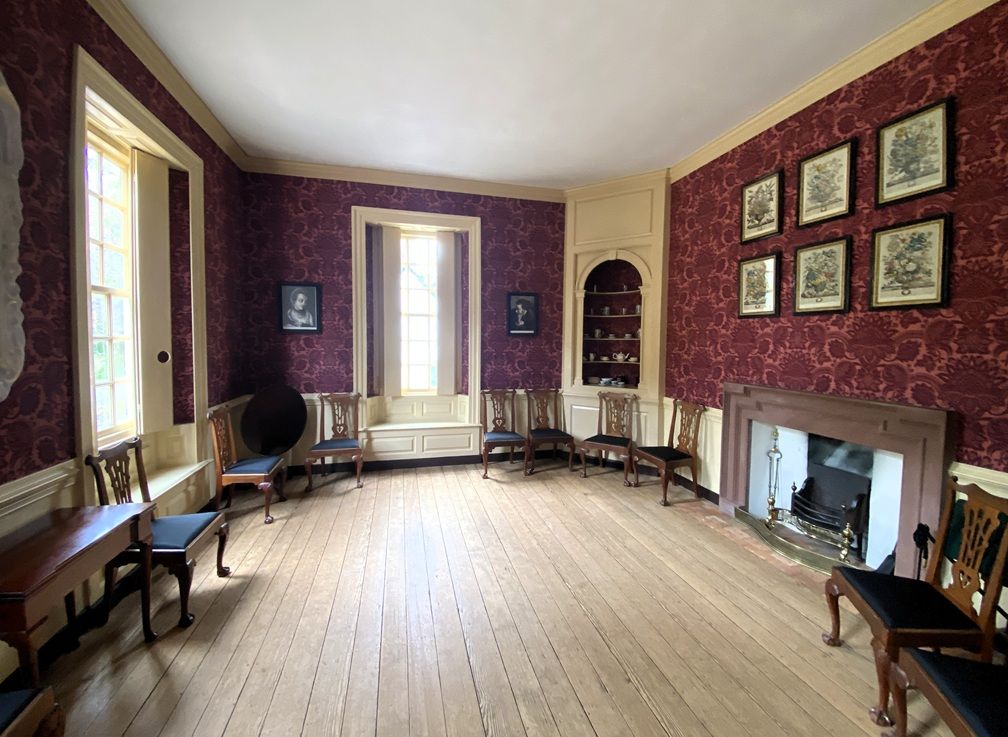 At the left side of the Hall at the front is the Dining Room used for hosting meals and for social gatherings, it was the ceremonial heart of hospitality, balancing refinement with sociability. 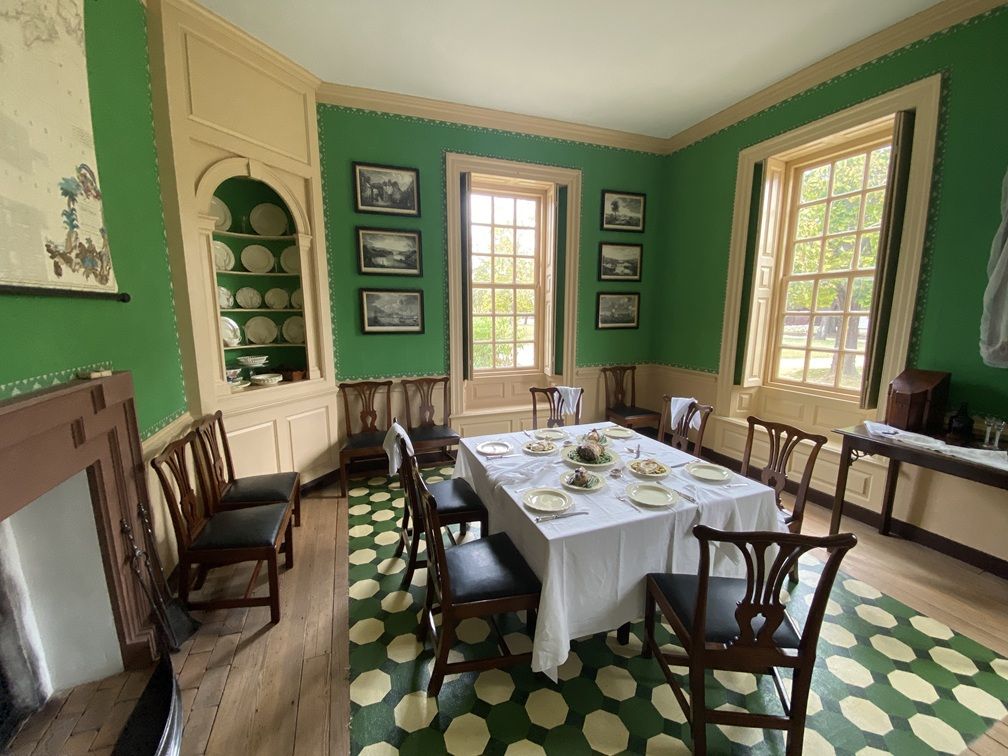 At the rear of the house on the right side behind the Parlour is the Study /Office which contained books, legal papers, and scientific instruments and is where Wythe taught law apprentices like Thomas Jefferson. The study was a quiet, more private room devoted to scholarship and mentorship. 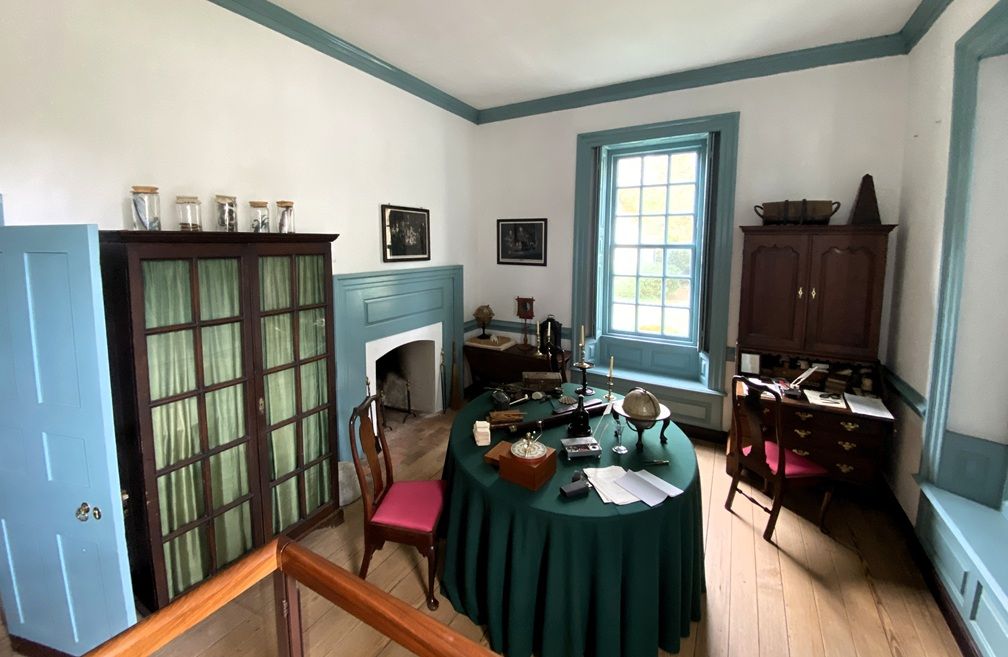 Opposite the Study/Office at the rear is the Withdrawing Room which served as a private chamber by Elizabeth Wythe as her personal space, used for domestic management and respite. It was also where accounts, correspondence, and household decisions were handled. It could, however, serve as a bedroom or sitting room for close family members. 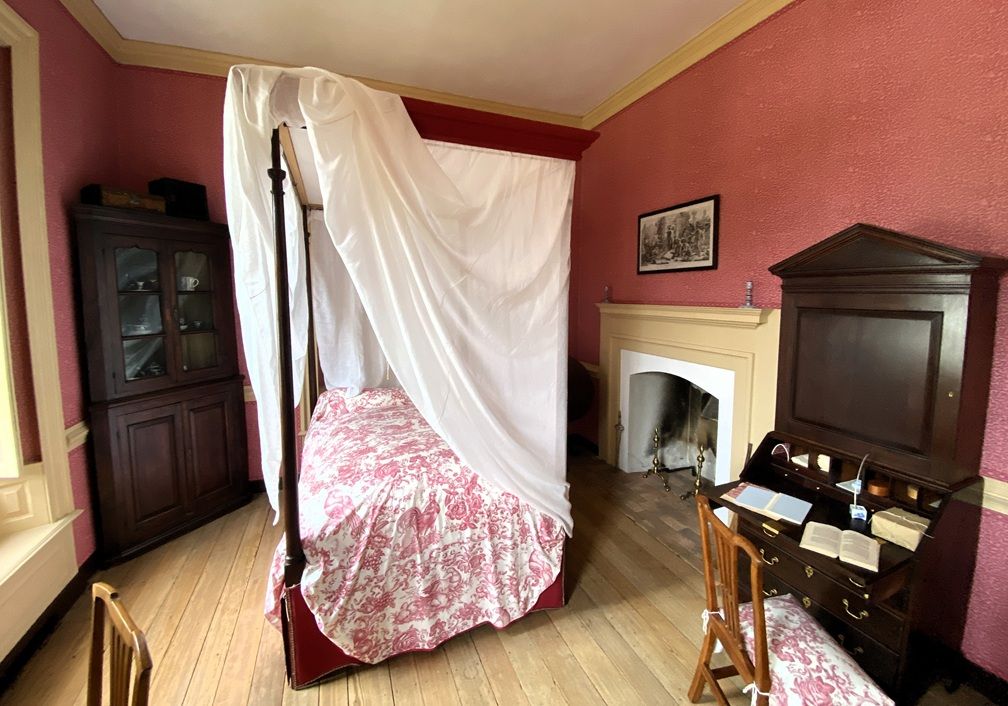 Going up the stairs the rooms off the landing are placed similarly as the ones below and consist of four Bedchambers.  These were used by family members, guests, and students boarding with Wythe. In Georgian domestic design, bedrooms were not only for sleeping but also for private retreat, family life, and sometimes semi-public functions like receiving close visitors. During the Revolutionary War, George Washington occupied one of these upper rooms while planning the Siege of Yorktown, and in 1781 it served as Washington’s Headquarters. 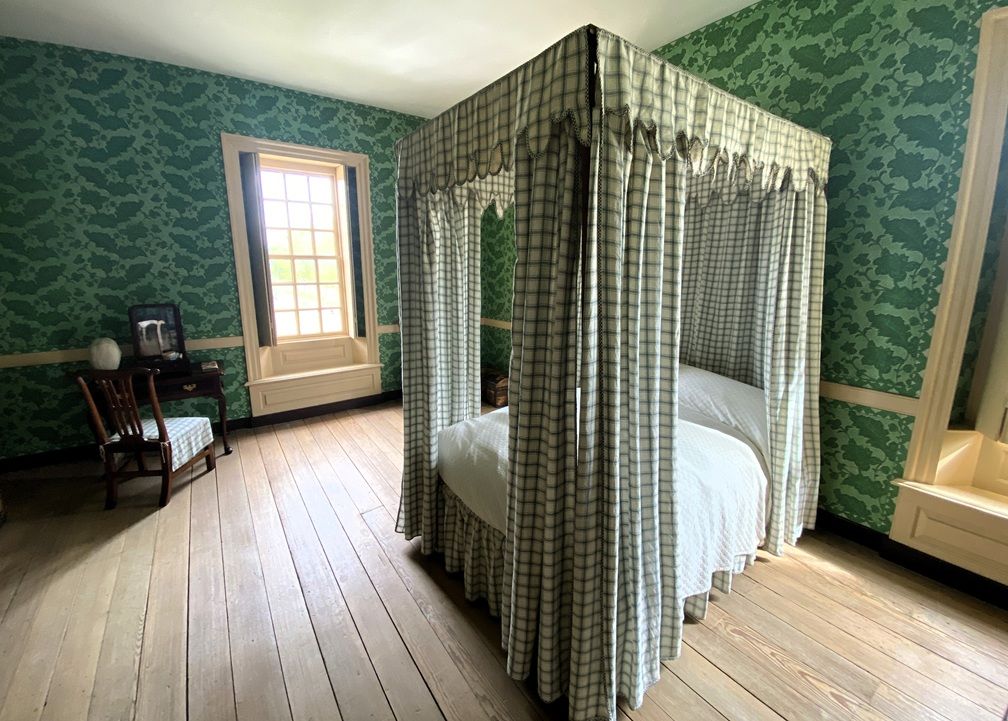 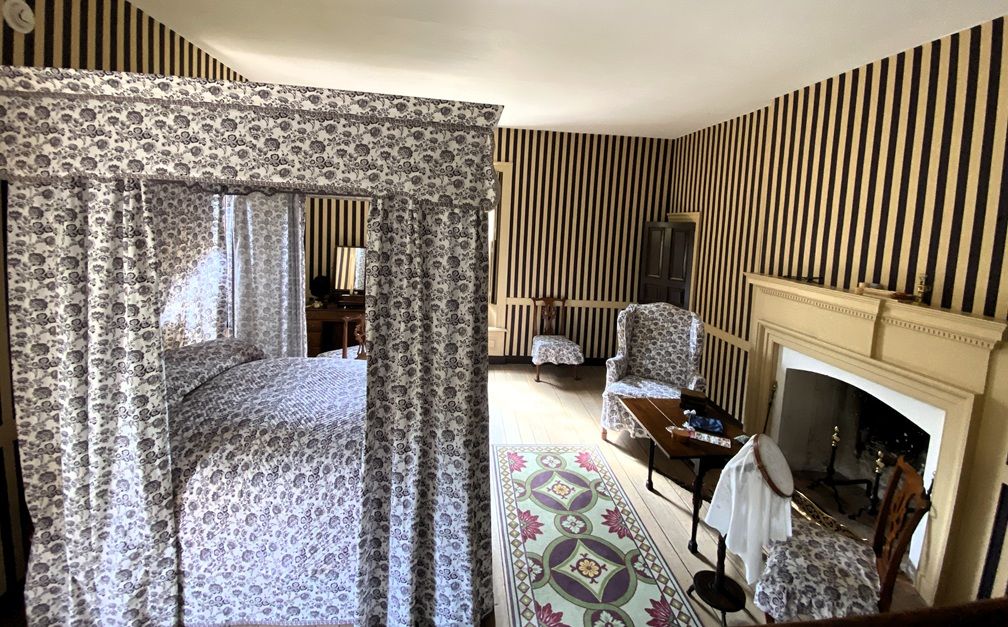 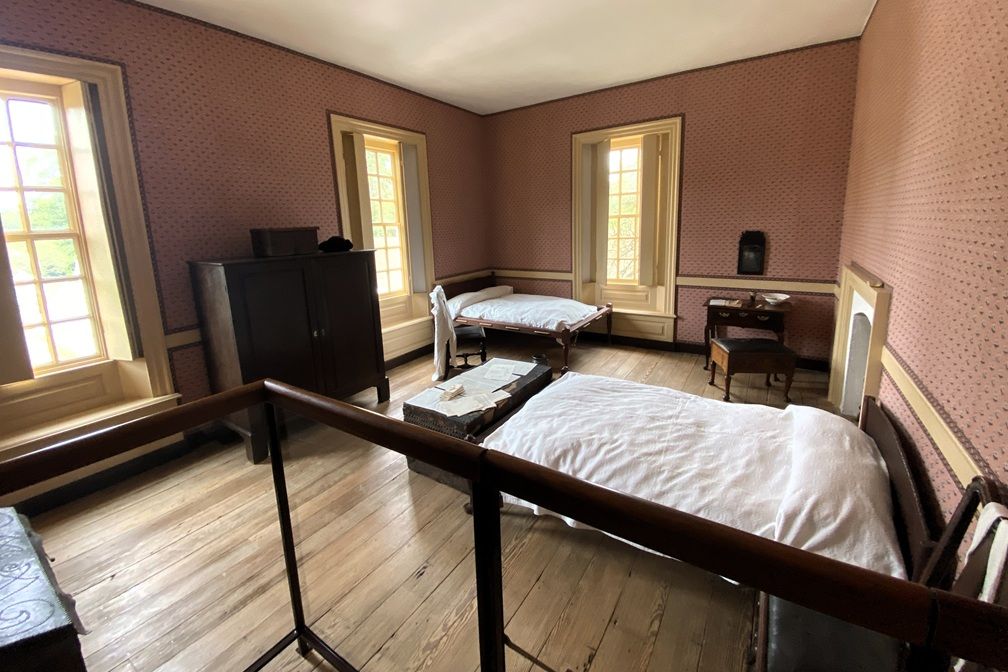 Looking out the rear bedrooms, the rear garden and outbuildings can be seen. 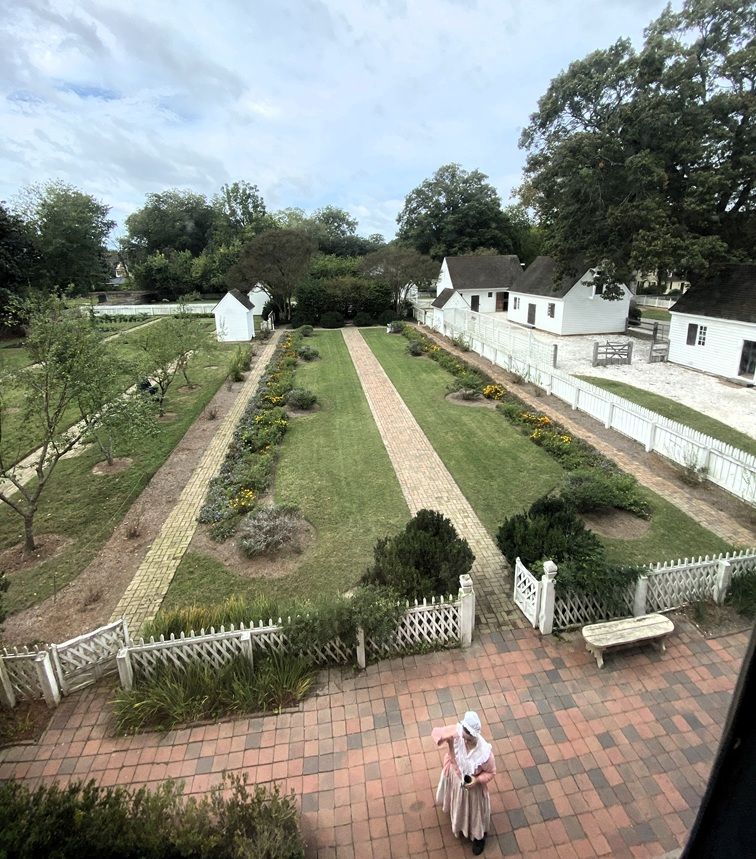 The outbuildings consist of the Kitchen, Laundry, Smokehouse, Stable, and Poultry House all of which are essential for daily operations: These would be managed by Elizabeth Wythe and enslaved personnel. 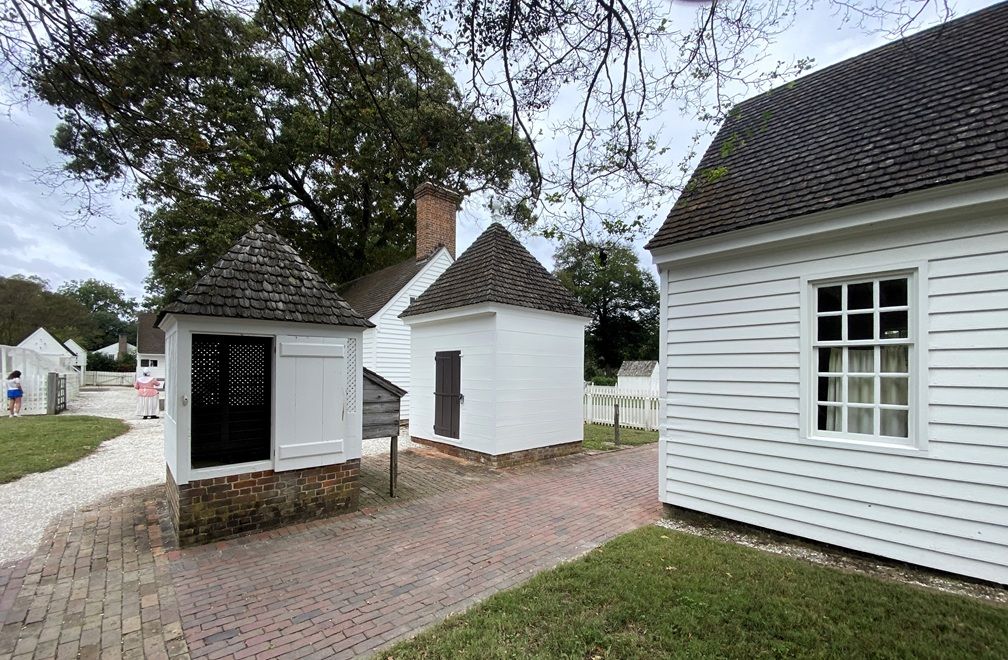 The enslaved labour would work and live in these buildings. 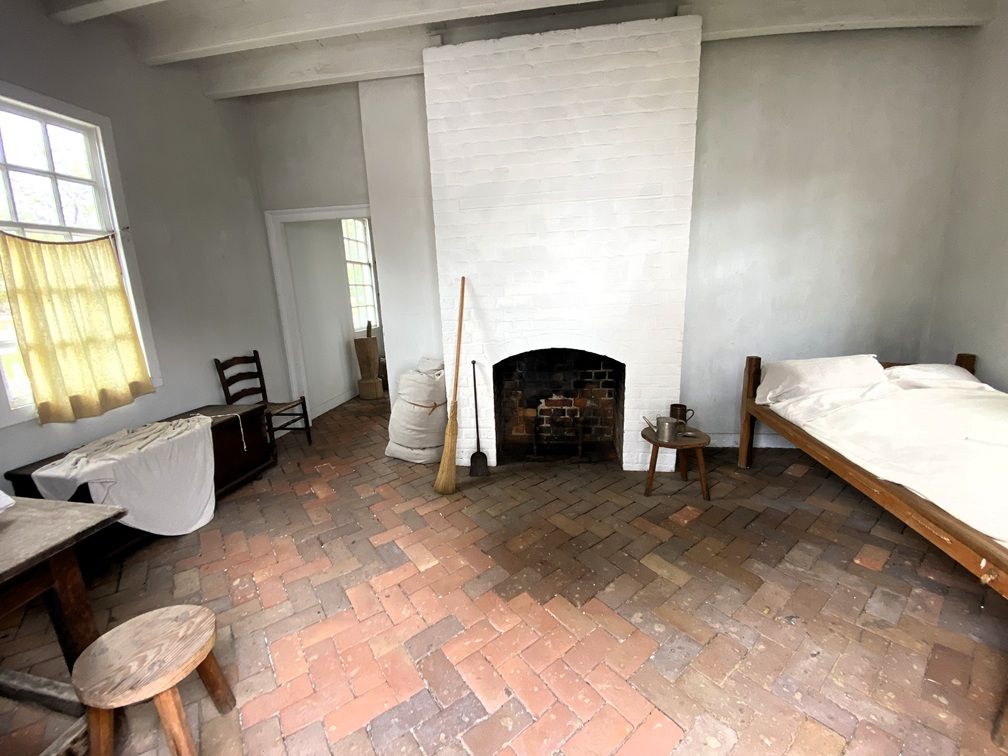 As was normal in those days the kitchen was not inside the main building but located in a separate outbuilding. This arrangement kept heat, smoke, and the risk of fire away from the formal rooms, while also reinforcing the ceremonial separation between refined domestic life and the labour that sustained it. The kitchen was a detached brick building behind the main house. The food was carried into the dining room through the yard and passageways. The kitchen contained a large hearth and ovens for roasting, boiling, and baking. 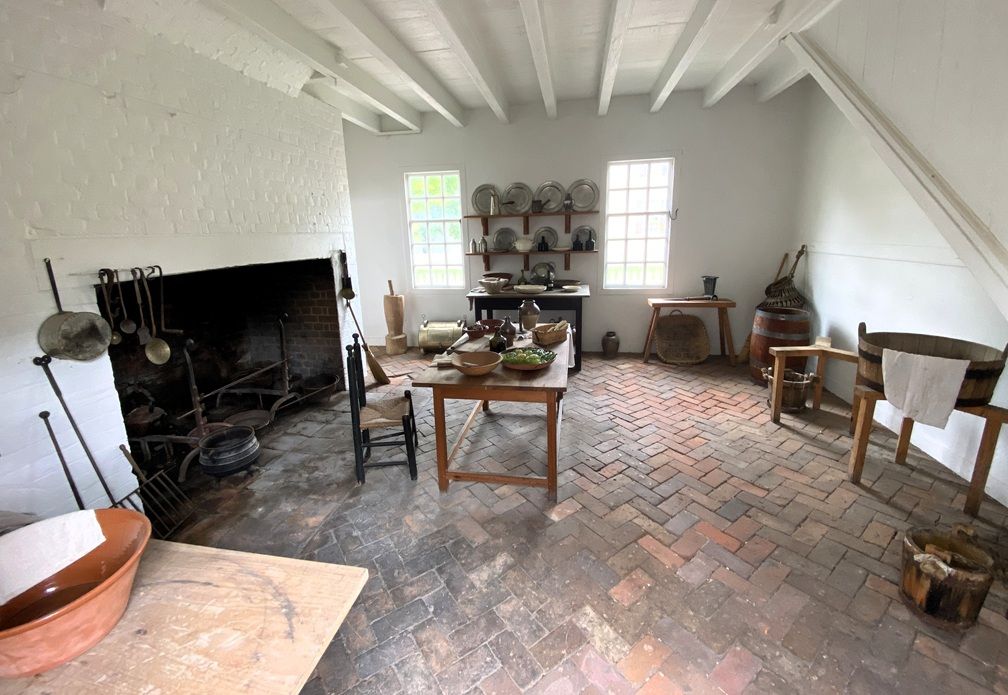 Like the kitchen, the laundry was a detached outbuilding behind the main house. In 18th‑century Virginia, laundry was a physically demanding, specialised task, and its separation from the main residence reflected both practical concerns (heat, steam, odours) and the social logic of keeping labour invisible from ceremonial and family life. All buildings can be visited during a tour of the house and are included in the guided tour. 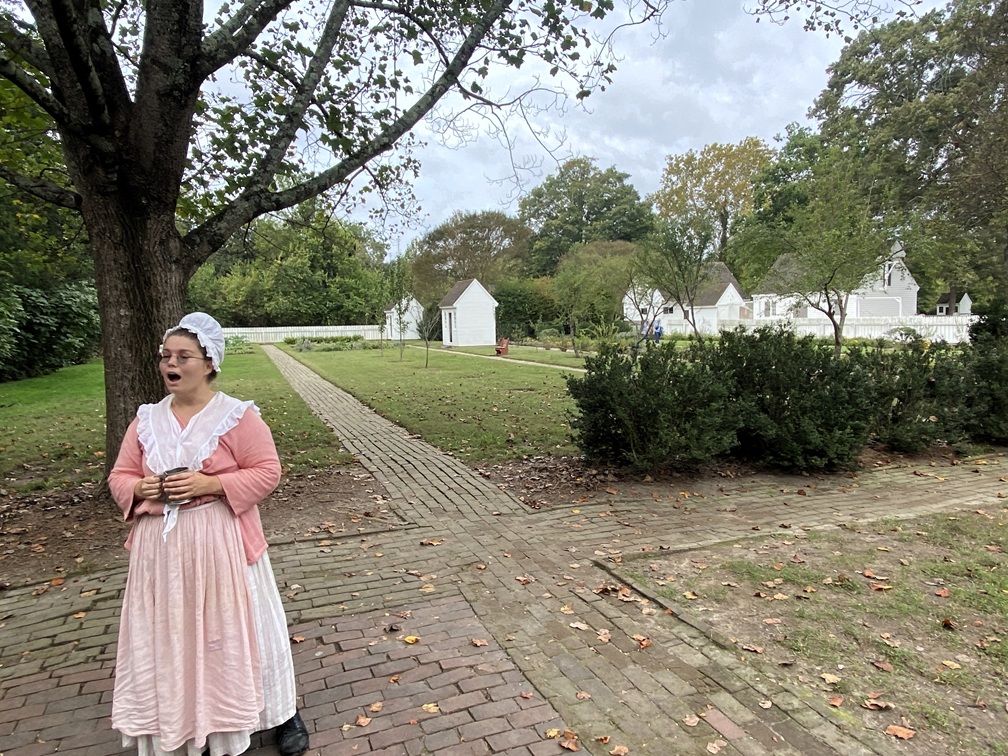 |
 |
|
 |
|||


All Photographs were taken by and are copyright of Ron Gatepain


| Site Map |