 |
Places of Historic & Architectural Interest in India
Agra
Taj Mahal
The Taj  Mahal is one of the most splendid pieces of architecture in the world. It was built by the 5th Mogul emperor of India, Shah Jahan, as a mausoleum to his beloved wife Ar-ju-mand Banu Begum, a Muslim Persian princess better known by her other name, Mumtaz Mahal, which means, the Distinguished of the Palace. The couple met in 1607, when he was 15, and Mahal is one of the most splendid pieces of architecture in the world. It was built by the 5th Mogul emperor of India, Shah Jahan, as a mausoleum to his beloved wife Ar-ju-mand Banu Begum, a Muslim Persian princess better known by her other name, Mumtaz Mahal, which means, the Distinguished of the Palace. The couple met in 1607, when he was 15, and
he fell in love, although they weren't married until 1612 when she became his second wife. READ MORE
The Red Fort
 The Red Fort dates back to the 10th century when it started as a simple mud and brick fortress on the banks of the River Yamuna. When Akbar – who was to become known as Akbar the Great (1564-1570) chose Agra as the capital of the Mughal empire, he set about rebuilding the fortress and followed the lines of its original layout, something that accounts for the irregular semi-circle shape of the outer bastioned walls. Started in 1565, it took eight years to build and was one of the largest fortified residences of the Mughal Empire, with over 500 buildings. READ MORE The Red Fort dates back to the 10th century when it started as a simple mud and brick fortress on the banks of the River Yamuna. When Akbar – who was to become known as Akbar the Great (1564-1570) chose Agra as the capital of the Mughal empire, he set about rebuilding the fortress and followed the lines of its original layout, something that accounts for the irregular semi-circle shape of the outer bastioned walls. Started in 1565, it took eight years to build and was one of the largest fortified residences of the Mughal Empire, with over 500 buildings. READ MORE
Tomb of Itmad-ud-Daula - Baby Taj
 The Tomb of Itmad-ud-Daula’s is in the city of Agra a short distance from the Taj Mahal (see above). It is more commonly known as the ‘Baby Taj’ as it is thought to have been the model for the Taj Mahal, although it is also referred to as the 'jewel box'. The Tomb of Itmad-ud-Daula’s is in the city of Agra a short distance from the Taj Mahal (see above). It is more commonly known as the ‘Baby Taj’ as it is thought to have been the model for the Taj Mahal, although it is also referred to as the 'jewel box'.
The Tomb was built between 1622 and 1628 as the mausoleum of Mirza Ghiyas Beg, the chief treasurer under the Mughal Emperor Jahangir, who gave him the title of 'I'timad-ud-Daulah', which means 'Pillar of the State'. READ MORE
Mumbai
Elephanta Caves
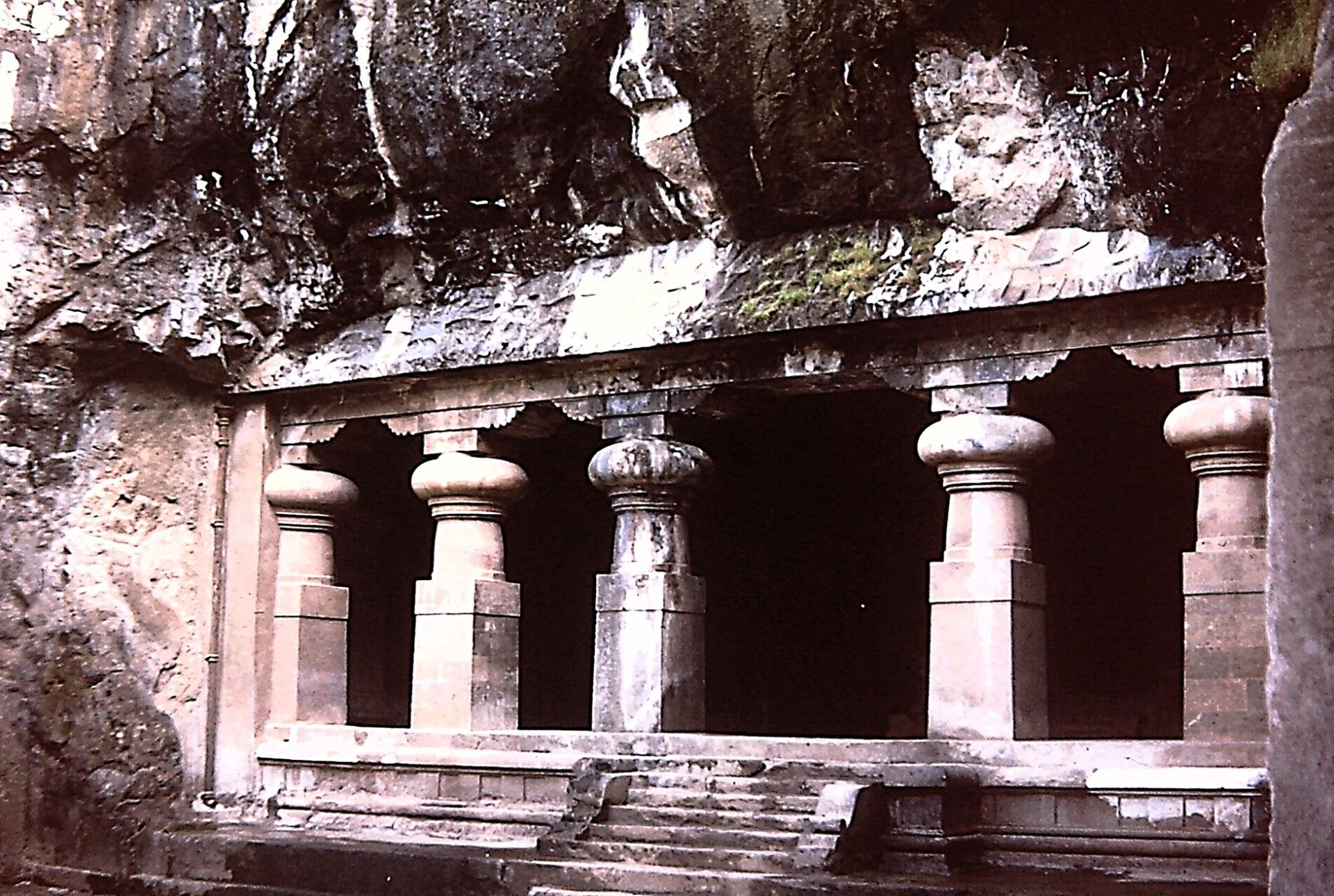 The Elephanta Caves, carved into a basalt hill on Elephanta Island near Mumbai, are a 5th–7th‑century Hindu rock‑cut temple complex dedicated to the worship of Shiva, featuring a mandala‑like plan with a freestanding linga shrine at its core and monumental reliefs - including the iconic Trimurti/Sadashiva, Nataraja, Yogīśvara, Ardhanārīśvara, and Gangādhara - arranged along the cardinal axes; the caves suffered significant damage during Portuguese occupation in the 16th–17th centuries but were later conserved under British and Indian stewardship, ultimately being recognised in 1987 as a UNESCO World Heritage Site for their artistic mastery and exceptional testimony to early medieval Shaivite culture. READ MORE The Elephanta Caves, carved into a basalt hill on Elephanta Island near Mumbai, are a 5th–7th‑century Hindu rock‑cut temple complex dedicated to the worship of Shiva, featuring a mandala‑like plan with a freestanding linga shrine at its core and monumental reliefs - including the iconic Trimurti/Sadashiva, Nataraja, Yogīśvara, Ardhanārīśvara, and Gangādhara - arranged along the cardinal axes; the caves suffered significant damage during Portuguese occupation in the 16th–17th centuries but were later conserved under British and Indian stewardship, ultimately being recognised in 1987 as a UNESCO World Heritage Site for their artistic mastery and exceptional testimony to early medieval Shaivite culture. READ MORE
Gateway of India
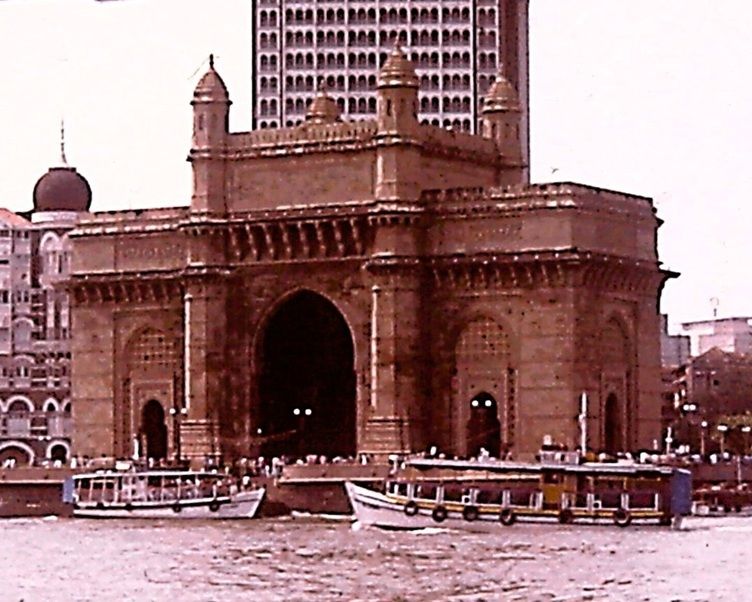 The Gateway of India is a 26‑metre basalt triumphal arch on Mumbai’s waterfront at Apollo Bunder, built between 1913 and 1924 to commemorate the 1911 visit of King George V and Queen Mary and to serve as the ceremonial point of arrival for British dignitaries entering India by sea. Designed by Scottish architect George Wittet in the Indo‑Saracenic style - blending Islamic arches, Hindu decorative motifs, and European monumental form - it was constructed from locally quarried yellow basalt by Indian engineers and craftsmen on newly reclaimed land that required deep foundations. Once a symbol of imperial authority, it became a powerful emblem of independence when the last British troops departed through it in 1948, and today it remains one of Mumbai’s most visited public spaces, a cultural gathering point, and a defining icon of the city’s maritime identity. READ MORE The Gateway of India is a 26‑metre basalt triumphal arch on Mumbai’s waterfront at Apollo Bunder, built between 1913 and 1924 to commemorate the 1911 visit of King George V and Queen Mary and to serve as the ceremonial point of arrival for British dignitaries entering India by sea. Designed by Scottish architect George Wittet in the Indo‑Saracenic style - blending Islamic arches, Hindu decorative motifs, and European monumental form - it was constructed from locally quarried yellow basalt by Indian engineers and craftsmen on newly reclaimed land that required deep foundations. Once a symbol of imperial authority, it became a powerful emblem of independence when the last British troops departed through it in 1948, and today it remains one of Mumbai’s most visited public spaces, a cultural gathering point, and a defining icon of the city’s maritime identity. READ MORE
|
 |