






 |
|
|||||||||||||||
 |
||||||||||||||||













 |
||
 |
Athens
Odeon of Herodes Atticus (Herodeion) 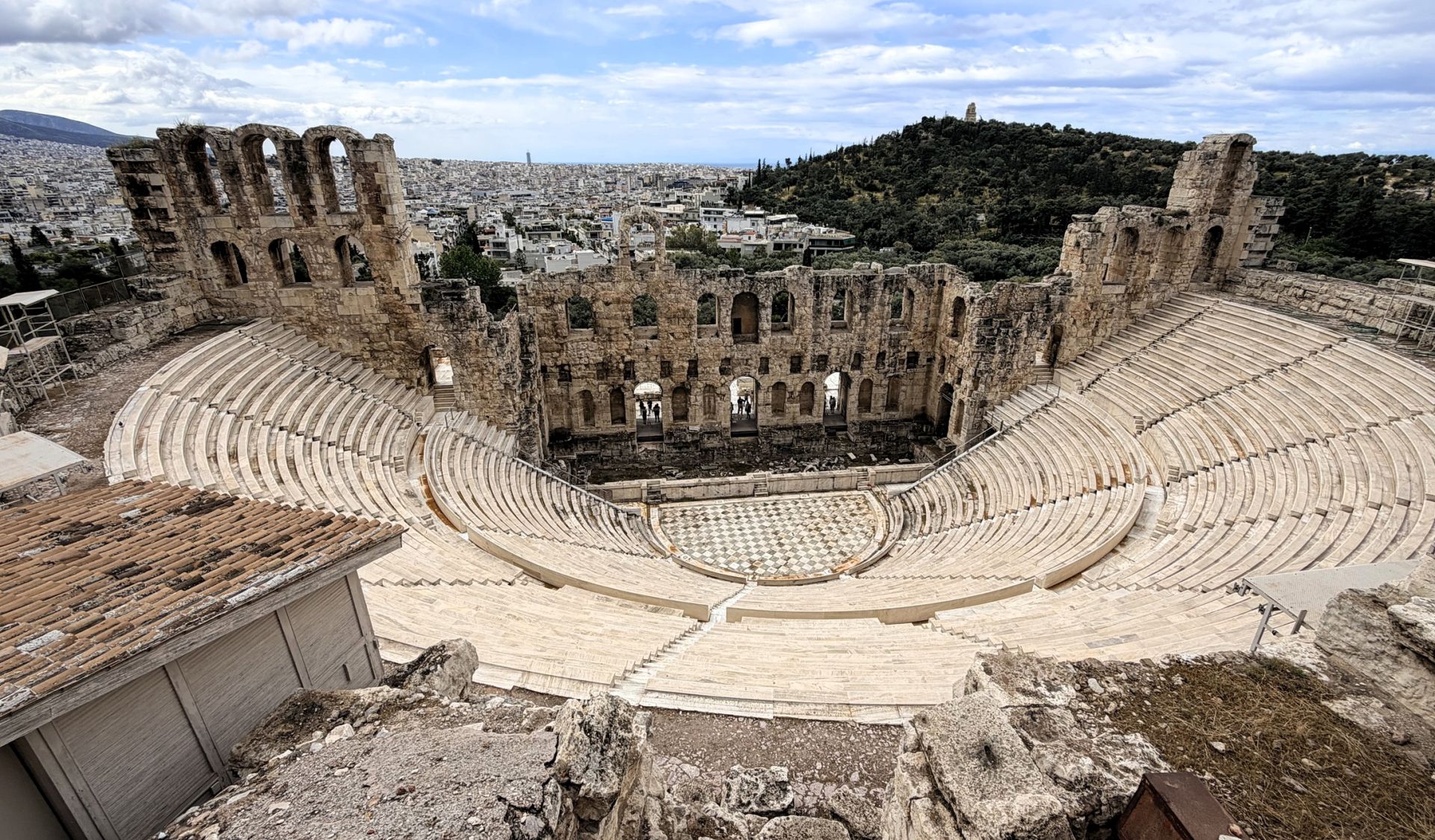 The Odeon of Herodes Atticus, built in 161 CE by the Athenian aristocrat Herodes Atticus in memory of his wife Regilla, is a Roman‑period concert hall on the southwest slope of the Acropolis which is distinguished by its steep marble cavea, towering three‑storey stage façade, and its once‑famous cedar‑wood roof that fully enclosed the auditorium. One of the most technically ambitious buildings in Roman Greece, it combined a mosaic‑floored portico, refined interior finishes, and advanced timber engineering. The structure was destroyed in 267 CE when Athens was sacked by the Herulian and it remained in ruins until its mid‑20th‑century restoration, after which it became Athens’ premier performance venue. Today, it functions both as a major archaeological monument and as an active cultural space, hosting international artists and forming a central component of the annual Athens Festival. READ MORE The Odeon of Herodes Atticus, built in 161 CE by the Athenian aristocrat Herodes Atticus in memory of his wife Regilla, is a Roman‑period concert hall on the southwest slope of the Acropolis which is distinguished by its steep marble cavea, towering three‑storey stage façade, and its once‑famous cedar‑wood roof that fully enclosed the auditorium. One of the most technically ambitious buildings in Roman Greece, it combined a mosaic‑floored portico, refined interior finishes, and advanced timber engineering. The structure was destroyed in 267 CE when Athens was sacked by the Herulian and it remained in ruins until its mid‑20th‑century restoration, after which it became Athens’ premier performance venue. Today, it functions both as a major archaeological monument and as an active cultural space, hosting international artists and forming a central component of the annual Athens Festival. READ MORE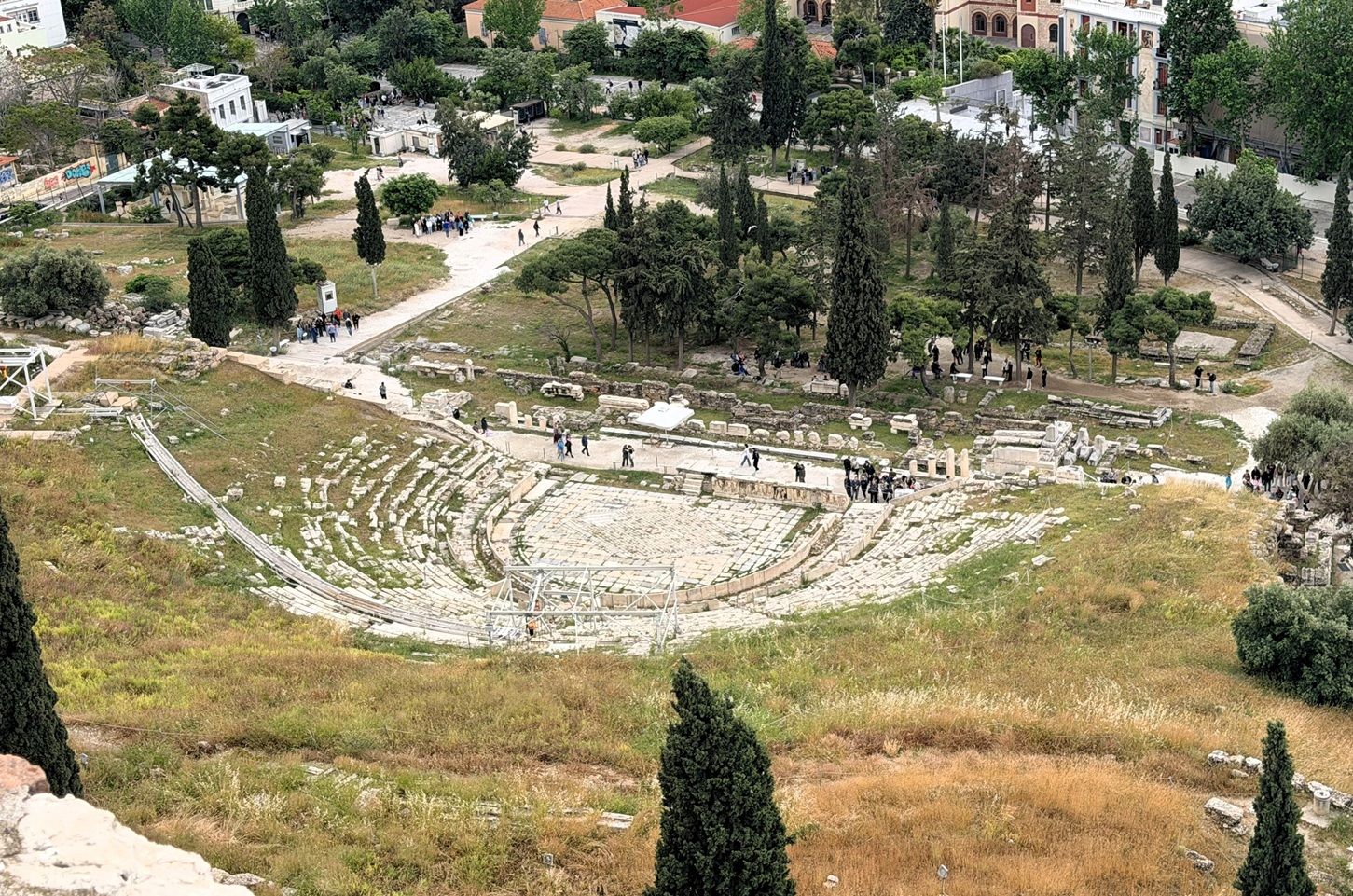 The Theatre of Dionysos on the south slope of the Acropolis in Athens is the world’s earliest known theatre and the birthplace of Greek drama, evolving from a sixth century BCE sanctuary of Dionysus into the monumental stone structure where the works of Aeschylus, Sophocles, Euripides, Aristophanes, and later Menander were first performed; beginning as a simple circular orchestra with wooden seating, it was transformed in the fourth century BCE under Lycurgus into the first fully stone built theatre, complete with marble seats for priests and officials, a two storey skene, and seating for up to 25,000 spectators, later modified by the Romans, while above the theatre stands the Roman period Statue of Menander on its original inscribed base, commemorating the leading playwright of New Comedy whose refined, character driven works marked the final flowering of Athenian drama; after centuries of decline, burial, and rediscovery, the surviving orchestra, carved seating, and sculptural remains make the site one of the most important monuments for understanding the origins and development of Western theatre. READ MORE The Theatre of Dionysos on the south slope of the Acropolis in Athens is the world’s earliest known theatre and the birthplace of Greek drama, evolving from a sixth century BCE sanctuary of Dionysus into the monumental stone structure where the works of Aeschylus, Sophocles, Euripides, Aristophanes, and later Menander were first performed; beginning as a simple circular orchestra with wooden seating, it was transformed in the fourth century BCE under Lycurgus into the first fully stone built theatre, complete with marble seats for priests and officials, a two storey skene, and seating for up to 25,000 spectators, later modified by the Romans, while above the theatre stands the Roman period Statue of Menander on its original inscribed base, commemorating the leading playwright of New Comedy whose refined, character driven works marked the final flowering of Athenian drama; after centuries of decline, burial, and rediscovery, the surviving orchestra, carved seating, and sculptural remains make the site one of the most important monuments for understanding the origins and development of Western theatre. READ MORE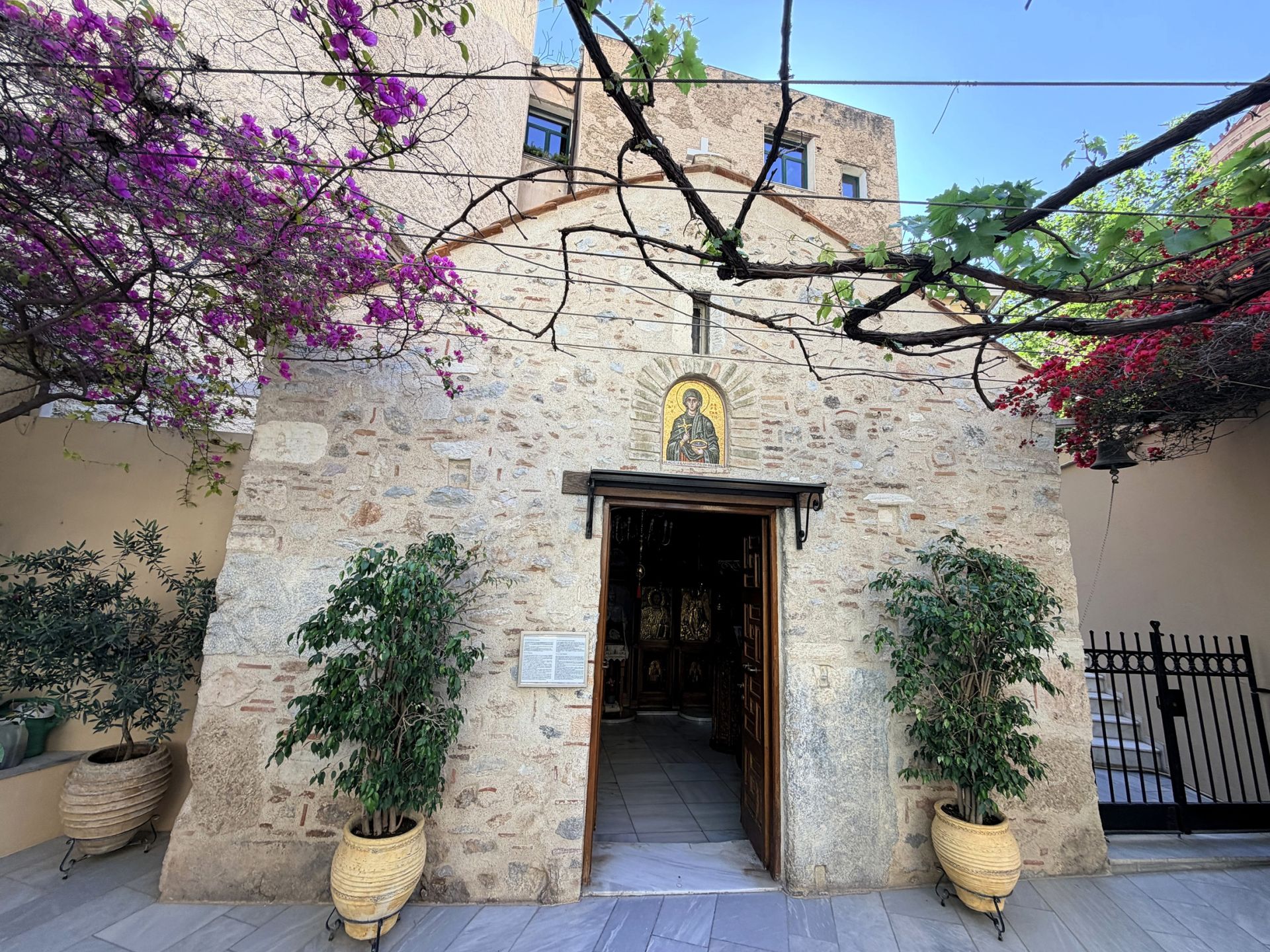 The Church of Agia Paraskevi the Holy Martyr on Aiolou Street is a small post Byzantine chapel dating from the late sixteenth or early seventeenth century, built during the Ottoman occupation as a simple single aisled basilica with later additions that include a narrow northern aisle and a south side entrance and window. Dedicated to the Virgin Martyr Paraskevi, it served for centuries as an urban metochi of the Monastery of Osios Meletios and briefly of the Monastery of Faneromeni, preserving its role as a monastic lodging and devotional chapel in the heart of Athens. Renovated in the 1930s, when its present wall paintings were created, the church remains a rare survivor of old Athens, its modest stone structure and intimate interior offering a glimpse into the city’s religious life under Ottoman rule amid the modern commercial surroundings of Aiolou Street. READ MORE The Church of Agia Paraskevi the Holy Martyr on Aiolou Street is a small post Byzantine chapel dating from the late sixteenth or early seventeenth century, built during the Ottoman occupation as a simple single aisled basilica with later additions that include a narrow northern aisle and a south side entrance and window. Dedicated to the Virgin Martyr Paraskevi, it served for centuries as an urban metochi of the Monastery of Osios Meletios and briefly of the Monastery of Faneromeni, preserving its role as a monastic lodging and devotional chapel in the heart of Athens. Renovated in the 1930s, when its present wall paintings were created, the church remains a rare survivor of old Athens, its modest stone structure and intimate interior offering a glimpse into the city’s religious life under Ottoman rule amid the modern commercial surroundings of Aiolou Street. READ MORE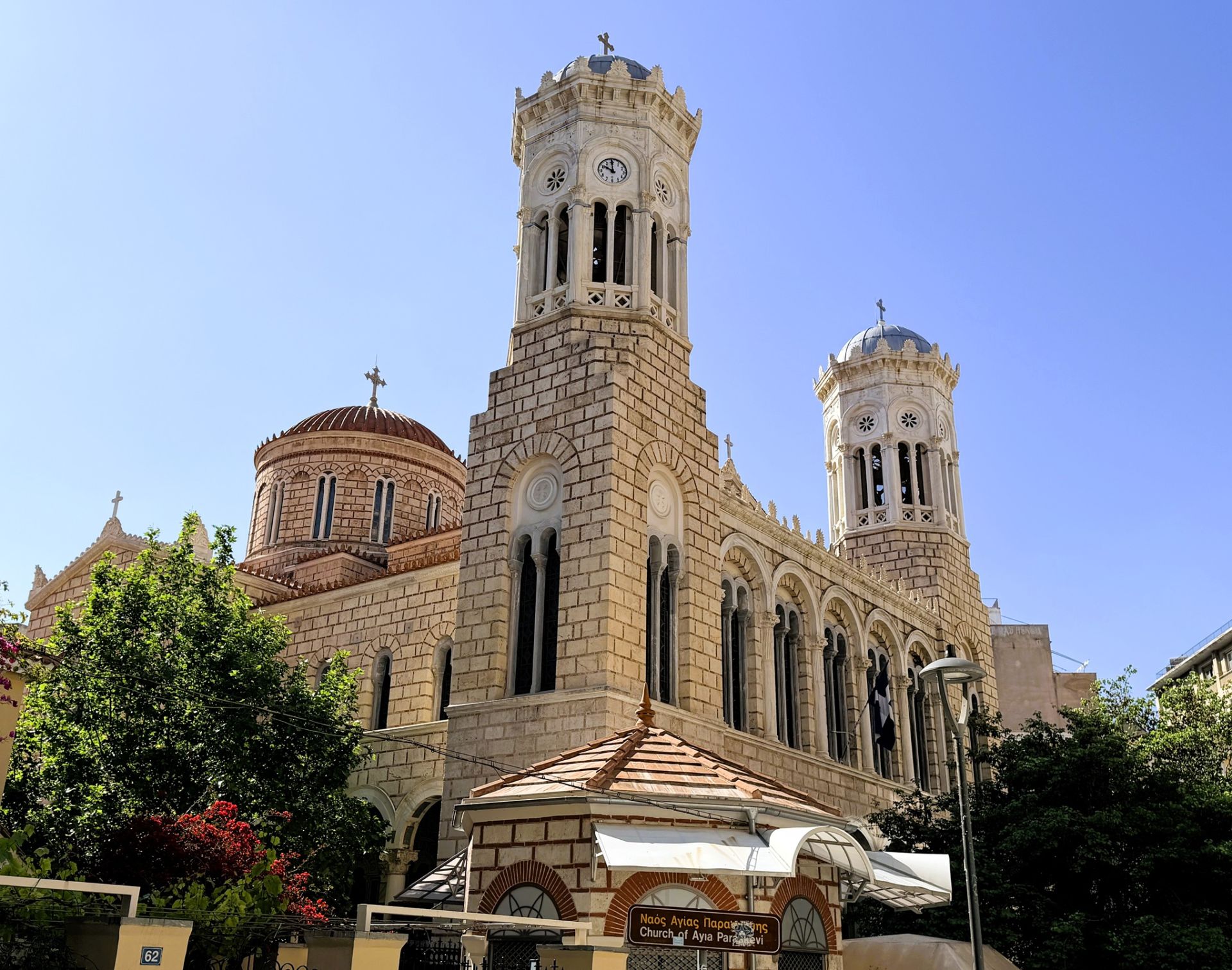 The Church of the Virgin Mary of the Golden Cave (Panagia Chrysospiliotissa) on Aiolou Street is one of the most ambitious nineteenth century parish churches in Athens. The church combines Byzantine Revival and Neoclassical elements in a three aisled domed basilica completed in 1892 after decades of construction that began in 1863. Its history stretches back to a small 1705 basilica destroyed in the 1826–1827 siege carried out by Ottoman forces during the Greek War of Independence. Its present form—featuring a monumental west façade with a marble stairway, heavy timber entrance doors, cloisonné brickwork, and twin octagonal bell towers—leads into a richly painted interior of Corinthian arcades, frescoed vaults, and a distinguished Pentelic marble iconostasis attributed to Ernst Ziller. Behind the iconostasis lies the sanctuary with its solid marble high altar and Platytera fresco. The church also contains a finely crafted pulpit and a unified decorative programme that integrates architecture, light, and iconography. Together, these features make it a major landmark of modern Athens and a vivid expression of the city’s post independence architectural aspirations. READ MORE The Church of the Virgin Mary of the Golden Cave (Panagia Chrysospiliotissa) on Aiolou Street is one of the most ambitious nineteenth century parish churches in Athens. The church combines Byzantine Revival and Neoclassical elements in a three aisled domed basilica completed in 1892 after decades of construction that began in 1863. Its history stretches back to a small 1705 basilica destroyed in the 1826–1827 siege carried out by Ottoman forces during the Greek War of Independence. Its present form—featuring a monumental west façade with a marble stairway, heavy timber entrance doors, cloisonné brickwork, and twin octagonal bell towers—leads into a richly painted interior of Corinthian arcades, frescoed vaults, and a distinguished Pentelic marble iconostasis attributed to Ernst Ziller. Behind the iconostasis lies the sanctuary with its solid marble high altar and Platytera fresco. The church also contains a finely crafted pulpit and a unified decorative programme that integrates architecture, light, and iconography. Together, these features make it a major landmark of modern Athens and a vivid expression of the city’s post independence architectural aspirations. READ MOREHoly Temple of Agia Irini 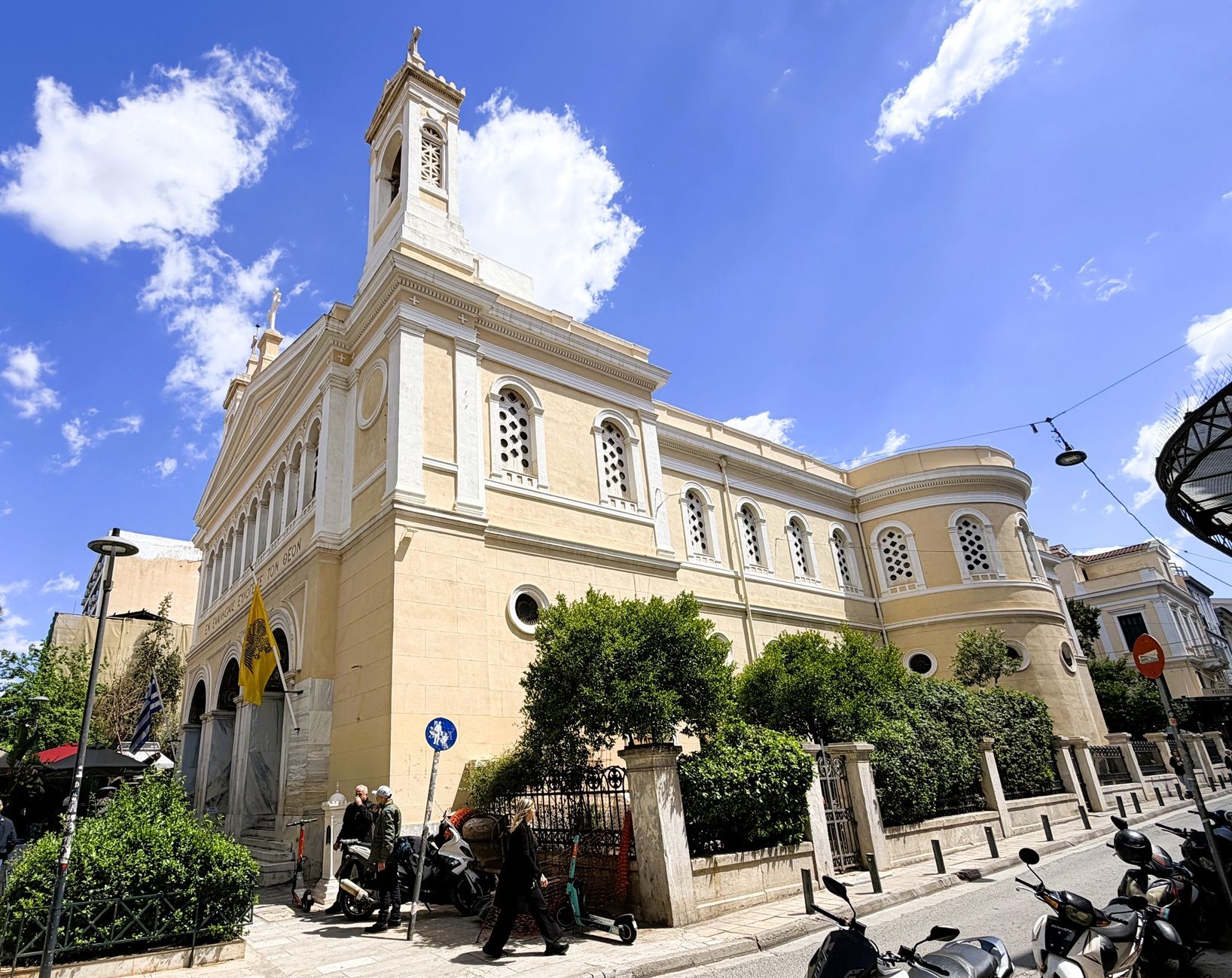 The Holy Temple of Agia Irini on Aiolou Street is one of the most important churches in modern Athens, originally built on the site of a small Byzantine chapel and later restored to serve as the first cathedral of the newly independent Greek state before being completely rebuilt by Lysandros Kaftanzoglou in 1850. Its architecture blends a three aisled basilica plan with neoclassical bell towers, Athonite style side conches, and a central dome, while the interior is richly decorated with 19th century murals by Spyridon Hatzigiannopoulos, a gold plated iconostasis donated by Russian Tsar Nicholas I, painted ceilings, stained glass windows, and numerous side shrines including the Panagia Galaktotrophousa. From the radiant Platytera fresco in the apse to the narrative murals in the western dome bay, the church forms a continuous visual and spiritual narrative that reflects both Byzantine tradition and the artistic ambitions of the early modern Greek capital, making it one of Athens’ most historically and architecturally significant sacred buildings. READ MORE The Holy Temple of Agia Irini on Aiolou Street is one of the most important churches in modern Athens, originally built on the site of a small Byzantine chapel and later restored to serve as the first cathedral of the newly independent Greek state before being completely rebuilt by Lysandros Kaftanzoglou in 1850. Its architecture blends a three aisled basilica plan with neoclassical bell towers, Athonite style side conches, and a central dome, while the interior is richly decorated with 19th century murals by Spyridon Hatzigiannopoulos, a gold plated iconostasis donated by Russian Tsar Nicholas I, painted ceilings, stained glass windows, and numerous side shrines including the Panagia Galaktotrophousa. From the radiant Platytera fresco in the apse to the narrative murals in the western dome bay, the church forms a continuous visual and spiritual narrative that reflects both Byzantine tradition and the artistic ambitions of the early modern Greek capital, making it one of Athens’ most historically and architecturally significant sacred buildings. READ MOREPanathenaic (Olympic) Stadium 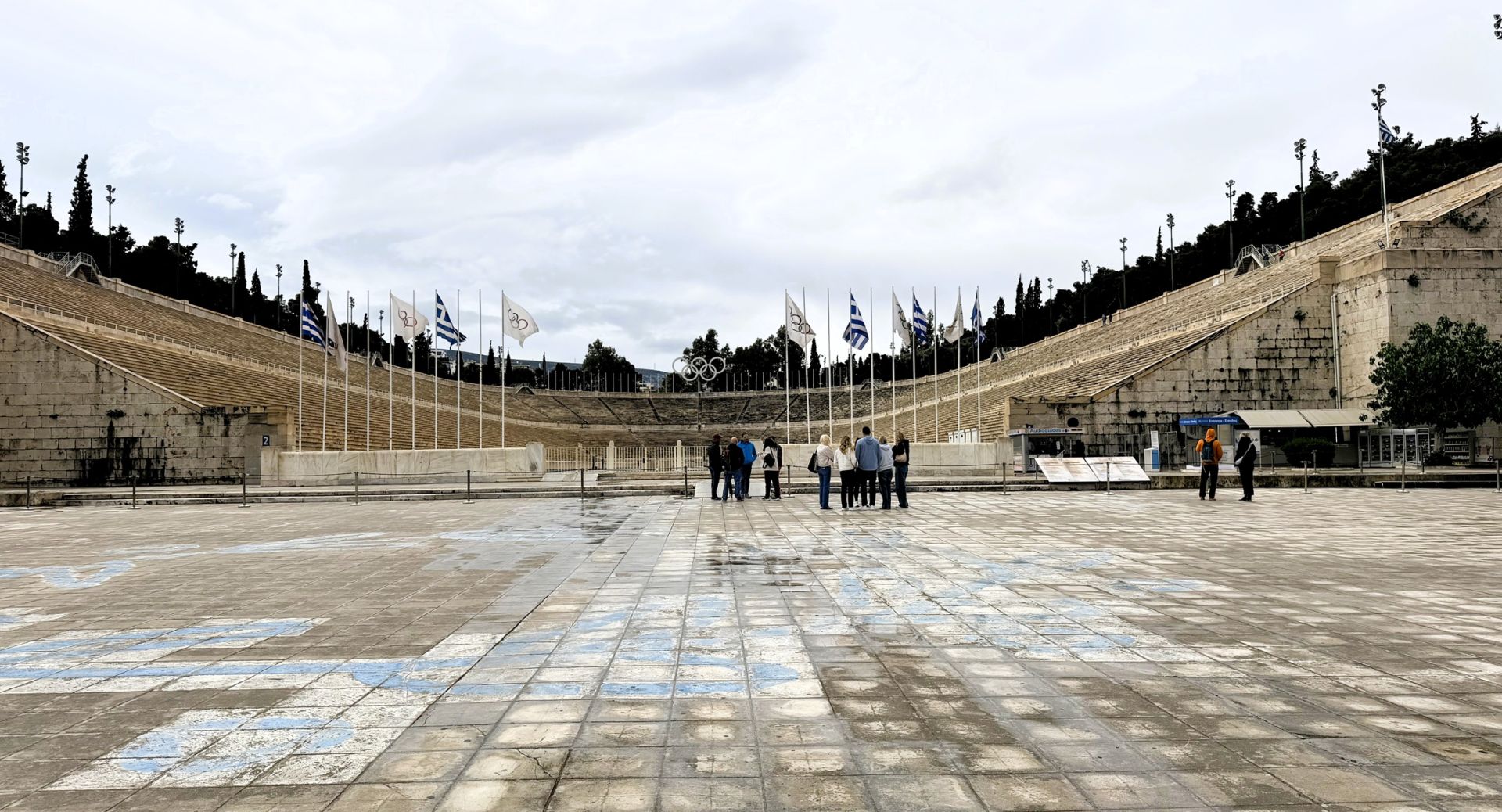 The Panathenaic (Olympic) Stadium in Athens, entirely built of white Pentelic marble and set within a natural hollow between the hills of Agra and Ardettos, is one of the most distinctive historic sporting monuments in the world. First used as a simple racecourse for the Panathenaic Games in the 6th century BCE, it was transformed into a monumental marble stadium by Herodes Atticus in the 2nd century CE and later rebuilt in the 19th century to host the first modern Olympic Games of 1896. Its long, narrow horseshoe shape follows the ancient design, and features such as the original starting line, the vaulted passage, and the ceremonial platform all reflect its continuous association with athletic competition. Today it remains an active symbol of the Olympic movement, serving as the finishing point of the Athens Marathon and the venue where the Olympic flame is formally handed over to each host nation. READ MORE The Panathenaic (Olympic) Stadium in Athens, entirely built of white Pentelic marble and set within a natural hollow between the hills of Agra and Ardettos, is one of the most distinctive historic sporting monuments in the world. First used as a simple racecourse for the Panathenaic Games in the 6th century BCE, it was transformed into a monumental marble stadium by Herodes Atticus in the 2nd century CE and later rebuilt in the 19th century to host the first modern Olympic Games of 1896. Its long, narrow horseshoe shape follows the ancient design, and features such as the original starting line, the vaulted passage, and the ceremonial platform all reflect its continuous association with athletic competition. Today it remains an active symbol of the Olympic movement, serving as the finishing point of the Athens Marathon and the venue where the Olympic flame is formally handed over to each host nation. READ MORE
Corfu Achilleion Palace The Achilleion Palace is located on top of the hill in the Village of Gastouri, 10 kms southwest of the town of Corfu. Its positioning provides views over the surrounding countryside with its green hills and valleys and the Ionian Sea in the background. The building was acquired by Empress Elizabeth (known as Sisi), of Austria, the wife of Emperor Franz Joseph I, from the philosopher and diplomat Petros Vrailas Armenis and was formerly known as "Villa Vraila". READ MORE
Agia Triada Monastery
Delos Archaeological Site
Olympia
Church of Our Lady of Mercy 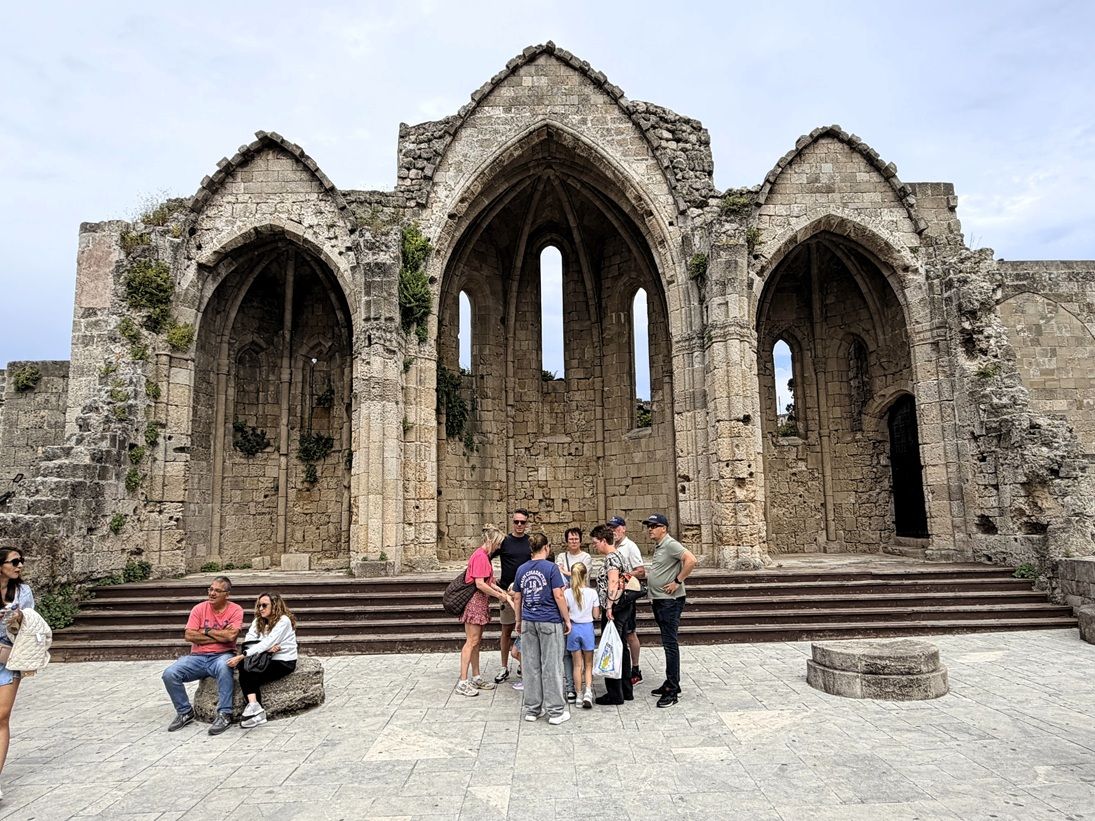 The Church of Our Lady of Mercy, known in Greek as Panagia tou Bourgou, is a ruined 14th century Gothic Basilica built by the Knights Hospitaller to serve the civilian Bourgou quarter of medieval Rhodes. Although commonly described today as a Latin church because it functioned as the Catholic parish of the district, its historical name never included the word “Latin”. Once a large three aisled basilica with pointed arcades, side chapels, and a tall, vaulted sanctuary, it was destroyed during the Ottoman siege of 1522 and left unrepaired. Its surviving arches, ashlar walls, and isolated columns now stand open to the sky, forming one of the most atmospheric medieval monuments in the Old Town. READ MORE The Church of Our Lady of Mercy, known in Greek as Panagia tou Bourgou, is a ruined 14th century Gothic Basilica built by the Knights Hospitaller to serve the civilian Bourgou quarter of medieval Rhodes. Although commonly described today as a Latin church because it functioned as the Catholic parish of the district, its historical name never included the word “Latin”. Once a large three aisled basilica with pointed arcades, side chapels, and a tall, vaulted sanctuary, it was destroyed during the Ottoman siege of 1522 and left unrepaired. Its surviving arches, ashlar walls, and isolated columns now stand open to the sky, forming one of the most atmospheric medieval monuments in the Old Town. READ MORE
The Archaeological site of Akrotiri is a Minoan Bronze Age settlement that was buried by the volcanic eruption of Thira in 1627 BC. Because it was buried under volcanic ash it was preserved until it was rediscovered in the 20th century. READ MORE
|
 |
 |
||

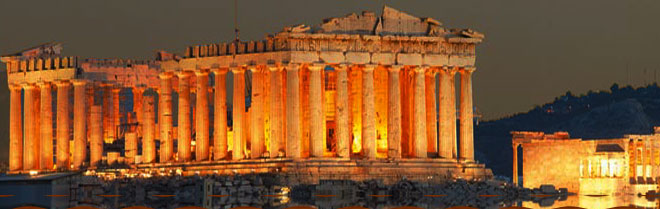
 The Acropolis is not a single building but a number of temples built on a hill overlooking Athens. Although there are many Acropolises (the word meaning high city) in Greece we tend to associate the name with the one in Athens. The buildings that survive today are the Parthenon built between, 447 – 438 BC - although the decorative features weren’t completed until 432 BC; the Propylaea constructed around 437 BC; The Temple of Athena Nike between 427 BC and 423 BC; and the Erechtheum which was begun in 421 BC, although work ceased between 414 BC and 409 BC, and was completed in 407 BC.


 Located two miles from the island of Mykonos is the small, barren island of Delos, five square km in size, and originally known as Ortygia (Quail Island). It contains an archaeological site which, according to Greek mythology, was the birthplace of the god Apollo and his twin sister Artemis. These were the children of Zeus by his mistress, Leto. Zeus’s jealous wife, Hera, banished Leto from Earth but she was given sanctuary on Delos by Poseidon, where she gave birth to the twins.
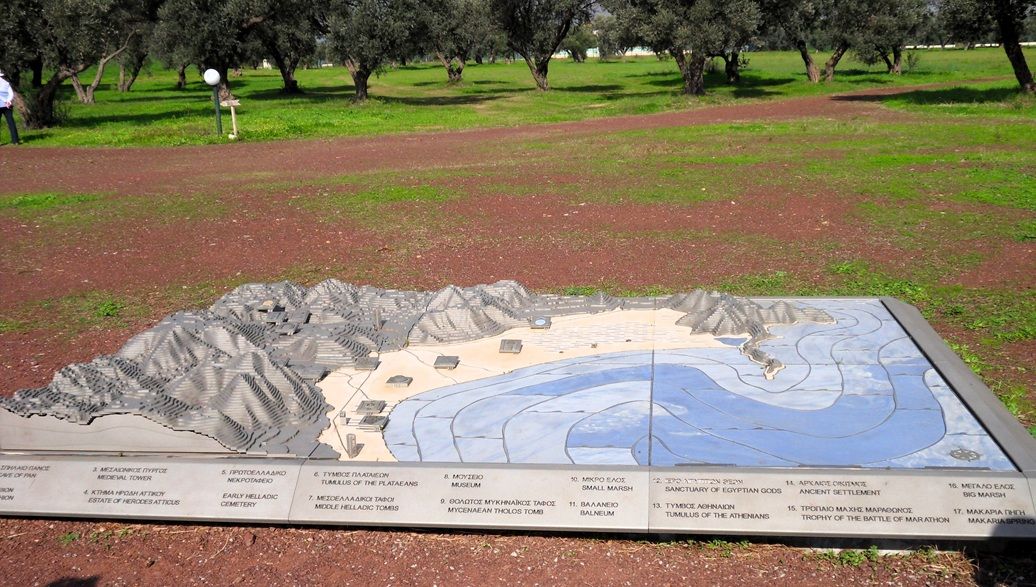 Marathon is a historic town on the coastal plain northeast of Athens, best known as the site of the Battle of 490 BCE, where the Athenians and Plataeans defeated the invading Persian army, a victory commemorated by the Tumulus of the Athenians, the Plataean burial mound, and the reconstructed victory trophy whose original fragments are displayed in the Archaeological Museum of Marathon, a 1975 building that also houses prehistoric finds from Tsepi and Vrana and Roman period sculptures from Brexiza; together, the preserved battlefield, memorials, and museum collections make Marathon one of Greece’s most evocative archaeological landscapes.
  Olympia was one of the most important sanctuaries of ancient Greece although we know it as the birthplace of the Olympic Games. There are a number of different versions of how the Olympic Games began. One puts it down as the place where Zeus overcame his father Cronus and seized the throne. It thus became a sacred place to Zeus and he created the games to celebrate his victory. The first recorded Olympic Games took place in 776 BC although they may have started earlier. At that time there was just one event, a foot race over a stade, a distance of 180 metres.
  Built on the highest point of the medieval city in Rhodes, the Palace of the Grandmaster dominates the city and the harbour. It played a major role in the defence of the city beginning in the 7th century when it was first constructed on the site of the Byzantine citadel of Rhodes and on the foundations of the Temple of the Sun God (Helios), whose cult was widespread in Rhodes in antiquity. The citadel’s strong fortifications provided the last refuge for the population in the event of the city falling to the enemy.



All Photographs were taken by and are copyright of Ron Gatepain


| Site Map |